Central vacuum system maintenance feels optional right up until the hose goes dead in your hand and you assume the motor is dying. It usually isn’t. Dealers frame every weak-suction call as a service appointment, when a canister sitting three-quarters full explains most of them, and the “oil the motor” advice you’ve read elsewhere is wrong on every sealed modern unit.
This guide swaps vague intervals for manufacturer-verified numbers, drawn from manufacturer documentation and CVAC-certified technician consultation. Finish it knowing which fix is a tonight job and which one earns a technician.
Central Vacuum System Maintenance
Central vacuum system maintenance is the routine care of a power unit, filter, and canister that keeps suction steady for two decades. Four habits cover it: empty before the canister packs, change the filter on schedule, check motor brushes by the hour count, and keep debris out of the hose.Your Suction Didn’t Die. It Drifted.
Suction loss almost never happens overnight. It fades weekly as filter pores clog and the canister fills, the same way a tap loses pressure when someone closes it one degree at a time.
The test that proves your suction actually dropped
Pull the wand off and hold the bare hose against the same rug you vacuumed a month ago. Weaker pickup with nothing attached confirms the loss is real; weak suction at every inlet points to the power unit, not one blocked branch.
Why bagged units fade and cyclonic units mostly don’t
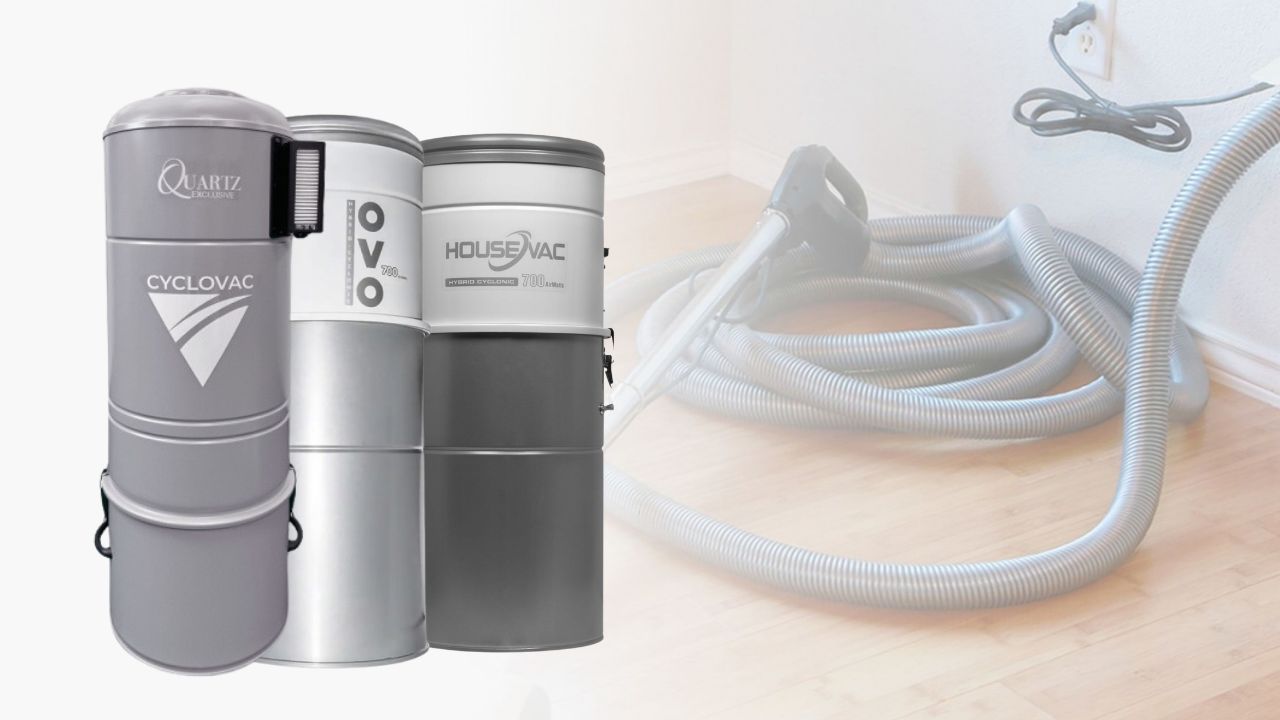
Bagged systems lose suction as dust clogs the bag’s pores, while true cyclonic units like those from Cyclovac, a Quebec manufacturer, spin debris out before it touches a filter and hold airflow longer. Open the canister lid to check: a bag or cloth liner means filtered, a clear bin means true cyclonic.
| Unit Type | Airflow Curve | Upkeep Task | Filter Cost/Year |
|---|---|---|---|
| Bagged/Filtered | Drops steadily as bag fills | Replace bag + secondary filter | $20-$60 |
| True Cyclonic | Stays flatter until bin fills | Empty bin, rinse filter occasionally | $0-$40 |
Clog, filter, or motor? Read the exhaust first
Two-motor units should push warm air out both exhaust ports; a motor pulling air backward instead needs attention, not the pipes. Confirm you’re getting your central vacuum started correctly, then feel each exhaust vent by hand: one blowing cold and one blowing nothing is a wiring problem, not a clog.
The Maintenance Calendar Real Homeowners Can Keep
Four intervals cover roughly 90 percent of central vacuum upkeep: canister emptying, pipe cleaning, the monthly walk-around, and the five-to-seven-year brush check. Miss all four and you’re the homeowner calling about a “dying motor” that was really a full bag.
How often does central vacuum system maintenance actually need doing?
Most homes empty the canister two to four times a year, and that’s normal, not neglect. Emptying far more often signals a filter or bag problem, not a dirty house.
| Task | Interval | Time Needed | DIY or Pro |
|---|---|---|---|
| Empty canister | 2/3 to 3/4 full | 10 min | DIY |
| Run maintenance cloths through tubing | 2-3x/year | 15 min | DIY |
| Motor brush inspection | Every 500 hours (~5-7 yrs) | 20 min | Pro or advanced DIY |
| Secondary filter swap | Every 3 bags (~45 hrs) | 5 min | DIY |
The monthly walk around that takes two minutes
Squeeze the hose along its length once a month, listening for a whistle that means a hidden crack. A pet owner running a Beam unit with three dogs caught a cracked hose this way, before it split open mid-clean. Fold this into cleaning out your entire central vacuum once a season.
What you only touch every five to seven years
Weekly vacuuming reaches roughly 500 motor hours in five to seven years, and that’s the clock brushes get inspected on, not when the motor already quit.
Emptying the Canister Is the Messiest Part
Emptying is the one task every owner dreads, not because it’s hard, but because it’s genuinely messy over an open trash can.
Empty at three quarters full, never at packed
Filtered cyclonic canisters should be emptied at two-thirds full and true cyclonic units at three-quarters full, per MD Manufacturing’s power unit owner’s manual, based in Bakersfield, California. A packed bag strains and slowly cooks the motor, and overfilled canisters push odor back through the hose.
The outdoor routine that keeps dust out of your lungs
Empty the canister outside, downwind, with the replacement bag already open before you break the seal on the full one. Fine dust escapes the moment that seal opens, so an indoor trash can just redistributes it through the room.
Bagged, bagless, and the trade you already made
Bagless cyclonic systems carry no recurring bag cost but hand you a dustier emptying job. Bagged systems keep your hands cleaner at the cost of a recurring parts bill.
| Style | Mess Level | Yearly Cost | Filtration Grade |
|---|---|---|---|
| Bagged | Low (sealed removal) | $20-$60 | Higher (multi-layer bag) |
| Bagless/Cyclonic | Higher (open bin) | $0-$40 | Depends on secondary filter |
Filters, Bags, and the HEPA Label Problem
HEPA on a central vacuum bag means something specific only when it’s tied to a tested standard, and most packaging skips that part on purpose. Cyclovac’s own bag and filter maintenance guidance puts a number on the part most owners skip: the disc-shaped secondary filter between bag and motor changes after three bag replacements, or roughly 45 hours of runtime.
What HEPA means legally and what dealers imply
True HEPA follows a U.S. Department of Energy standard of capturing 99.97 percent of particles at 0.3 microns, a tested threshold, not a marketing adjective. Bags labeled “HEPA-style” carry no certified capture rate at all.
The motor screen nobody remembers to check
A dust-caked screen above the cartridge filter starves the motor of airflow even when the filter looks clean. Clear it with a shop vacuum nozzle, never your fingers, since the mesh tears easily.
Washing a cloth filter without wrecking it
Rinse a cloth filter under running water and never scrub it, then let it dry completely before reinstalling. A filter reinstalled damp grows mildew that vents into your living space on the next run.
When a fourth stage filter beats venting outside
Venting the exhaust straight outdoors handles fine dust better than any indoor filter stage, and basement units without an outside vent need a fourth-stage filter to compensate.
| Setup | Fourth-Stage Filter Needed |
|---|---|
| Garage-mounted, vented outside | Usually skip |
| Basement, vented outside | Usually skip |
| Basement, no outside vent | Recommended |
Clearing a Clog Before You Pay Anyone
Most clogs sit in one branch line, not the whole system, and finding which branch narrows a repair to twenty minutes instead of an afternoon of guessing.
Find the blocked branch by testing inlets in order
Test every inlet and note which ones feel weak, since suction dies downstream of a clog and the dead-inlet pattern points at the blocked branch. Before reaching for tools, review the basics of snaking your central vacuum tubing so you know how far a standard snake reaches.
Snake, blow back, or reverse the airflow?
Feed a plumber’s fish tape or a dedicated vacuum snake through the weak inlet toward the power unit, working slowly so it doesn’t jam at a fitting. Compressed air blown into the line risks blowing apart glued PVC joints hidden inside a wall, so save it as a last resort.
| Method | Risk to PVC Joints |
|---|---|
| Fish tape / snake | Low |
| Reverse suction | Low |
| Compressed air | Higher (can separate glued joints) |
For a full walkthrough, clearing stubborn clogs in central vacuums covers each method step by step.
The clogs that mean stop and call someone
A clog you can’t reach from either end needs a professional, full stop. Repeated breaker trips point to an electrical fault, not a blockage, and wet debris inside the line changes the approach entirely.
Hoses and Handles Fail Before the Motor Does
Hose and handle failures show up years before a motor quits, since thin wiring inside the hose flexes thousands of times before the power unit does anything.
Why your handle switch keeps dying
Thin-gauge switch wire running through the hose flexes at the handle joint until it breaks, the single most common reason a hose stops turning the unit on. Older NuTone systems, produced under license by Broan-NuTone LLC, use a low-voltage switch design covered in troubleshooting NuTone central vacuum units, since contacts corrode faster than the wire wears out.
Patching a cracked hose versus replacing it
A pinhole crack near the cuff is patchable, while a split down the middle isn’t worth the effort. Full instructions for repairing a damaged central vacuum hose walk through which cracks are worth patching.
| Crack Location | Patch Viable | Suction Loss | Replacement Cost |
|---|---|---|---|
| Near cuff | Yes | Minor | $0 (patch only) |
| Midspan split | No | Major | $60-$150 |
Frayed powerhead cords are a safety problem
Exposed conductor at the plug means stop using the unit immediately, not tape it and keep going. Technicians name damaged cords among their most common service calls, ahead of most motor complaints.
Inlet Valves and Their Low Voltage Contacts
Weak suction at exactly one inlet almost always traces back to corroded low-voltage contacts or a tired door spring, not the power unit.
Two small contacts, one weak spring, zero suction
Corroded contacts inside the inlet valve stop the power unit from starting when a hose plugs in at that location. Clean them gently with a dry cloth, never a metal file, since scraping removes the plating that resists corrosion.
Gasket seals decide how much air you lose
Run a hand around a closed inlet door and feel for a draft, since even one unsealed door bleeds airflow from every other inlet. Chasing a suction complaint usually means tracking down leaks in your vacuum system at the inlet doors first, before the power unit gets touched.
Motor Hours, Carbon Brushes, and Honest Lifespans
Central vacuum motors wear on runtime hours, not calendar age, so two identical units installed the same week can need brushes at very different points.
What 500 hours of runtime looks like in a real home
Weekly vacuuming stacks up to roughly 500 motor hours over five to seven years, an odometer counting miles rather than years parked in a garage. A 20-year-old Beam unit, now built by Trovac Industries, running through a 2,800-square-foot ranch with three cats hit that mark closer to year five from extra litter box runs. Confirm your unit’s history against the Beam central vacuum owner’s manual before assuming your hours match.
How worn carbon brushes announce themselves
Brushes worn below 3/16 inch have passed their replacement point, and a large blue spark around the commutator right before failure is the motor’s last warning. Drainvac, a Quebec-based manufacturer, recommends inspecting carbon brushes at 500 operating hours because scoring worsens the longer worn brushes stay in, and diagnosing common Beam vacuum system faults covers what a burning smell paired with weak suction usually means.
When brush replacement stops paying for itself
Fresh brushes installed on a worn armature buy limited extra runtime, and bearings usually fail next on an old motor.
| Option | Typical Cost | Expected Hours Gained |
|---|---|---|
| Brush kit only | $15-$40 + labor | Limited if armature is worn |
| Full motor swap | $150-$800 | Full new motor life |
Old units where the parts simply don’t exist
Confirm parts availability before investing in any repair on a unit older than 20 years, since some manufacturers no longer stock brushes for pre-1980 motors. Legacy units like the older Galaxie GA-100 setup and user manual still show up in inherited homes, and checking it first tells you whether a brush kit even exists.
What Should Never Go Down Your Hose
Fine construction dust, cold ash, and liquids all damage a motor in ways that don’t show up until weeks later.
Drywall dust destroys bearings on a delay
Gypsum powder slips past standard filters and turns bearing grease into paste inside the motor housing, and suction feels normal right up until the motor cooks itself. Rent a shop vacuum for renovation cleanup instead.
Fireplace ash, liquids, and the smell that follows
Cold ash behaves like drywall dust, fine enough to slip past a standard filter stage into the motor housing. Damp debris trapped inside pipe walls turns into a mold problem, and dealing with moisture inside vacuum pipes covers what to do the moment liquid gets into the line.
| Material | Damage Path | Tolerated? |
|---|---|---|
| Drywall dust | Bearing grease turns to paste | No |
| Cold ash | Same as drywall dust | No |
| Liquid/moisture | Mold inside pipe walls | No |
Renovation season needs a different machine
New home buyers should cap every inlet until construction dust fully settles, since one careless renovation cleanup can shorten a 20-year system’s life in a single afternoon.
Odors, Damp Pipes, and Pipe Cleaning Truths
Your pipe network only ever carries air, never water, so most odor complaints trace back to the canister and filter rather than the tubing itself.
Do central vacuum pipes need cleaning every year?
Yes, running maintenance cloths through the tubing once or twice a year is plenty for most homes without pets. Send them from the farthest inlet first, working one branch line at a time toward the power unit.
Where the musty smell actually starts
Odor comes from the canister and filter, not the wall pipes, no matter how strongly it seems to radiate from every inlet. Pet hair carries oils that hold smell inside the bin long after the fur gets cleared out.
Repair or Replace? The Honest Math
Most central vacuum repairs cost less than a new unit, but a few specific failures make replacement the smarter math.
| Repair | Typical Parts Cost | Replacement Wins When |
|---|---|---|
| Clog removal | $50-$250 | Rarely |
| Motor replacement | $150-$800 | Unit is 15+ years old |
| Hose replacement | $60-$150 | Rarely |
What you’re actually paying a technician for
Most service quotes are mostly labor, with parts billed separately. Angi’s 2026 repair cost data puts the average central vacuum repair at $321, ranging $129 to $560, so ask for the part number and price first, and estimate your central vacuum repair costs before the technician arrives.
The markup story that should make you ask questions
Homeowners have reported paying close to a thousand dollars for a power unit swap on a unit that retails under four hundred dollars. You’re allowed to source the power unit yourself and hire labor separately.
Keep the pipes, swap the power unit
Your tubing, inlets, and wiring outlast several generations of power units mounted to them, often by decades. Confirm inlet and pipe diameter compatibility before ordering, and read through when to replace the main power unit to see the failure signs worth acting on instead of patching again.
Conclusion
You arrived assuming weak suction meant an expensive, dying motor. Airflow restriction explains most of it, and now you know which fix is a tonight job and which one earns a technician. Tonight, open the canister, check the fill level, and hold the filter up to a light. The most common central vacuum problems is worth a bookmark before anything breaks. The pipes in your walls will outlast every portable vacuum you’ve ever owned.
Frequently Asked Questions
How often do I need to empty a central vacuum canister or change the bag?
Empty a filtered canister at two-thirds full and a true cyclonic bin at three-quarters full, two to four times a year in most homes. Emptying far more often points to a filter problem, not a dirty house.
Does a central vacuum motor need oiling or lubrication?
No, every modern power unit ships with permanently sealed motor bearings that need no oil. Any guide telling you to lubricate the motor describes a design that hasn’t shipped in decades.
How do I know when the carbon motor brushes need replacing?
Replace brushes once they wear below 3/16 inch, or the moment you see a blue spark around the commutator. Manufacturers like Drainvac set the inspection point at 500 operating hours, roughly five to seven years of weekly use.
Why does one inlet have weak suction when the others are fine?
A corroded low-voltage contact or a hardened door gasket at that inlet is the cause, not the power unit. Clean the contacts and check the gasket seal first.
Is a professional central vacuum tune-up worth the cost, and how often?
Yes, once every five to seven years around the 500-hour brush inspection mark is worth the visit. Anything more frequent is money spent on a system already maintained correctly at home.