You went looking for the best central vacuum system NZ has to offer, and you found five sites that each crown themselves the winner. Every one sells the single brand it ranks first. Worse, they all wave the same trick at you: a big motor wattage sticker, as if the number on the box equals the suction you’ll feel at the hose.
It doesn’t. By the end of this guide, you’ll judge any NZ system by the three things that survive a long pipe run, and you’ll know which one belongs in your home.
Best Central Vacuum System NZ
Air watts at the hose end, not the wattage on the box, decide whether you still love this system in five years. Air watts combine airflow and sealed suction into one honest figure. Builders, renovators, and upgraders all need this number first, because it predicts real cleaning power.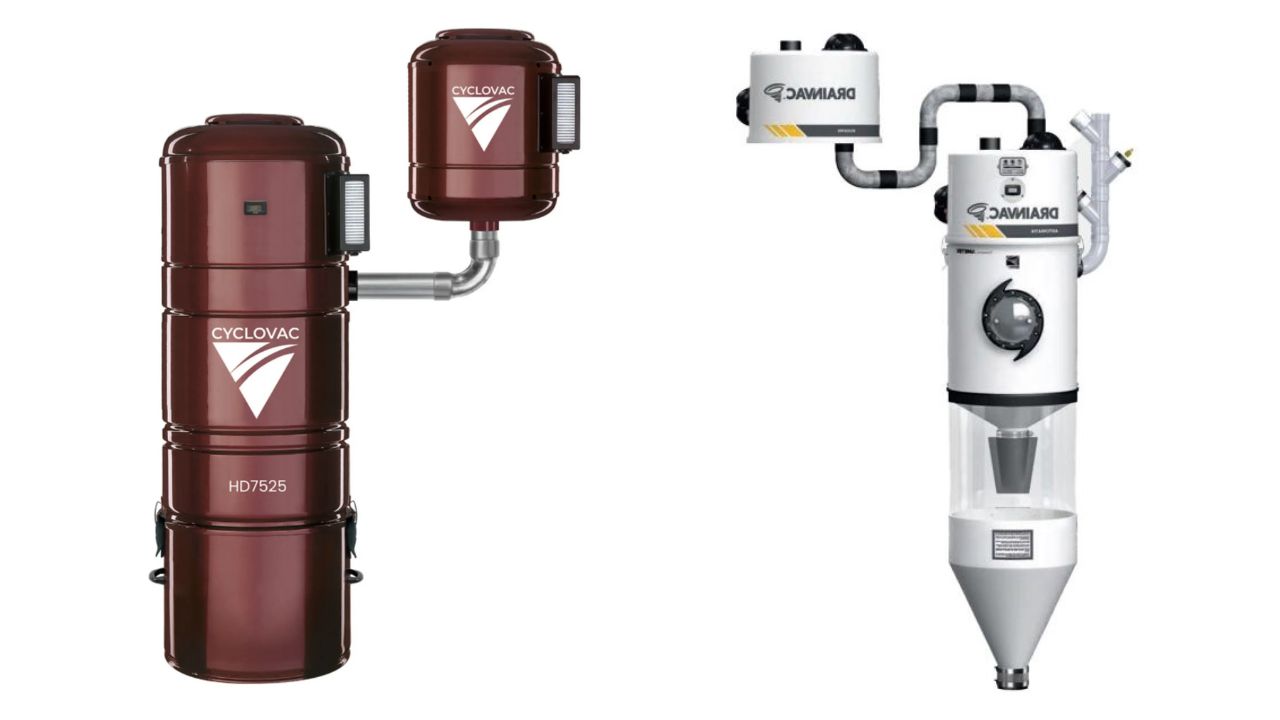
Why every NZ dealer calls itself the best
Every NZ page that ranks for this search sells the one brand it calls best. That’s the conflict you have to see before you trust any winner, including ours.
Who actually wrote the review you’re reading?
You searched for honesty and landed on five sales pages. Check whether the “best” list features only brands the site installs, because that tells you who profits before you read a single spec.
VacuumOne ranks Electron. Beam NZ ranks Beam. Euro Vacs ranks Tubo. None of them names a rival, because a rival doesn’t pay the bills. We sell nothing. We built this guide from manufacturer spec sheets, published NZ dealer price guides, the AS/NZS standards that govern every install here, and the public record of who owns each brand today. That method puts honest comparison ahead of the showroom pitch. So here’s the test for any guide you read: who gets the sale when you click buy?
What makes the best central vacuum system nz?
Forget the logo. The best system matches three buyer-led measures: suction you’ll still feel in year five, a layout that fits your floor plan, and honest advice about when to skip a central vacuum entirely.
Independence means we’ll say the quiet part out loud. Skip a central vacuum, if you live in a small single-level apartment, rent short-stay, or have no garage or utility wall to mount the power unit. Those homes pay thousands for convenience a good cordless stick delivers for a fraction. For everyone else, the right unit pays you back every day you don’t lug a canister up the stairs.
The one spec that predicts real suction
Air watts at the hose end predict real suction better than any other number. That single figure tells you whether grit lifts from carpet after a long pipe run.
Why motor wattage on the box fools you
That big 1400W sticker measures the power the motor eats, not the dirt it lifts. Air watts measure the work that reaches your floor, so they’re the honest number to compare.
Air watts measure true cleaning power, calculated as airflow multiplied by water lift, then divided by 8.5. ASTM F558 recognises maximum air watts as the standard measure of vacuum cleaning power. A motor draws 1,400 input watts and still delivers weak air watts when its design wastes energy as heat and noise. When you compare units, look for AHAM-verified performance ratings for vacuum air watts rather than the input wattage stamped on the carton.
Water lift versus airflow, in plain words
Water lift is the sealed pull that drags grit up two storeys. Put your thumb over a running garden hose and feel the pressure build behind it. That squeeze is water lift.
Water lift is the sealed suction that hauls heavy debris, measured in inches of water the motor raises. Airflow, measured in cubic feet per minute, carries that debris through the pipe once water lift grabs it. You need both balanced. A brochure that inflates one and hides the other tells you nothing about how the unit cleans a real floor. So which matters more for your home? Your floors answer that.
The number a NZ dealer won’t volunteer
Ask for air watts measured at the hose end, not at the unit. That number drops the moment air travels through 12 metres of pipe and hose, which is exactly why a dealer won’t print it.
Ask for air watts at the hose end. The number always drops, and the size of that drop is the truth.
Brochure air watts come from a bench test with the motor wide open and nothing attached. Real cleaning happens after the air fights through tubing, elbows, and the hose itself. Watch a salesperson pause when you ask for end-of-hose performance. The honest ones quote a range. The rest change the subject.
Single fan or two fan: which motor fits?
Single-fan and two-fan motors trade airflow for suction. Hard floors want airflow; deep carpet and stairs want water lift, so the right motor follows your floors.
| Motor type | Strength | Best for |
|---|---|---|
| Single-fan (thru-flow) | Higher airflow, lighter, runs cooler | Hard floors, smaller single-level homes |
| Two-stage (tangential bypass) | Higher water lift, longer service life | Deep carpet, stairs, two-storey homes |
Why more fans isn’t always more clean
More fans don’t always mean cleaner floors. Each added fan stage stacks more water lift but trades away airflow, so a high-lift motor on all-hard floors moves dust slower, not faster.
A two-stage motor stacks two fans in series to raise water lift, which suits air-driven carpet brushes that need the extra pull. Here’s the counter-intuitive part most guides miss: in a small single-level home with short pipe runs and no flow restriction, the highest air-watt unit underperforms a balanced one, because nothing in the system uses that extra lift and the airflow you actually need stays flat. Bigger isn’t the win. Matched is.
What your floors decide for you
Your floors pick the motor for you. All hard floors? Favour airflow and skip the overbuilt water lift. Deep wool carpet and stairs? Lean toward stronger water lift.
A hard-floor townhouse in Ponsonby cleans beautifully on a single-fan unit that moves a lot of air. A villa with deep wool carpet and a steep staircase needs the sealed pull of a two-stage motor to drag embedded grit out of the pile. Most two-storey NZ homes mix both, so a balanced motor near the middle of the air-watt range handles the whole house without you overspending on lift you’ll never feel.
Does suction really die down a long pipe run?
No, a long pipe run doesn’t gut suction on its own. Poor routing does. Clean routing holds strong cleaning power even 40 metres from the unit.
The forum fight nobody settles cleanly
Vacuum forums brawl over whether long runs kill suction, and the truth sits in the middle. Bad routing bleeds airflow. Clean routing holds it.
You’ll read the claim that a long run loses 95% of its performance. That’s scare talk. One owner reported running the same network of pipe for 40 years with no noticeable suction loss, because the layout used gentle sweeps and sat the unit central to the runs. The physics of friction is real but small per metre. What wrecks suction isn’t distance. It’s the elbows and the routing shortcuts a rushed installer makes. So what should you actually watch on the plan?
How bad pipe routing voids your investment
Bad routing voids the suction you paid for. Every tight 90-degree elbow steals airflow, and an inlet stranded far from the unit feels weak at the head.
Here’s the routing that protects your money:
- Use 45-degree elbows and long sweep elbows, never tight 90s, on the main trunk.
- Place the power unit central to the network, not in the farthest corner.
- Keep the longest run inside the manufacturer’s stated maximum length.
- Run full 2-inch pipe the whole way, with no reduced sections.
Why a quiet unit feels like magic
A remote power unit feels like magic because the loudest part now lives in your garage, not next to your ear. You hear air rushing the hose, nothing screaming beside you.
A portable upright howls right at your feet. Walk a central vacuum hose to a bedroom and the motor stays two rooms and a wall away in the utility space. That quiet changes behaviour. Owners who barely tolerated a screaming canister clean far more often once the noise leaves the room. The hush isn’t a luxury feature. It’s the reason the system gets used.
Bagged, bagless and the allergy truth
Bagged units cost more per year but spare allergy sufferers a dust cloud at emptying time. Bagless saves money and risks recontamination. Venting outside settles most of the debate.
Will this actually help my allergies?
Yes, a central vacuum eases allergy symptoms, especially when it vents outside. A University of California, Davis study found measurable symptom relief for people with house-dust allergic rhinitis who switched from a portable to a central system.
That study, titled The Influence of a Central Vacuum System on Quality of Life in Patients with House Dust-Associated Allergic Rhinitis, appeared in the Journal of Investigational Allergology and Clinical Immunology in 2001, volume 11, pages 290 to 294. It reported symptom improvements reaching up to 61% against an upright vacuum. The reason is simple: a portable recirculates fine dust through its own exhaust, while a unit vented outdoors sends that dust out of the house for good.
“HEPA” versus genuinely HEPA filtration
True HEPA and HEPA-style are not the same thing. True HEPA captures 99.97% of particles at 0.3 microns, the size that lodges deepest in your lungs, under the recognised US standard. HEPA-style borrows the word without the sealed path or the test behind it.
A filter only matters when the whole unit seals around it. A genuine HEPA bag inside a leaky canister still leaks fine dust through the gaps. Demand a sealed HEPA system, if anyone in the home has asthma or a dust allergy. And read the label closely. HEPA-style, HEPA-like, and vague 99% claims all dodge the 99.97% at 0.3 microns bar that defines the real thing.
The mess nobody warns you about
Bagless units puff dust back at you the moment you open them. That’s the mess nobody warns you about, and it lands hardest on the person with allergies holding the canister.
Empty a bagless canister on a windy Wellington deck and you’ll wear a fine grey cloud of everything the system pulled in for a month. Sealed bags cost more over time, yet you lift the full bag out clean and bin it without breathing the dust. Choose by who empties it. A bagless unit suits a tidy garage and a household with no allergy sufferers. A sealed bag suits anyone whose chest tightens around dust.
What a central vacuum really costs in NZ
A NZ install runs from about NZ$2,000 fitted for a small home to NZ$4,500 for a large one. The price tag is only half the story. Running cost over 15 years decides the real winner.
The NZ price nobody quotes upfront
Auckland installers suggest budgeting around NZ$2,500 for a small home, NZ$3,500 for a medium one, and NZ$4,500 for a large one, fitted. NZ-made units start lower than most imports.
| Home size | Typical fitted budget (NZD) |
|---|---|
| Small | ~$2,000 to $2,500 |
| Medium | ~$3,500 |
| Large | ~$4,500 |
Kiwivac, a New Zealand manufacturer building central vacuum units in this country since 1983, prices its power units from around $1,750 plus GST, below most imported brands. The catch worth naming: a lower unit price still needs professional install labour, so the fitted total lands inside the same ranges above. Across 15 years, add bags or filters, one possible motor service, electricity, and the odd hose. That running cost, not the sticker, separates a true bargain from a cheap one.
New build or retrofit: the cost gap
New builds cost less than retrofits, every time. Roughing pipe into open framing before the linings go up is the cheapest moment you’ll ever get.
Retrofits into finished walls rarely need many Gib cuts, because installers fish pipe through cavities, ceilings, and under floors, but the labour climbs anyway. Building now? Lock the rough-in before the linings close. One more thing the US-copied NZ pages get wrong: your unit doesn’t need a dedicated 20-amp circuit. NZ power units run on a standard 230V, 10-amp grounded outlet under the AS/NZS 3000 Wiring Rules governing NZ electrical installations, plus 24V low-voltage wiring to the inlets. Plan the outlet beside the unit and you’re sorted.
Where the hidden costs sneak in
Hidden costs hide in the extras. Every added inlet, a retractable hose upgrade, and premium powerheads all sit outside the base kit price.
Decide your must-haves before the quote, not after regret sets in. The extras that lift the number:
- Each extra wall inlet adds pipe, labour, and a fitting.
- A retractable Hide-A-Hose system costs more up front than plug-in inlets.
- HEPA filtration and a powered carpet brush sit outside the base price.
Sort wants from needs first, and the quote stops surprising you.
Matching inlets and hose to your home
Plan inlets per floor, not by total house size. Two or three cover a small home; five or more cover a large one. The hose type you pick changes that count.
How many inlets does your floor plan need?
Count inlets by floor area and reach, not by one whole-house number. Small NZ homes cover everything with two to three inlets, medium homes with three to four, and large homes with five or more.
The figure that matters is reach. A standard hose stretches about 9 metres, so each inlet needs to cover its slice of the floor without forcing you to drag the hose around a corner you can’t see past. Plan per floor so the top storey never gets stranded on a single inlet. A two-storey 200sqm home lands at four to five inlets total, split across both levels.
Standard hose or retractable Hide A Hose?
A retractable Hide-A-Hose stores inside the pipe and needs fewer inlets; a standard plug-in hose costs less but you carry and store all 9 metres yourself.
| Hose type | Inlets needed | Trade-off |
|---|---|---|
| Plug-in standard | More (3 to 5+) | Cheaper, but you drag and store the hose |
| Retractable Hide-A-Hose | Fewer (often 2) | Pricier, and each inlet needs wall space to swallow the hose |
Dragging 9 metres of hose up the stairs gets old fast, which is why retractable systems sell well in two-storey homes. Brands built around this design, like the Valet central vacuum models reviewed on our site, suck the hose back into the pipe between uses. The limitation: each retractable inlet needs enough wall and pipe length to swallow the full hose, so it won’t suit every wall in the house.
The inlet placement mistake that kills convenience
One badly placed inlet means dragging hose across the whole lounge every clean. The classic mistake puts an inlet behind a door that swings flat against it, so you can never plug in without shoving furniture aside.
I’ve seen a new-build inlet land behind a wardrobe door, useless from day one, because nobody mapped the furniture before the drill came out. Map your doors, your bed, and your couch onto the floor plan first. Mark where you actually stand to clean. Get placement right once and you enjoy it for decades. Get it wrong and you’ll resent the system every single week.
The NZ brands buyers actually weigh up
NZ buyers weigh a handful of systems: locally made Kiwivac, Electron through VacuumOne, the legacy Beam name now under Nuera Air, Australian-made Hills, and imported premium units like Tubo and BVC. Origin decides who keeps your parts.
| Brand | Origin | Motor / air-watt range | Parts in NZ |
|---|---|---|---|
| Kiwivac | NZ-made (since 1983) | 461 to 868 air watts | Local stock, steel build |
| Electron / EVS | Imported, via VacuumOne | Model-dependent | Through one distributor |
| Beam | Global brand, now Nuera Air | Wide model range | Via NZ distributor |
| Hills | Australian-made | Mid range | Trans-Tasman supply |
| Tubo / BVC | Italy / Germany, via Euro | Premium range | Imported to order |
NZ made versus imported: who keeps your parts?
NZ-made units keep parts on a local shelf. Imported units shine until a spare depends on an overseas factory that may have changed hands. Ask who stocks parts here before you fall for the specs.
Kiwivac builds steel-bodied units in New Zealand and stocks parts locally, which matters in year eight when you need a gasket, not a sales pitch. Imported brands ship beautifully and then test your patience on a single hard-to-find fitting. Buyers overseas run the same calculus when they compare the central vacuum options in the UK, where distance from the factory shapes parts supply too. Standard 2-inch fittings, hoses, and inlets swap freely across most NZ systems, so day-to-day consumables aren’t the worry. The motor and the control board are.
Beam, Electron, Kiwivac, Euro: the honest split
Each brand earns its place differently. Kiwivac wins on local parts and NZ build, Euro’s Tubo and BVC win on premium engineering, and Beam carries the widest legacy dealer network.
Kiwivac quotes 461 to 868 air watts across its range, NZ-made, with a 5-year warranty. Its limitation: a smaller model lineup than the global giants. Euro Central Vacuum Systems brings Italy’s Tubo and Germany’s BVC for high-end builds, though premium pricing and imported parts follow them. Beam, the brand Electrolux ran for decades before Electrolux’s divestiture of the Beam central vacuum business to Nuera Air in 2018, still carries a broad dealer network here. The catch with any brand sold across owners: long-term parts continuity rides on the new owner’s commitment, not the old badge.
We installed it and barely use it. Why?
Some owners pay for the system, then reach for the old upright anyway. The cause is almost always bad inlet placement or an underpowered unit, not the technology.
A family near Hamilton spent thousands on a builder-spec unit, then left it idle, because the single downstairs inlet meant hauling hose up the stairs every time. The fix was never a bigger motor. It was inlets where they actually clean. Buy for how you move through your rooms, room by room, floor by floor. A system planned around your habits gets used daily. One spec’d to hit the lowest builder price becomes a garage ornament. So before you sign, walk your own house in your head first.
Keeping it strong for the next 20 years
A serviced quality unit runs well past 20 years. Five minutes of upkeep protects the suction you paid for and keeps the motor breathing.
How long does a central vacuum actually last?
A maintained quality unit runs well past 20 years, and owners report units still pulling strong at 30-plus.
Replace the hose and the filter. Keep the motor for twenty years.
The motor is the heart, and a good two-stage motor logs thousands of hours before it tires. You’ll swap a worn hose, a cracked inlet cover, or a tired filter along the way, and the core keeps going. That’s the quiet economics of a central vacuum: you replace the cheap consumables and keep the expensive part for decades. Compare that to a portable you’ve boxed up and replaced every few years.
The five minute habit that protects suction
Five minutes of routine protects your suction. Empty the canister or bag before it chokes the airflow, clean or change the filter so the motor breathes, and glance at the tubing for clogs.
The habit that prevents clog panic:
- Empty the canister at the halfway mark, not when it’s packed solid.
- Clean or replace the filter on the maker’s schedule.
- Run the hose check: weak suction at one inlet points to a clog, not a dead motor.
Do this and the system you bought in year one still cleans like new at year fifteen.
Conclusion
You arrived trusting the biggest wattage sticker on a dealer page. You leave able to judge any system by air watts at the hose, motor stages, and inlet placement.
Tonight, sketch your floor plan, mark where you clean, and count inlets per floor before you ring an installer. Then browse our complete manufacturer directory to match your notes to a real unit.
Unlike every portable you’ve boxed up and replaced, a well-placed system keeps pulling for 20 years and vents the dust outside for good. Start by comparing all central vacuum brands against your own plan.
Frequently Asked Questions
Are central vacuum systems worth it in New Zealand?
Yes, for the right home. A central vacuum earns its keep in a two-storey or larger NZ house where you’d otherwise lug a heavy canister up the stairs daily. Skip it in a small single-level flat where a cordless stick does the job for far less.
How much does it cost to install a central vacuum system in NZ?
Budget around NZ$2,000 to $2,500 for a small home, $3,500 for medium, and $4,500 for a large one, fitted. NZ-made power units start near $1,750 plus GST, before install labour, and new builds cost less than retrofits.
Can a central vacuum be retrofitted into an existing NZ home, or only new builds?
Yes, you can retrofit most existing homes. Installers fish pipe through wall cavities, ceilings, and under floors without major Gib damage, though the labour costs more than roughing into open framing on a new build.
What is the difference between air watts and water lift, and which matters more?
Air watts measure overall cleaning power; water lift measures sealed pulling strength. Air watts matter most for comparing units, because they combine water lift and airflow into the figure you actually feel at the hose.
Should the system exhaust outside or use an indoor HEPA filter for allergies?
Vent outside whenever you can. Outdoor exhaust sends fine dust out of the house entirely, which suits allergy and asthma sufferers best. A sealed true-HEPA canister is the next best option when outdoor venting isn’t possible.