Standing at a wall inlet, hose in hand, is where most new owners realize they don’t actually know how to use a central vacuum system. No manual got left behind, and the plug-in-and-go myth falls apart the moment an electric carpet head refuses to spin. Still fuzzy on what a central vacuum system is? That’s the dirt-through-pipes basics behind everything below.
This guide skips the brochure talk and covers every start mechanism, hose type, and tool swap that actually matters, plus the short list of materials that kill these motors for good.
How To Use A Central Vacuum System
Using a central vacuum system means matching hose type to inlet, powerhead to floor, and emptying the canister before suction fades. Push the hose in; the metal collar fires the motor through a low-voltage circuit. Carpet needs an electrified head, hard floors need a soft brush.This walkthrough draws on owner manuals across Beam, NuTone, and Vacuflo, checked against verified-owner forum threads and DrainVac’s technician advice, not one dealer’s pitch.
Why your hose feels like wrestling a snake
The hose is the one part of a central vacuum system that fights back, and that fight comes down to length, weight, and where you hang it.
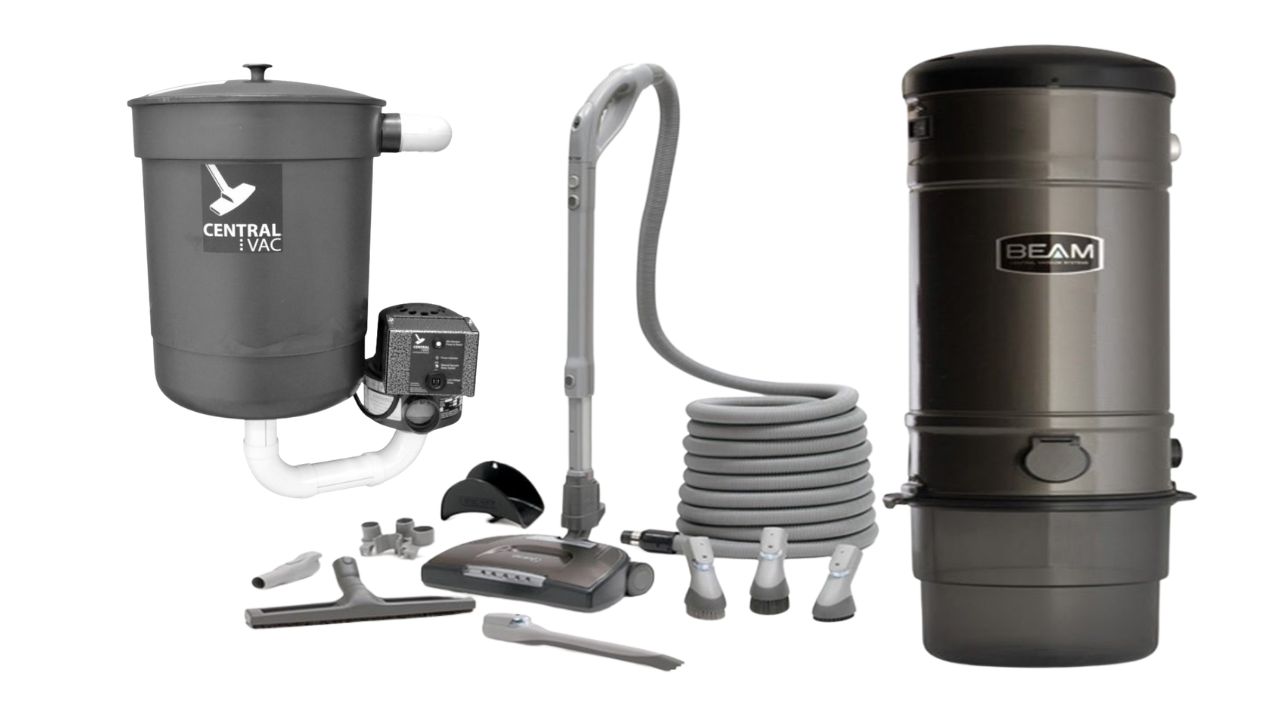
Is the hose really the annoying part everyone warns about?
Yes. The flexible hose is the single moving, tangling, furniture-scuffing part of an otherwise silent system. One owner running a 30-foot hose through a split-level home said the loose end whips into baseboards on every turn. A swivel handle and crush-proof body fix that by letting the hose pivot instead of kink.
The weak link in an otherwise bulletproof system.
How long should the hose be for your home?
Most hoses run 30 to 35 feet, with 50-foot hoses available for rooms far from any inlet.
Leave slack at the wall end, and buy more hose than you think you need. You’ll use it.
Where do you store the hose so it stops kinking?
Hang the hose on a wall bracket near your most-used inlet, not coiled on a closet floor, so it stays untangled. That’s the hallway or family room inlet in most layouts.
Retractable systems like Hide-A-Hose skip that problem: pull the end out and the rest feeds out behind it, then push the slack back in. The tradeoff: a second moving part, with replacement parts harder to find locally.
The three hose types nobody explained to you
A central vacuum hose comes in three types: basic, low-voltage, and electric. Which one you have decides whether a carpet powerhead will ever spin.
What is the difference between basic, low voltage, and electric?
Basic hoses only carry suction. Low-voltage hoses add an on/off switch at the handle. Electric hoses carry full household power to run a motorized brush.
| Hose Type | What It Powers | Best Floor |
|---|---|---|
| Basic | Suction only | Hard floors, quick jobs |
| Low-voltage | Suction plus handle on/off switch | Hard floors, light carpet |
| Electric | Suction plus 110V motorized powerhead | Carpet, deep cleaning |
Standard 2-inch inlets fit Beam, manufactured by Trovac Industries, and most universal hoses. Vacuflo, made by H-P Products, used a proprietary low-voltage connector, so check fit before ordering.
Choosing the right system type before you order a new hose saves you from buying electric when your inlets were only ever wired for low-voltage.
Pigtail or direct connect, and how do you tell?
Pigtail hoses plug a short cord into a nearby outlet. Direct-connect hoses wire straight into the inlet, mostly in new construction. Reach into the inlet; two small metal contacts near the top mean it’s low-voltage capable.
No contacts, no powerhead. Full stop.
Will an electric head even work on your setup?
An outlet near a pigtail cord, or an inlet wired for 110V, decides whether an electric head spins. No power source nearby means a basic hose only.
One owner with carpeted bedrooms but no outlet near the hallway inlet added a pigtail-style electric hose, plugged into a nearby lamp, before the powerhead would spin.
Your first cleaning run start to finish
Running a central vacuum system follows the same order every time: open the inlet, seat the hose, attach the right tool, and clean the whole zone before moving on.
How to use a central vacuum system without the fuss?
Open the inlet door, push the hose end in until it clicks, and the motor starts. The metal collar bridges two low-voltage contacts inside the inlet, firing the power unit. That’s how a central vacuum’s hose and motor circuit work on most systems sold since the 1980s.
Attach the wand and tool, then clean the entire room before moving to the next inlet.
Why does inlet placement decide how far you walk?
Each inlet reaches roughly 600 to 900 square feet, so the inlet you start from sets how far you’ll drag the hose.
Builders space inlets outside bedrooms, near the kitchen, and at the bottom of stairs. Confirm your inlets cover every room by checking how to size a central vacuum for your home.
What about stairs and high corners most people skip?
Carpeted stairs and ceiling corners are easier with a light hose than a heavy upright, since nothing gets carried up the steps. Run the crevice tool along the stair edge and corner trim, and watch the dust lift off.
Match the right tool to each floor type
No single floor brush handles carpet, hardwood, and grout, so the tool you attach matters as much as the suction behind it.
Which head belongs on carpet versus hardwood?
Carpet needs an electrified or air-driven powerhead with a beater brush. Hardwood, tile, and grout need a soft-bristled floor brush instead.
| Tool | Surface | Why It Matters |
|---|---|---|
| Electric or air-driven powerhead | Carpet | Beater brush lifts embedded dirt from deep in the pile |
| Soft-bristled floor brush | Hardwood, tile, grout | Glides without scratching or scattering debris |
| Bare floor brush on carpet | Not recommended | Skims over grit instead of lifting it |
How to use a central vacuum powerhead on carpet: attach it, push slow, and let the beater bar agitate.
Are air driven powerheads worth it over electric?
Air-driven turbine heads spin from suction alone, no wiring needed. A higher air watt rating doesn’t fix a weak air-driven brush; the brush, not the motor, decides how much dirt leaves the carpet.
When do crevice and dusting tools earn their keep?
Crevice tools earn their keep along baseboards, stair edges, and the gap behind a couch cushion. A dusting brush handles blinds and shelves a powerhead would scratch.
The toe kick trick dealers rarely mention
A toe-kick inlet, sold under the VacPan name, lets you sweep kitchen and bathroom debris into a wall slot with your foot.
What is a VacPan and why is it so handy?
VacPan, made by MD Manufacturing, is a toe-kick inlet under a cabinet that activates with a tap of your foot; sweep crumbs toward the slot and suction pulls them in. One owner stopped pulling the hose out after installing one under the sink.
Can you add a toe kick to an older system?
Yes, in most homes. VacPan-style units tie into the existing 2-inch pipe already in the walls.
Measure the toe kick height before ordering, since the unit needs minimum clearance to sit flush, and not every kitchen has it.
Emptying the canister without a dust cloud
Emptying a central vacuum canister takes a few minutes a few times a year, and two habits keep dust off your face.
How often do you actually empty it?
Most bagless canisters only need emptying two to three times a year. The canister holds months of debris, far more than a portable’s bin.
Bag or bagless, which spares you the dust face?
Bagged systems spare you the dust face. Bagless systems cost less over time but kick up a cloud the moment you release the latch.
| Type | Cost Over Time | Mess at Emptying | Best For |
|---|---|---|---|
| Bagless | Lower | More dust released | Budget-focused owners |
| Bagged | Higher, replacement bags | Minimal dust | Allergy or asthma households |
Choose bagged if anyone in the home reacts to airborne dust. Owners sticking with bagless should read maintaining a bagless central vacuum before their first cloud-free dump.
What is the cleanest way to empty it?
Slide a large plastic bag over the lower canister before releasing the latch, so debris falls into the bag instead of the air. Shake the bag loose, seal it, and toss it.
Keep strong suction for twenty plus years
A central vacuum system runs strong for twenty years or more, if the filter gets cleaned on schedule and certain materials never touch an inlet.
How often should you clean or change the filter?
Clean a reusable filter about every three months and replace a standard filter around the six-month mark. A clogged filter is the quiet reason suction fades each season, not a failing motor.
Filters rated as true HEPA, per the EPA’s standard for what qualifies as a true HEPA filter, capture at least 99.97% of particles down to 0.3 microns, which matters for dust or pet allergies. NuTone, manufactured by DrainVac International, ships permanent filters on some models needing only a rinse, but must dry fully before reinstalling or airflow chokes.
Does the pipe network really last decades?
Yes. The 2-inch PVC pipe inside your walls outlives two or three power units. One owner has run the same Beam power unit for 34 years on its original pipe network, replacing the hose twice.
Confirm parts are still in stock before counting on the same lifespan. Some older Beam units stopped getting new filters from certain dealers years ago.
What everyday habits protect your motor?
Keep liquids out, keep large debris out, and keep inlet covers closed between uses. Skip these and the motor pays for it:
- Standing water or any liquid, unless the system has a wet-pickup add-on.
- Drywall dust or construction debris fine enough to pass straight through the filter.
- Fireplace ashes, which stay hot enough to ignite for more than 72 hours after the fire looks out.
- Broken glass, which lodges in the hose and pipe joints instead of traveling through.
DrainVac’s own technicians list the materials that can damage a central vacuum motor, and these four cause nearly every burned-out motor they see. Most power units run a motor built by Ametek/Lamb, so this list applies across Beam, NuTone, and Vacuflo alike.
When suction drops what to check first
Weak suction almost always comes from a clog or a long pipe run, not a dead motor, and three quick checks find the cause.
Where do clogs actually hide in the system?
Clogs lodge most where a branch line meets the main trunk pipe, especially at a poorly angled joint that lets debris fall back instead of moving forward. Unglued joints, common in DIY installs, let you pull the pipe apart by hand and clear it.
Is it the hose, the inlet, or the unit?
Test suction at the power unit first, then the inlets, then the hose, to isolate where airflow drops.
- Hold your hand over the power unit’s main pipe connection to confirm full motor suction.
- Test each wall inlet directly, without the hose, to find a blocked pipe run.
- Test the hose alone against a known-good inlet to rule out a hose clog.
Why does distance from the unit matter?
Suction weakens the farther an inlet sits from the power unit, since every foot of pipe and every elbow bend shaves off airflow. Breathing through a long straw takes more effort than a short one for the same reason; the air still moves, just against more friction.
Conclusion
The wall inlet that once felt like a dead end is now a system you run start to finish: hose seated, right tool attached, dust gone before it floats into the room you’re standing in. Tonight, reach into your inlet and feel for the two low-voltage contacts so you know exactly which hose type your system takes before ordering the wrong one. That beats the guessing that had you wrestling the hose like a snake in the first place. The real payoff over any portable you’ve owned: the motor and the dust both stay in the basement, never in your lungs.
Frequently Asked Questions
How do you turn on a central vacuum system?
You don’t switch it on directly. Pushing the hose into the wall inlet bridges two low-voltage contacts that start the motor, or you open the inlet door on older styles.
Why won’t my central vacuum start when I plug the hose in?
Most likely a connection problem, not a dead motor. Check that the metal collar on the hose end is fully seated against the inlet’s contacts, and confirm the hose isn’t a basic suction-only type.
What attachment do I use for carpet vs. hardwood floors?
Use an electrified or air-driven powerhead with a beater brush on carpet, and a soft-bristled floor brush on hardwood, tile, and grout.
How do I reduce the suction when vacuuming curtains or upholstery?
Slide open the bleed valve, the small relief port near the hose handle, to let in outside air and cut suction. That keeps sheer curtains and lightweight upholstery from getting pulled in.
Can I vacuum liquids, drywall dust, or fireplace ashes with a central vacuum?
No, not with a standard system. Liquids need a wet-pickup add-on, drywall dust is fine enough to pass the filter and damage the motor, and fireplace ashes stay hot enough to ignite for more than 72 hours after they look cold.
How do I use a Hide-A-Hose retractable system?
Pull the end out of the wall inlet like a tape measure and the rest feeds out behind you. Push the slack back through the inlet when done and it retracts on its own.
How often do I empty the canister or change the bag?
About two to three times a year for a bagless canister, since it holds months of debris compared to a portable’s bin. Bagged systems run on roughly the same schedule, just swap a fresh bag instead of dumping the cup.