You searched for canavac dealers, found the same unit at four prices across five sites, and left with no clear answer on which seller backs what you buy. Dealers and frozen retailer pages still quote a 20-year warranty Cana-Vac no longer offers since Trovac Industries took over the brand.
By the end, you’ll know which seller preserves your warranty, what changed under new ownership, and how to read a dealer quote before you pay. This guide draws from current manufacturer documentation, warranty terms, and verified owner reports. Learn what a canavac central vacuum system involves before you buy.
Canavac Dealers
A Cana-Vac central vacuum is only as good as the dealer selling it. Authorized purchase and proper installation determine whether your warranty survives the first repair call. This guide cuts through conflicting warranty terms, price confusion, and the ownership change most dealer pages still haven’t disclosed to buyers.Who Actually Owns CanaVac Now
Most buyers assume Cana-Vac Systems Inc. still runs out of its Ontario roots. It doesn’t. Trovac Industries, Les Industries Trovac Ltée, now designs and manufactures Cana-Vac from a facility in Blainville, Quebec, alongside its Cyclo Vac brand. That one fact reshapes everything from parts sourcing to warranty routing.
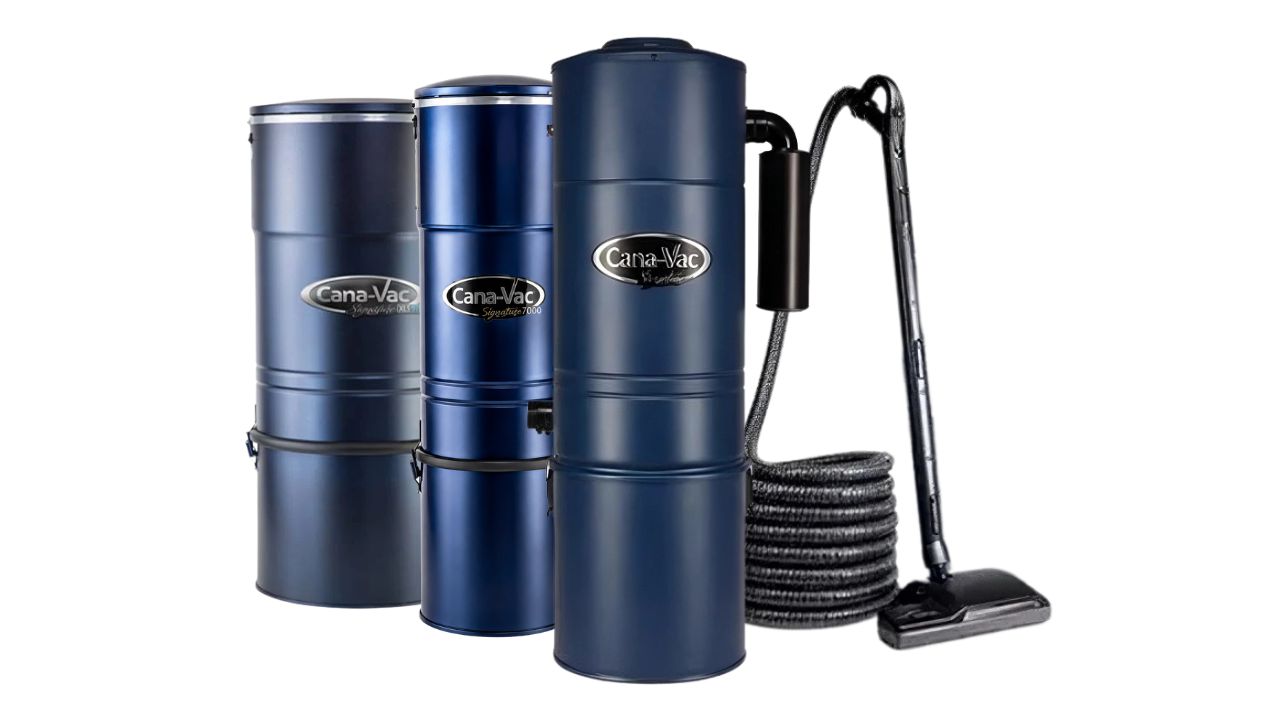
Trovac bought Canavac and moved the factory
Trovac Industries absorbed Cana-Vac and builds the product line from a single Quebec facility shared with Cyclo Vac, MVac, and other brands. The “made in Canada” claim still holds, but the address changed and so did the product roadmap.
Warranty paperwork now routes through Trovac’s service structure, not an Ontario service depot. Get updated contact information in writing before you leave the store, with an address current to Trovac’s Blainville operation rather than a legacy Ontario listing. A Cana-Vac part and a Cyclo Vac part may share a shelf, so confirm your dealer has access to current Trovac parts stock before you commit.
Why the new model names confuse buyers
The old coding system, LS and XLS numbers, is gone. Signature units now carry names like ACAN490A, ACAN590A, ACAN690A, and ACAN790A. Ethos units became ACAN50A, ACAN60A, and ACAN70A. The familiar number you’ve seen quoted in forums doesn’t map directly to a box on a dealer’s shelf anymore.
Dealers selling leftover old stock alongside current units make this worse. You can be quoted two units with similar specs and a $300 price gap, and only one of them is a current model eligible for today’s warranty terms.
Ask your dealer to write the exact ACAN model number on any quote, then cross-reference it on the Cana-Vac owner’s manuals and documentation page before you commit.
What got quietly dropped from the lineup
Forum owners on VacuumLand have confirmed no current Cana-Vac uses the larger 8.4-inch motor that powered the old XLS990-class units. That motor class has no direct replacement in today’s product line.
An XLS990 offered at a discount is leftover stock with no current warranty pathway and no guarantee of replacement motor availability through Trovac. The savings look real until the motor burns out and nobody has parts.
Authorized Dealer Versus Any Online Seller
The price difference between an authorized dealer and an online retailer can look like a few hundred dollars. That gap closes fast once a warranty claim gets rejected.
How do I find authorized CanaVac dealers near me?
Start at Cana-Vac’s official dealer finder and filter by your postal or zip code. An authorized dealer can register your unit with the manufacturer so the warranty activates properly. A marketplace seller, grey-market retailer, or unauthorized online store cannot do that for you.
Once you have two or three names from the dealer finder, call each one and ask specifically whether their authorization is current, not just historical. Dealer authorizations can lapse. Ask to see documentation before you visit.
Proximity matters long after the purchase. The dealer two hours away may offer a better price, but your annual service call and any warranty repair both require you to haul the unit in or pay a travel fee.
The grey market trap that voids coverage
A sealed Cana-Vac box bought from an unauthorized seller arrives with no path to warranty registration. Coverage depends on purchase through an authorized channel, and unauthorized sellers have no mechanism to register the sale with Trovac’s service network.
Think of it like buying a car outside the franchise network. The car is the same hardware, but the manufacturer’s bumper-to-bumper warranty is gone before you turn the key.
Forum threads document this repeatedly. Buyers who saved $200 to $300 upfront end up paying full repair costs in year three because their warranty registration was never completed or was rejected on submission by Trovac.
The Warranty Number That Shrank
This is the part dealer pages won’t tell you. The Cana-Vac warranty shrank after the Trovac era began.
Why old pages still say 20 years
The old XLS line carried up to 20-year warranty marketing. The LS line offered 15 years. Some legacy materials claimed a lifetime warranty on the steel body. Those numbers date to pre-Trovac Cana-Vac and do not reflect current terms.
Today’s Cana-Vac publishes a 10-year Rest Easy Warranty across both the Signature and Ethos lines. That’s the number in current manufacturer documentation. Everything else is a cached page from a retailer that hasn’t updated its copy since 2015.
What today’s coverage really protects
| Series | Motor Type | Current Warranty | Body Covered | Accessories |
|---|---|---|---|---|
| Signature (ACAN490A-790A) | Tangential bypass | 10 years | Yes | Separate terms |
| Ethos (ACAN50A-70A) | Thru-flow | 10 years | Yes | Separate terms |
The 10-year term applies to the power unit body and motor. Accessory kits, hose assemblies, and attachments carry different terms, and those terms are shorter. Confirm the exact scope in writing from your dealer before you finalize the sale.
Registration is not automatic. You complete warranty registration after purchase, and it must be tied to an authorized dealer sale to be accepted by Trovac.
Forum buyers are already confused about this
On RedFlagDeals, a buyer asked whether his new unit carried a 10-year or 20-year warranty and guessed “20 for the new LS690 model?” Nobody had told him the warranty shrank and the model line was renamed.
Your dealer should hand you a printed warranty card on the day of purchase showing the exact term, the coverage scope, and the registration link. Ask for it before you leave, and treat any verbal warranty promise as worthless until it appears on the invoice.
Reading a Dealer Quote Without Getting Upsold
A dealer quote often starts at a unit price and inflates into a “complete installed package” before you can ask what changed. Know what’s in the number before you accept it.
Air watts is the number dealers lean on
Air watts measure sealed suction power calculated from airflow in CFM multiplied by water lift, then divided by 8.5. A unit rated at 600 air watts at the power unit nozzle loses a meaningful portion of that figure over a 60-foot pipe run to a bedroom inlet. Dealers selling on air watts alone give you a number that doesn’t account for your actual installation.
Ask for the CFM airflow rating and the water lift measurement separately. Those two numbers let you calculate real-world performance across your specific pipe layout and catch the gap between what the spec sheet says and what the farthest inlet delivers.
Match inlet count to floors, not total size
A dealer who sizes your system by total square footage is guessing. Suction drops at every 10-foot pipe extension and at every elbow added beyond the manufacturer’s specified maximum. A 2,400-square-foot home laid out across two levels needs different inlet planning than the same square footage on one floor.
Inlets should be placed so no cleaning spot sits beyond a 35-foot hose reach from the nearest valve. The farthest inlet from your power unit is where suction loss shows up first, and it’s the measurement that reveals whether your dealer actually planned the system or just wrote down a number.
Local Install Versus Doing It Yourself
The install decision is where buyers either protect or erode their warranty coverage, depending on how Trovac defines authorized service in your region.
What a dealer install actually buys you
A professional install through an authorized dealer keeps one party accountable from purchase through commissioning. Suction that underperforms at any inlet becomes the dealer’s problem to fix when they ran the pipe and registered the sale.
A common retrofit scenario: a family with an 18-year-old failing power unit hired an authorized Cana-Vac dealer to swap in a new unit onto existing PVC pipe. The dealer confirmed standard 2-inch bore compatibility, replaced two cracked inlet valves, and installed an ACAN690A across four inlets in a 2,200-square-foot home. Consistent suction at the farthest bedroom, one accountable contact for every service call over the next decade.
Bundled installs are common. Ask upfront whether the quote includes labor, fittings, and inlet valves, or whether those are separate line items waiting to surprise you at checkout.
When DIY makes sense and when it does not
Running fresh pipe in an unfinished basement or open-framing new construction is reasonable weekend work. Standard 2-inch central vacuum fittings are compatible with Cana-Vac, Drainvac, CycloVac, OVO, and most North American systems.
Fishing pipe through finished two-story walls with blown-in insulation and fire blocking at every floor joist is not a weekend project. That’s a three-day retrofit minimum for an experienced installer, and every mistake adds suction loss you’ll live with for years.
A self-install can pair with an authorized dealer purchase to preserve warranty coverage, as long as Trovac accepts self-install registrations in your region. Confirm this with your dealer before you commit to running the pipe yourself.
Readers comparing specific power units might find the popular Cana Vac 060115 a useful reference when deciding which unit to bring into a self-install or dealer-install scenario.
Service after the sale is the real test
Year one service calls are rare. Year seven is when the relationship with your dealer matters. One owner on a central vacuum forum passed on a competing brand entirely because no authorized dealer was within 90 minutes of their home, even though the specs were right for their 3,800-square-foot layout.
Pick the dealer you would call in year eight without hesitation. A quick repair through a nearby authorized dealer costs less than shipping a power unit to a Quebec service depot.
Which CanaVac Line Fits Your Home
Cana-Vac’s two current lines use different motor technologies, and the difference matters more than most dealers explain before they write the quote.
Signature bypass versus Ethos flow through
The Signature series uses a tangential bypass motor. Air bypasses the motor housing entirely, which keeps the motor cooler and extends its service life under heavy daily use. The Ethos series uses a thru-flow motor, where exhaust air passes directly over the motor windings. Thru-flow motors run warmer and have shorter operational lifespans in high-use environments.
| Signature | Ethos | |
|---|---|---|
| Motor type | Tangential bypass | Thru-flow |
| Longevity | Longer service life | Shorter service life |
| Best for | Large, carpet-heavy, pet homes, daily use | Smaller homes, hard floors, light use |
| Price tier | Higher upfront | Lower upfront |
Forum owners are nearly unanimous: the bypass motor is worth the extra spend for daily use or homes with pets and carpet. The upfront savings on an Ethos unit disappear when you replace it before the Signature would have needed attention.
Condo, mid home, or large two story
An Ethos unit suits condos and homes under 1,500 square feet with mostly hard floors and weekly cleaning. The Signature line is built for homes above 2,000 square feet, carpet-heavy layouts, and anyone running the system five or more times a week.
One buyer upgrading from an aging LS399 found the performance gap between his old unit and a new Signature ACAN690A was larger than expected. The bypass motor maintained consistent suction across all four inlets without the mid-run drop he’d accepted as normal for over a decade.
For a detailed look at what the legacy XLS models delivered and how current units compare, the Central Vacuum Lab XLS 970 review provides benchmarks worth knowing before you visit a dealer.
The private label units hiding the same guts
Some buyers have reported the Trillium T170 appears to be a rebadged Cana-Vac built on the bypass motor platform. The same hardware sometimes surfaces under a different name at a different retailer, occasionally at a lower price.
Ask your dealer directly whether the unit they’re showing you is manufactured by Trovac Industries. A yes answer means you can compare it to the equivalent ACAN model on spec alone and avoid paying a badge premium.
Questions to Grill Your Dealer With
Five minutes of direct questions at the point of sale saves more money than any promotional code.
Pin down the filtration claim
Cana-Vac Signature marketing states the system captures up to 99.97% of particles at 0.3 microns, which matches the US DOE HEPA standard. That’s a meaningful number for allergy sufferers because the exhaust exits outside the living space rather than recirculating through the room.
Ask specifically whether the filter is certified HEPA or HEPA-style media. Certified means it meets the 99.97% at 0.3-micron threshold under standardized test conditions. HEPA-style means it approximates that performance without independent certification.
Verify the allergy and health claims
The allergy reduction figure that circulates in central vacuum marketing, often cited as a 61% improvement, traces to a peer-reviewed central vacuum allergy study from University of California, Davis School of Medicine researchers. It was a small, 25-patient study measuring rhinoconjunctivitis quality-of-life scores across specific domains, not a headline percentage designed for a sales floor.
The result applied specifically to systems that vent exhaust outdoors. An indoor-venting unit without certified HEPA filtration would not replicate those outcomes. Make your dealer specify whether the unit you’re buying vents outside or uses a HEPA canister to filter exhaust air before it re-enters the room.
Confirm price against real owner reports
Forum buyers have reported pricing around $740 for LS750-class units and near $449 for an Ethos ES725 package in recent retailer posts. Use those as sanity checks before you walk in, not as fixed benchmarks. Local labor markets, install complexity, and accessory packages change the final number.
A quote that lands 40% above those reference points without a clear line-item explanation is worth questioning. An honest dealer can account for every dollar.
Get the new model number in writing
Before you leave the store or confirm an online purchase, the exact ACAN model code should appear on your written quote. Match the serial on the box to the model code before payment. A unit sold as “current” that carries an old LS or XLS model number is discontinued stock, not new inventory.
A dealer who resists writing the model number down is telling you something about what they’re selling.
Conclusion
You came in chasing a price and a warranty number that turned out to be obsolete. You leave knowing the warranty is 10 years, the model codes changed, and the dealer matters more than the badge. Tonight, open the Cana-Vac dealer finder, find your two closest authorized sellers, and email both asking for the exact ACAN model number and written warranty term. Unlike the portable you’ll keep replacing, a properly installed Cana-Vac vents dust outside the home and outlives the next several machines you would have bought instead.
Frequently Asked Questions
Who makes Cana-Vac central vacuums now?
Trovac Industries, Les Industries Trovac Ltée, now manufactures Cana-Vac from Blainville, Quebec. The brand shares a production and service network with Cyclo Vac and other Trovac brands.
Where can I buy a Cana-Vac central vacuum?
Buy through an authorized dealer listed on the Cana-Vac dealer finder. Online retailers can sell the hardware, but only an authorized dealer can register your warranty with Trovac.
Is it better to buy a Cana-Vac from a local dealer or an online retailer?
Buy local from an authorized dealer. The price difference rarely covers the cost of a single unwarranted motor repair, and only an authorized dealer sale supports manufacturer warranty registration.
Does buying a Cana-Vac online or installing it myself void the warranty?
Buying from an unauthorized online seller voids the warranty because there is no path to manufacturer registration. Self-installation may or may not affect coverage depending on Trovac’s current regional policy; confirm this with your dealer before doing the pipe work yourself.
How do I find an authorized Cana-Vac dealer near me?
Use the Cana-Vac dealer finder at canavac.com/dealer-finder, filter by location, and call each result to confirm their authorization is current before you visit.