The door on your Broan central vacuum wall inlet cracked, yellowed, or just stopped triggering the motor, and now every search for a replacement dead-ends on listings marked discontinued. Most owners assume they need a genuine Broan part or nothing at all, a myth retailers rarely correct because branded parts carry higher margins.
You don’t need a Broan-branded inlet in most cases. By the end of this central vacuum outlet guide, you’ll know the two measurements that decide fit, the wiring trap that ruins a swap, and where Broan’s parts pipeline landed after 2023.
Keynote: Broan Central Vacuum Wall Inlet
Nearly every Broan central vacuum wall inlet is a universal design: an opening near 1.5 inches with mounting screws spaced 4 inches apart. Your replacement decision comes down to wiring type and physical fit, not brand loyalty. This guide serves owners with an existing Broan system, not new buyers.

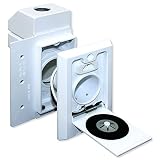
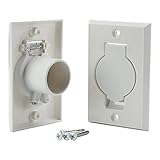
Broan Left Central Vacuums. Your Inlet Didn’t Notice.
Broan exited the central vacuum business, but the pipe network and wall inlet behind your drywall kept working the same day the paperwork closed. The brand changed hands. The physics of your system didn’t.
The Quiet Exit Nobody Announced on the Box
Broan-NuTone discontinued its entire central vacuum line on August 31, 2023, and most owners found out by accident, not by notice. A Home Depot shopper asked in a product review why a NuTone power unit had gone unavailable, and a Broan representative confirmed the shutdown in the replies.
Drainvac International, based in Quebec, acquired the Broan, NuTone, and Venmar vacuum lines that same year. Your wall inlet kept pulling suction through the swap, with no recall and no service interruption.
Who Actually Supports Broan Inlets Now
Drainvac now manufactures current Broan-branded central vacuum units in Mont-Saint-Hilaire, Quebec, and handles the parts and warranty questions Broan used to field directly. Broan-NuTone’s own site now routes vacuum buyers straight to DrainVac’s NuTone parts and product line rather than listing new inventory of its own.
Old Broan stock still circulates through electrical supply houses and big-box retailers, tagged unavailable, discontinued, or certification required. That tag describes the sales channel, not the part’s usefulness.
Why This Ownership Story Changes Your Buying Math
Paying a premium for the Broan name buys no extra support today, since Drainvac runs the parts pipeline regardless of which logo sits on the cover plate. Aftermarket universal inlets now match or beat original-equipment availability, often shipping same week while old Broan stock sits back-ordered.
Stop asking which brand to buy. Start asking which wiring type your system actually uses.
The Measurement Test That Beats Any Brand Label
Two numbers settle almost every Broan inlet replacement before you open a browser tab: the opening diameter and the screw spacing. Grab a tape measure before you grab a credit card.
Which Broan Central Vacuum Wall Inlet Fits Your System Today?
A universal central vacuum inlet has an opening just under 1.5 inches and mounting screws spaced 4 inches apart, fitting a 1-5/8-inch bracket hole. Match those two numbers and nearly any rectangle valve on the market fits your existing bracket and pipe stub, Broan logo or not.
Thirty seconds with a tape measure prevents a mismatched return shipment two weeks later. Before ordering anything, verify Broan model compatibility against your existing bracket dimensions, since a handful of older systems break from the standard.
The Two Contacts Inside the Hole Tell You Everything
Two small metal contact points sit inside the inlet opening, and they carry the 24-volt low-voltage signal that starts the vacuum motor. Central vacuum technicians test a suspect inlet with a bent spoon, touching both contacts at once to bridge the circuit.
Suction firing instantly means the inlet, wiring, and power unit relay all work. No response points to a wiring problem somewhere in that branch, not necessarily a dead inlet. That single test saves a needless parts order more often than any spec sheet.
The Oddballs That Break the Universal Rule
Not every inlet plays by the 1.5-inch rule. VacuFlo, Budd, and select older Sears-branded inlets use nonstandard openings and backplates that reject a standard rectangle valve outright.
Button-activated and copper-strip-activated inlets, common in systems built before the mid-1990s, don’t accept modern rectangle replacements. Older 1.25-inch hose openings need an adapter or a full valve swap rather than a drop-in cover. Broan-NuTone’s own official inlet and rough-in catalog confirms current rough-in dimensions if your bracket predates the standard. Since Broan and NuTone share the same parent company, the NuTone outlet equivalents fit the same bracket pattern and are worth checking too.
Low Voltage or Electrified: Get This Right First
Every Broan inlet falls into one of two wiring categories, and mixing them up is the single most common mis-purchase in this parts category. Check wiring type before opening a product listing.
| Type | Wiring | Hose Type | Who Should Install |
|---|---|---|---|
| Low voltage | 24-volt signal wire only | Standard suction hose | Most homeowners |
| Electrified | Line-voltage 110V circuit | Direct-connect powerhead hose | Electrician recommended |
Spotting an Electrified Inlet Before You Touch Anything
Two small holes spaced about 3/8 inch apart near the main opening signal that 110-volt house wiring is present at that inlet. Never probe those holes with anything metal. They power an electric hose and powerhead directly, unlike a low-voltage inlet, which carries only a harmless 24-volt trigger signal through its two contact points.
Super Valve and Electra Valve Are Not Interchangeable
Broan systems historically used the ElectraValve, a cover that holds a molded plug wired into 110-volt Romex behind the wall. The CI358W SuperValve specification sheet describes a different design entirely: a UL-listed assembly with a permanent 110-volt pigtail connection built for the CH615 electrified hose, rated for a 1-year warranty.
Buy the wrong style and you’re left holding a part that physically can’t connect to your existing wiring. An installer who’s swapped both puts it simply: one has a plug you snap in, the other has wires you splice.
The CI390 to CI399 Trap Inside Broan’s Own Catalog
Original CI390 ElectraValve inlets don’t fit the newer CI399 rough-in kit, a mismatch Broan created across its own product generations. Broan sold a separate E-box connector to bridge the two.
Mixing generations without that adapter means cutting factory plugs and splicing wire at the valve, work that pushes past casual DIY into electrician territory.
Decoding the Broan Part Numbers Still Floating Around
Broan’s model numbers look interchangeable at a glance, and that’s exactly where owners overspend or order the wrong part.
| Model | Function | Status | Modern Substitute |
|---|---|---|---|
| 330W | Snap-back cover only, low voltage | Discontinued, some stock remains | Universal rectangle cover |
| 360W | Complete automatic low-voltage inlet | Discontinued, thinning stock | Universal rectangle valve |
| CI358W (SuperValve) | Electrified inlet, UL listed | Available through Drainvac | Direct SuperValve equivalent |
| CI399 | Rough-in kit, newer generation | Available | E-box adapter for older CI390 |
What 360W and 330W Actually Were
The 360W is a complete automatic low-voltage inlet valve measuring 3.75 inches wide by 3 inches tall, sold to work with a 361 or 361F mounting bracket. The 330W, by contrast, is just the snap-back cover plate, measuring 3.5 by 5.125 inches, meant to pair with the CF329 metal mounting plate and CI3301RK or CI3303RK rough-in kits rather than function as a standalone unit.
Home Depot listed the 360W near $16 before stock dried up. Owners buying it today usually mean they need swapping out an old inlet for a universal equivalent, since the exact 360W is increasingly hard to source new.
Reading a Discontinued Listing Without Getting Burned
Retailer listings marked unavailable or certification required describe supply status, not a dead end for your repair. Discontinued doesn’t mean irreplaceable, it means the fix is a universal equivalent rather than a factory reorder. Aftermarket compatible valves start near $13 and typically ship the same week.
Swapping the Inlet Without Opening a Wall
Replacing a central vacuum wall inlet is closer to swapping a light switch cover than any wall-opening repair. The pipe stub and mounting bracket already exist behind the drywall.
The Fifteen Minute Job Most Homeowners Can Do
Cut power at the breaker first if any inlet in the loop is electrified, since line voltage runs through those wires even when the vacuum is off. Two screws release the old cover from the bracket, and the low-voltage wires attach to terminals on the back of the new valve with simple screw clamps.
- Kill breaker power if the system includes any electrified inlet.
- Remove the two mounting screws and pull the old cover free.
- Transfer or reconnect the low-voltage wires to the new valve’s back terminals.
- Seat the new valve into the existing mounting bracket and pipe stub.
- Restore power and test with the spoon method before closing up.
The new valve seats directly into the bracket and pipe stub already in the wall. No drywall work, no new wiring run, no dealer visit.
The Air Leak Fix Installers Keep in Their Pocket
A loose replacement neck bleeds suction every time another inlet runs, quietly stealing performance system-wide even though the new valve tests fine on its own. Installers wrap the neck with a layer of electrical tape to form a tight field gasket against the pipe stub, a five-minute fix.
One leaking inlet doesn’t just weaken its own room. It steals cleaning power from the inlet at the far end of the house too.
When to Stop and Call Someone
Hand electrified valve wiring to an electrician unless Romex splicing is already familiar work, since these circuits carry full house voltage. Buried wire breaks inside finished walls need a wire-tracing tool, not guesswork with a screwdriver, and chasing a bad run through blown-in insulation is where DIY savings evaporate fast.
The Inlet Looks Fine but Nothing Turns On
A wall inlet that looks perfect gets replaced constantly for failures that live somewhere else in the system entirely. Test before you buy.
Prove It’s the Wiring, Not the Valve
Touch the two low-voltage wires together directly at the power unit to isolate the fault before ordering any part. The motor firing means the unit and relay are fine, and the problem lives in the inlet loop instead. No response points to a failed relay or control board, not your wall inlet.
The Hose Twist Trick Forum Owners Swear By
A metal contact band on the hose end has to bridge both contacts inside the inlet opening to complete the circuit and start the motor. One longtime forum owner fired a “dead” system back to life just by rotating the hose slightly, seating the band against contacts that dirt and corrosion had dulled.
Twisting the hose and getting a response means the fix is cleaning contacts, not buying parts. Try it before spending a dime.
One Dead Inlet Versus a Dead System
| Symptom Pattern | Likely Culprit | Typical Cost to Fix |
|---|---|---|
| Every inlet dead | Wiring at power unit or failed relay | $30 to $150 |
| One inlet dead, others work | Loose terminal or break in that branch | Under $20 |
| Intermittent at one inlet | Corroded contacts, dirty hose band | Free to $13 |
Pests, drywall screws driven during renovations, and simple age are the usual wire killers behind a dead branch. A single dead inlet almost never means the whole system needs attention.
What This Purchase Actually Costs in 2026
The real spread runs from a $13 universal cover to a full electrified kit north of $80, and knowing which one you need before shopping keeps the repair proportional to the problem.
The Price Gap Between Branded and Compatible
Compatible low-voltage valves run about $13 from aftermarket suppliers, while surviving Broan-branded stock often costs more and ships slower from a shrinking pool of distributors. The plastic, the contacts, and the fit are equivalent. The logo is the only real difference.
Where the Buying Channels Actually Stand
Big-box inventory is thinning fast, with listings sitting unavailable for months rather than restocking. Central vacuum specialty retailers carry deep universal inventory year-round, and Drainvac’s dealer network handles anything that genuinely requires a Broan-specific part.
Buy Two While You’re At It
Inlet doors and their springs fail from the same years of daily use that killed the first one, usually within a season or two of each other. A thirteen-dollar spare in the junk drawer beats a rush order the next time a door snaps off.
Conclusion
You arrived hunting a discontinued brand part. You’re leaving knowing the fit was universal the whole time, with wiring type as the only decision that actually matters.
Tonight, grab a tape measure and a spoon. Confirm the 1.5-inch opening, check the 4-inch screw spacing, and short the contacts to test the circuit before ordering anything. A $13 valve keeps a 20-year pipe network earning its keep, a repair economy no portable vacuum has ever offered anyone.
Frequently Asked Questions
How do I know which Broan wall inlet model my system uses?
Measure the opening and count the connection holes before assuming a model number. A 1.5-inch opening with two low-voltage contacts means a standard inlet like the 330W or 360W, while two small holes 3/8 inch apart mean an electrified model like the CI358W.
Are Broan central vacuum parts still available now that the line is discontinued?
Yes, through Drainvac International, which acquired the Broan, NuTone, and Venmar vacuum lines in 2023. Universal aftermarket inlets also cover nearly every standard replacement need without waiting on Broan-specific stock.
What’s the difference between a low-voltage inlet and an electrified SuperValve inlet?
A low-voltage inlet carries a harmless 24-volt trigger signal for a standard suction hose, while an electrified SuperValve carries full 110-volt house current for a direct-connect powerhead hose. Check for the two small 3/8-inch holes before buying either type.
Will a universal central vacuum inlet fit my Broan system?
Yes, in the vast majority of installations, since most Broan inlets use the industry-standard 1.5-inch opening and 4-inch screw spacing. VacuFlo, Budd, and some older Sears-branded systems are the main exceptions worth checking first.
Do I need an electrician to replace an electrified Broan inlet?
Hire an electrician unless Romex wiring and breaker work are already familiar territory, since electrified inlets carry live 110-volt current. Low-voltage inlet swaps are a safe fifteen-minute DIY job for most homeowners.