A central vacuum system on sale is priced by most homeowners on the discount badge, not the machine behind the wall. You see “40% off, ends Friday,” and your finger hovers over the buy button before you’ve checked a single spec.
That countdown hides the one number that decides if the deal holds up: air watts, motor type, and what the unit costs to own for twenty years. Replacing a failing system instead of buying your first one? Our full central vacuum replacement guide covers that separately. Read on for the specs worth demanding and the claims worth skipping.
Central Vacuum System on Sale
A central vacuum system on sale is a built-in power unit, inlets, and hose priced below list. The discount counts only if the motor, air watts, and warranty survive it too. First-time buyers use this to spot a renamed price; replacement shoppers use it to avoid repeating their last failure.What a Central Vacuum Sale Actually Rewards
A central vacuum sale rewards patience, not speed. A built-in system pulls dirt through wall inlets to a power unit in the garage or basement instead of you dragging a canister room to room, and how central vacuum systems work and where they fit explains why that power unit’s motor matters more than anything printed on a banner.
Why the Timer Always Seems to Reset Friday
That countdown resets because most “sale ends Friday” timers are marketing software, not real inventory deadlines. Here’s the thing about urgency banners: they work because they stop you from comparing.
- Many dealer “sale ends” dates quietly roll forward every week and never actually expire.
- That ticking clock exists to stop you from comparing motors and specs side by side.
- Bookmark the price, walk away, and check back in a few days. Nothing changes.
A 30 Percent Discount on the Wrong Unit
A 30 percent discount on a weak motor still costs more than full price on a good one. And that’s the trap a flashy percentage hides.
- A cheap single-stage motor marked down still wears out years before a two-stage bypass motor at full price.
- Discount math hides whether you’re saving on quality or just buying junk sooner.
- Compare the sale price against the same model’s normal price at two or three other sellers before you decide.
Is a Central Vacuum System on Sale Ever a Real Bargain?
Yes. A central vacuum system on sale is a real bargain when the identical motor and air watt rating sell for more everywhere else you check.
- Yes, when the identical motor sells higher elsewhere with no markdown attached.
- No, when “sale” only clears a model the manufacturer already dropped.
- A real bargain survives a side-by-side spec check. A fake one only survives the countdown.
So how do you actually run that spec check instead of trusting the banner? That’s next.
Read the Spec Sheet Before the Price Tag
Reading the spec sheet before the price tag means checking air watts, water lift, and CFM before you compare any discount at all. These three numbers, not the sticker, tell you what the unit will actually do.
The Two Numbers That Beat Any Sticker Price
Air watts and water lift beat any sticker price because they measure suction at the hose end, not marketing copy. Air watts are a measure of sealed suction power calculated at the hose end under load. Water lift is the pull, measured in inches, that drags embedded grit out of carpet pile.
- Air watts equal CFM multiplied by water lift, divided by 8.5, the formula behind ASTM F558, the test standard for vacuum air performance.
- Water lift is the number that does the actual work of pulling dirt out of low-pile carpet at the inlet.
- A unit with strong water lift but modest CFM outcleans a unit with flashy CFM and weak water lift.
Why Marketing Wattage Is the Number to Ignore
Marketing wattage is the number to ignore because it measures electricity burned, not dirt actually lifted off the floor. Input watts are like rating a car by how much gas it burns instead of how fast it goes.
- Input watts measure power draw at the wall, not suction performance at the hose.
- Some 12-amp motors burn more electricity while moving less air than a smaller, better-engineered two-stage motor.
- Sellers lead with big watt numbers because they sound powerful and cost nothing extra to print on a label.
The Spec Built In Vacuums Quote and Portables Do Not
Built-in systems get tested under ASTM F820, the standard written specifically for central vacuum air performance, a method portable vacuum ratings never use. That distinction is why a portable’s spec sheet and a central vac’s spec sheet aren’t comparable side by side.
| Motor stage | Typical air watts | Typical water lift | Typical CFM |
|---|---|---|---|
| Single-stage flow-through | 300 to 450 | 80 to 100 inches | 100 to 130 |
| Two-stage tangential bypass | 500 to 700 | 100 to 130 inches | 130 to 160 |
| Dual-motor | Not additive across motors | Varies by duct design | Varies by duct design |
Independent buyer’s-guide testing built on Ametek/Lamb engineering data found water lift, not raw airflow, drove end-of-hose performance, and a dual-motor system tuned for airflow alone turned in the worst end-of-hose results of the group tested. That’s the opposite of what a “bigger number wins” sale banner wants you to assume.
Got the spec sheet open? Good. Now let’s talk about the part that actually wears out.
The Motor Decides If the Deal Lasts
The motor decides if a sale lasts because flow-through and bypass designs age at completely different rates under the same daily workload. Everything else on the spec sheet is secondary to this one design choice.
Flow Through Motors and the Short Life Problem
Flow-through motors pull dirty air straight across the motor windings, and that’s the short-life problem behind plenty of bargain units. Owners on VacuumLand describe single-stage central vac motors losing meaningful suction within five years of regular use, the same flow-through design that shows up under several rebadged bargain brands today.
- Flow-through, also called tangential or single-stage, motors run dust-laden air across the windings every time you vacuum.
- They cost less upfront and wear out noticeably faster, frequently inside five years of regular use.
- A low sale price on this motor type means a full power unit swap long before the pipe network it’s attached to needs anything at all.
Why a Bypass Motor Is Worth Paying More
A bypass motor is worth paying more because it routes cooling air around the windings instead of through them, so debris never touches the motor itself.
- Two-stage tangential bypass motors separate the cooling air path from the dirty air path entirely.
- That separation lets the motor run for years longer under the same daily use.
- On a sale, a bypass unit beats a cheaper flow-through model nearly every time, even at a higher sticker price.
The Cheap Motor That Forums Warn You About
VacuumLand forum owners single out the Ametek Advantek single-stage motor as having a notably short service life inside central vacuums. Forum threads describing cheaply built units with this motor note that companies cut cost wherever they can and sell the result for as much as the market will bear.
- Owners report this single-stage flow-through motor wearing out faster than two-stage bypass alternatives.
- A bargain unit built around it needs a full motor swap within a couple of seasons of daily use.
- That kind of real owner report, not a glossy dealer page, is where this warning actually lives.
Same Motor, New Badge, Lower Price
The same Ametek or Lamb motor line shows up under dozens of central vacuum brand names, which means the badge on the shroud rarely tells you what’s actually inside.
How Identical Units Hide Under Different Brand Names
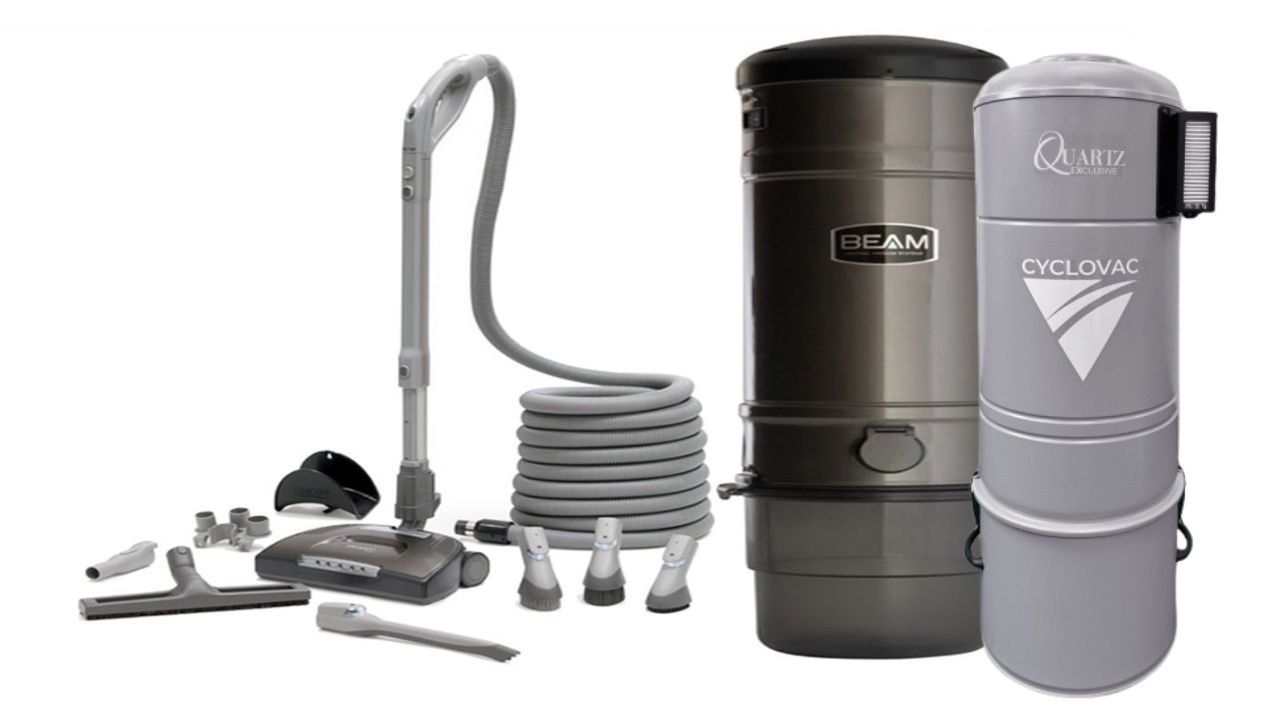
Identical power units hide under different brand names because most manufacturers buy the same Ametek or Lamb motor and wrap it in their own shroud. The OVO 700, for example, runs on a 5.7-inch, two-stage Ametek/Lamb motor, the same motor family used across a large share of the industry.
It isn’t only the motor that gets shared. Beam, now under Trovac Industries after its 2024 acquisition of the central vacuum brands previously owned by Nuera Air, sits in the same parent company as DuoVac and Hayden, which joined Trovac back in 2017. Three names on three different store shelves, one owner behind all of them.
- A single Ametek/Lamb motor line powers products across many competing brands at once.
- Two units that look nothing alike sometimes share the exact same motor under different plastic.
- Paying extra for a brand name instead of checking the motor maker and stage count is the common trap here.
When the Budget Brand Is the Smart Buy
A budget brand is the smart buy when it carries the same motor as a premium name at close to half the price. Check the motor manufacturer and stage count on the spec sheet before you chase a logo, never the other way around.
- A lesser-known label sometimes carries a premium two-stage motor for roughly half what a flagship brand charges for the same internals.
- Sometimes the honest deal is the brand no dealer bothers to push on you.
- The motor model number printed in a listing’s photos tells you more than the brand name in the title ever will.
Marketplace listings such as central vacuum deals on Amazon are a common place to find these rebadged budget units, so check that motor model number in the photos before you commit to a cart.
When a unit’s badge changes but the motor doesn’t, what should actually worry you? A price that’s too good for the wrong reason.
When a Clearance Price Is Really a Warning
A clearance price is really a warning when it means the manufacturer already discontinued the entire model, not that the price simply fell for the week.
The Discontinued Unit Dressed Up as a Deal
The NuTone PurePower PP600, rated at 600 air watts on a single-stage motor, is a real example of a discontinued unit still showing up dressed as a deal. NuTone, now managed by DrainVac International after Broan-NuTone exited the central vacuum category in 2023, lists the PP600 as discontinued, with the PP6501 named as its official replacement.
- The PP600’s 600 air watt rating still shows up in old listings marked down as a clearance sale.
- A steep markdown like this signals the maker already dropped the whole model, not that the price suddenly fell.
- Buying clearance here leaves you stranded the day a single part fails, since the manufacturer’s own part numbers now point to the PP6501 instead.
How to Check Parts Before You Buy Clearance
Checking parts before you buy clearance takes about two minutes and saves years of regret. Do this before the cart, not after the unit arrives.
- Search the exact model number first for available bags, filters, and motor replacement parts.
- Confirm the warranty still applies to a discontinued, marked-down power unit, since coverage follows the unit’s production date, not the storefront.
- The in-wall pipe network outlasts any single power unit, so plan on swapping power units on that same pipe more than once over twenty years.
The Refurbished Option Owners Actually Recommend
Forum owners actually recommend a refurbished power unit around $400 instead of a discounted clearance model with no parts support behind it. A rebuilt two-stage bypass motor in a refurbished unit outlasts a brand-new flow-through bargain machine bought at the same price.
- Local vacuum shops regularly sell trade-in units for less than a “discounted” new clearance listing.
- New replacement motors alone run $100 to $300, plus another $100 or so for brushes and a filter.
- That combination puts a full motor rebuild close to that same $400 mark, with a better motor than most clearance units offer new.
The Cost the Sale Price Never Shows
The sale price never shows installation, accessories, bags or filters, and electricity over time, and those add up to more than the power unit itself across twenty years. Independent energy-use guidance for home appliances is worth a look before you assume a central vacuum costs nothing extra to run.
Installation and the Inlet Count Nobody Mentions
Inlet count, not total square footage, decides what installation actually costs, and no sale banner mentions it. Match inlet valves to each floor’s layout, not one number for the whole house.
- Match inlet valves to each floor’s square footage individually, not a single whole-home total.
- An inlet far from the power unit loses real suction along the pipe run, elbow by elbow.
- New construction rough-in runs roughly $400 to $800; a full retrofit in an existing home runs $1,200 to $2,500 or more, depending on inlet count and layout.
Bags, Filters, and the Bagless Dust Surprise
Bagless units release a visible cloud of fine dust every time you empty the canister, and that’s the surprise no sale listing warns you about. The EPA’s definition of a true HEPA filter requires capturing at least 99.97 percent of particles at 0.3 microns, the hardest particle size to trap, a bar plenty of “HEPA-style” bagless filters never actually clear.
| Bagged (true HEPA) | Bagless (cyclonic) | |
|---|---|---|
| Filtration | Seals debris inside a disposable bag; true HEPA traps 99.97% at 0.3 microns | Spins debris out by cyclone; exhaust filtration varies widely by model |
| Yearly cost | Roughly $15 to $30 in replacement bags | No bag cost; occasional washable filter swap |
| Dust at emptying | Sealed bag, minimal exposure | Visible dust cloud released into the room |
- Bagless units throw a cloud of fine dust into the room every time you empty them.
- A true HEPA bag traps at least 99.97 percent of particles at the toughest test size the EPA uses.
- The ongoing bag cost is small next to the filtration difference for anyone with allergies or asthma at home.
Why the Cheapest Package Can Cost the Most
The cheapest package costs the most when a short hose or a weak power head undercuts whatever you saved on the power unit itself.
- A 30-foot hose instead of a 50-foot one means dragging an extension or losing reach in back bedrooms.
- A weak air-driven power head struggles on high-pile carpet where an electric power head would not.
- Price the full kit, hose, wand, and power head together, then compare that total against the real street price elsewhere.
Lock In a Deal You Will Not Regret
Locking in a deal you will not regret means checking five things before you click buy, not just the percentage off the sticker.
The Simple Checklist Before You Click Buy
A five-point checklist before you click buy separates a real deal from a regret you’ll live with for twenty years.
- Confirm motor type, air watt rating, water lift, and warranty length together, not just one number.
- Verify the model is current and that replacement parts are still easy to find.
- Price the full kit, hose, wand, and power head, then compare it against the real street price at two or three sellers.
- Check the brand’s current ownership so you know who actually backs the warranty.
- Confirm the inlet count and pipe run fit your home’s layout, not a generic square footage chart.
Checking sale pricing at Lowe’s is one of the easier ways to run this checklist on the spot, since the listing and the spec sheet sit on the same page.
When Central Vacuum Prices Actually Drop
Central vacuum prices actually drop at predictable points, model-year turnover and major holiday sales events, not on some random Tuesday banner.
- New model years push the previous season’s stock toward genuinely honest discounts.
- Major holiday sales events bring real markdowns, not just renamed everyday pricing.
- Compare across two or three sellers before you trust a single banner’s claimed percentage off.
Home Depot’s built-in vacuum deals are worth cross-checking against whatever banner you’re staring at right now, since the same model regularly carries a different number depending on the week.
Maintenance That Protects a Twenty Year Purchase
Regular bag and filter changes are what actually protect a twenty-year central vacuum purchase, not the sale price you paid for it.
- Change the bag twice a year to keep suction steady instead of letting it choke off slowly.
- Clean or swap filters on schedule so airflow never quietly drops without you noticing.
- A maintained bypass motor serves two decades or more. Owners report units from the 1990s still running on their original motor with nothing but routine brush and filter care.
Conclusion
You opened this guide chasing a discount percentage on a central vacuum system on sale. You’re closing it knowing that percentage tells you nothing on its own, and that motor type, air watts, water lift, and warranty length are what actually decide if the deal holds up. Tonight, pull up that listing and write down the motor type, the air watt rating, and the warranty length before you sleep on it. A central vacuum bought right disappears into your walls and quietly outworks every heavy canister you’ve ever dragged up a flight of stairs.
Frequently Asked Questions
How much does a complete central vacuum system cost?
A complete central vacuum system, power unit, pipe, inlets, and accessories, runs $800 to $3,500 installed, with most homeowners landing between $1,100 and $2,200. New construction rough-in alone runs $400 to $800, while a full retrofit in a finished home runs $1,200 to $2,500 or more depending on inlet count.
Is a central vacuum system worth the money?
Yes, for most homes over roughly 1,500 square feet with more than one level, where lower long-term maintenance and sealed outdoor exhaust outweigh the upfront cost. It’s a weaker case for a small single-level apartment, where a quality cordless matches the convenience for a fraction of the price.
What air watts do I need for my house size?
Match air watts to total pipe-run length and elbow count, not square footage alone; a 500 to 700 air watt two-stage unit covers most homes under 3,000 square feet on a single power unit. Larger homes with longer runs need a higher rating or a dual-motor setup, since suction drops with every added pipe length and elbow beyond the manufacturer’s stated maximum.
Is a cheaper central vacuum motor as good as an expensive one?
No, not when the cheaper motor is a single-stage flow-through design instead of a two-stage tangential bypass. The bypass design routes cooling air around the windings instead of through them, which is the difference owners report between a motor that lasts five years and one that lasts twenty.
Are central vacuum systems on Amazon and eBay the same quality as dealer units?
Yes, when the listing names the actual motor manufacturer and stage count, since that same Ametek or Lamb motor regularly ships under a pricier dealer badge too. Skip listings that hide the motor brand entirely or offer no return window, since that’s where the real quality gap shows up.