The simplicity central vac search leads to parts pages, dealer quote forms, and competitors before you find a single verified spec. Every listing shows an air watt number with no disclosure of motor stage count, motor architecture, or whether the figure came from a sealed lab test.
This guide maps the full Simplicity lineup against objective performance data, explains what hybrid filtration does in daily use, and tells you exactly what the limited lifetime warranty covers and when it stops.
Keynote: Simplicity Central Vac
Simplicity’s central vacuum power units run on the Trovac Industries manufacturing platform, the same Canadian company behind the Cyclovac brand since 1976. That shared engineering heritage means every SCU and SPU unit carries a motor architecture and suction track record built across six decades of central vacuum manufacturing.
The Honest Starting Point on Simplicity Central Vacs
What you’re actually looking at when you search “simplicity central vac”
Search results for simplicity central vac return parts pages, dealer quote forms, and competitor listings far more often than honest spec comparisons. The ratings and claims in this guide draw from Simplicity’s own specification pages, authorized dealer documentation, and CVAC-certified installer feedback, stated plainly.
Simplicity’s central vacuum line is a distinct product category inside Tacony Corporation, completely separate from the upright and canister vacuums the brand sells through retail channels. For a broader orientation on the central vacuum brand landscape, Simplicity occupies a specific niche: genuine Trovac-built performance credentials and almost no third-party evaluation outside dealer websites.
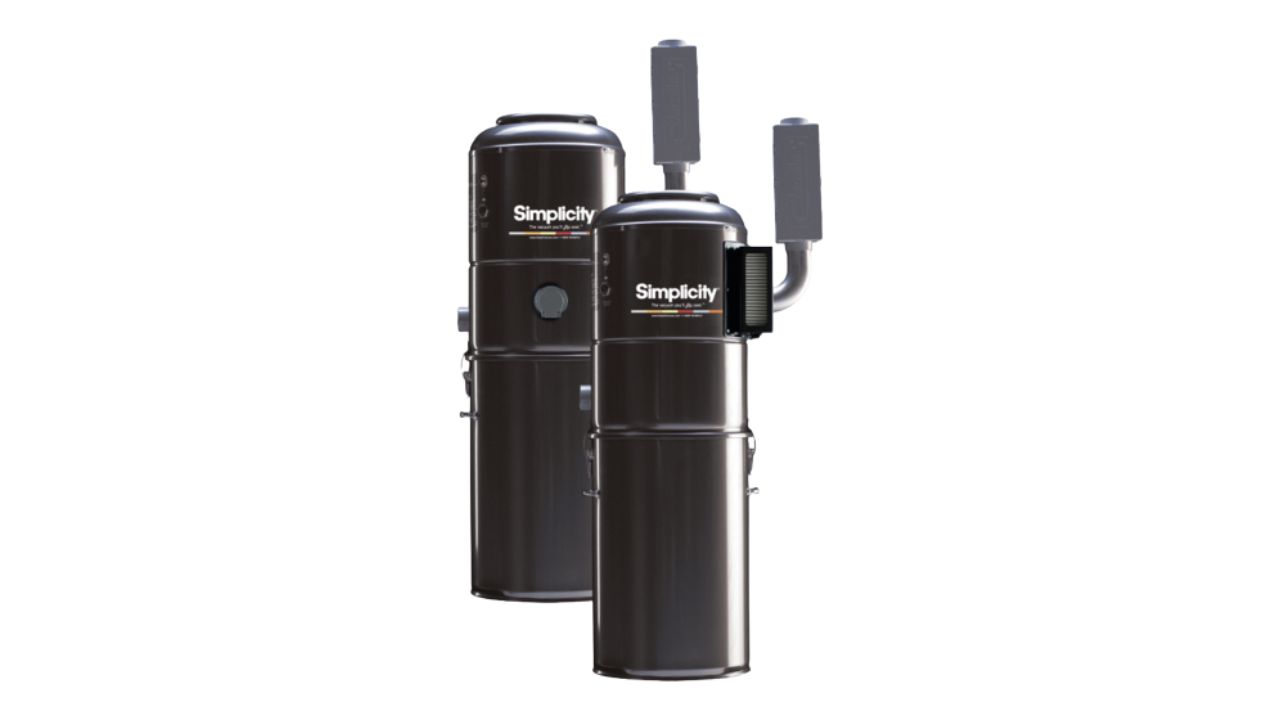
Who actually makes these machines, and why it matters
Simplicity’s central vacuum power units come from Les Industries Trovac Ltée (Trovac Industries), a Canadian manufacturer founded in 1960 that launched the Cyclovac brand in 1976. Trovac supplies motor platforms to multiple North American brands, and that supply relationship is the most critical context any buyer should understand before comparing specs.
When your SCU-H7 delivers 655 air watts and 157 inches of water lift, you’re measuring a Trovac-engineered motor. The upright vacuums share the Simplicity name and nothing else at the component level.
Vacuum professionals across Canada rate Cyclovac as a top-tier manufacturer. A Simplicity central vac buys into that same foundation without the Cyclovac dealer markup.
Why Tacony’s dealer-only model creates a real information gap
Simplicity’s central vacuum units sell only through independent authorized vacuum retailers. No Amazon listings, no Costco bundles, no online auctions. Per Simplicity’s own warranty policy effective April 2021, any unit purchased through an online auction platform carries zero warranty coverage.
Because authorized dealers rarely write objective comparisons of the systems they sell, useful third-party evaluation is nearly impossible to find. The brand’s performance credentials are real; the dealer-only model just doesn’t support the review ecosystem that would surface them.
The Simplicity Central Vac Lineup Decoded
The SCU-H series — what hybrid actually means here
“Hybrid” in Simplicity’s SCU-H naming means the unit runs with a bagged HEPA media bag or as a pure bagless canister. You choose based on filtration need. The machine doesn’t lock you into one approach.
| Model | Coverage | Motor Stages | CFM | Water Lift | Air Watts |
|---|---|---|---|---|---|
| SCU-H3 | Up to 5,000 sq ft | Single-stage | 117 | 120 in. | 600 AW |
| SCU-H7 | Up to 8,000 sq ft | 3-stage | 112 | 157 in. | 655 AW |
The SCU-H7 versus SCU-H3 decision comes down to motor stages and your home’s longest pipe run. A 3-stage motor distributes workload across three fan sets, reducing thermal stress per stage during extended cleaning sessions. That’s a longevity upgrade as much as a suction spec.
Both models include SilentRun technology; the SCU-H7 adds a muffler on top of it. Full technical specifications are in the Simplicity central vacuum power units owner’s manual if you want to verify before committing to a model.
The SPU premium tier — where Simplicity goes above 8,000 square feet
The SPU series targets homes above 8,000 square feet and extended-run cleaning loads. Bag requirements split across the tier, which directly affects annual maintenance costs.
The SPU-B10, SPU-BF10, and SPU-BF100 require the heavy-duty SCB-HD3 bag, a larger high-flow bag built for extended runs under heavier debris loads. The SPU-BF40, SPU-BF60, and SPU-B20 use the standard SCB-3 HEPA media bag shared with the SCU-H series.
A dealer quoting you the SCU-H3 for a 4,200 sq ft two-story home deserves pushback. Size to the longest pipe run, not total square footage. A first-floor and second-floor inlet sharing a trunk line create compound suction loss that square footage math doesn’t capture.
The Limited Lifetime Warranty — what it covers and what it does not
Per Simplicity central vacuum warranty terms and coverage, the warranty extends only to the original consumer purchaser from an authorized retailer. The moment the home sells, coverage lapses. A buyer who discovers a Simplicity central vac in a newly purchased home carries no warranty protection regardless of the unit’s age.
Wear parts sit outside coverage from day one: HEPA bags, foam filters, belts, and brush strips are the buyer’s expense throughout ownership. Warranty service requires an authorized Simplicity center within reach, so confirm geographic availability before you buy.
The Filtration Question No Dealer Will Answer Clearly
What “HEPA media bag” means versus true HEPA certification
Simplicity’s SCB-3 bags carry “HEPA media” language, meaning the bag material meets HEPA-grade filtration media standards. HEPA media and HEPA certification are two different claims, and that gap matters for households with diagnosed allergies or asthma.
True HEPA certification requires filtration of 99.97% of particles at 0.3 microns under test conditions. Confirm with your dealer whether the SCB-3 meets that threshold under actual testing or approximates it through material specification.
Use a verified HEPA filtration system if anyone in the home carries a diagnosed respiratory condition. Don’t rely on “HEPA-style” or “HEPA media” language without a certification number on the packaging. For what independently certified HEPA documentation looks like in a competing lineup, Miele systems and key specs are a useful benchmark.
Bagged vs hybrid — the real maintenance cost difference
The hybrid SCU-H design gives you a genuine operational choice, and the cost difference between modes compounds over years of use.
| Mode | Filtration Level | Bag Cost | Emptying Frequency | Mess Risk |
|---|---|---|---|---|
| Bagged (HEPA bag) | HEPA media grade | Ongoing bag cost | Per bag (varies by use) | Low, sealed disposal |
| Bagless (canister only) | Foam/screen filter | Filter cleaning only | Every 2-4 weeks | Moderate, dust cloud risk |
| Hybrid (bag or bagless) | Switchable | Your choice per season | Your choice | Low when bagged |
A bag overfilled past 2/3 capacity restricts airflow before any visual warning appears, forcing the motor to pull harder against increasing resistance. Most owners change bags too late.
What happens when you use aftermarket bags in a Simplicity central vac
Simplicity and Riccar, both Tacony Corporation brands sharing bags, parts, and service infrastructure, use filtration architectures where a wrong-fit bag breaks the sealed system and sends fine dust directly to the motor. Getting the bag specification right protects both filtration performance and motor longevity.
Oregon City Vacuum confirmed that SCB-series bags appear under alternate brand names including Cyclovac, Mvac, and Power Star. Those sources may carry compatible bags, but verify the 26-inch bag length before installing any non-Simplicity-branded option.
Using non-genuine bags puts the warranty’s filtration-performance coverage at risk. Motor damage from a mid-run bag seal failure costs more than any aftermarket savings.
Suction That Holds Up — How Far Your Simplicity Can Actually Reach
Air watts vs water lift — why Simplicity’s numbers tell two different stories
Air watts measure the rate at which a system moves air at the cleaning head under load. Water lift (inches of water, or IOW) measures how hard the motor pulls against a sealed restriction, showing its ability to maintain suction through partial blockages or a nearly full bag. Both appear on Simplicity’s spec sheets, and they describe different performance strengths.
Think of water lift as grip strength and air watts as the speed and volume of the pull. The SCU-H7’s 157-inch water lift at 112 CFM handles fine debris and near-full bags better than a high-CFM, low-lift setup. That trade-off points directly at allergen-sensitive households where the bag fills with fine particles and partial flow restriction is constant.
How pipe run length kills suction and what to do about it
Every 10-foot section of 2-inch PVC between the power unit and an inlet costs measurable suction. Every 90-degree elbow compounds that loss. Debris buildup in pipes alone reduces suction by up to 6% over time in an unmaintained system.
A two-story, 2,400 sq ft home with one inlet per floor typically runs 55 to 65 feet of pipe from a basement power unit to a second-floor bedroom inlet. At that distance, an SCU-H3 drops noticeably at the nozzle. An SCU-H7 holds suction across the same run.
Size to the longest pipe run in your layout. Not the average run, not the square footage number on the spec sheet.
Inlet valve placement is the spec that actually determines whether this system works
A 30-foot hose covers approximately 500 usable square feet per inlet. Builders who estimate 700 to 900 sq ft of coverage per inlet consistently leave at least one hallway or staircase landing out of reach.
On a two-story home, treat each floor as an independent coverage calculation. One inlet per floor is a builder shortcut that leaves staircase landings and long hallways unreachable.
Electrified inlets, the type needed to power a motorized cleaning head, mount at electrical outlet height, approximately 18 inches from the floor. Baseboard-height placement stresses the inlet connection and forces an awkward hose angle on carpeted stairs.
What Real Simplicity Central Vac Owners Actually Say
The “hose is a pain” complaint and why it’s a design issue, not a Simplicity issue
The most consistent complaint across central vacuum brands, including Simplicity, is hose management: 30 feet of hose to carry between inlets, coil, and store. That’s a central vacuum category issue, not a Simplicity fault.
Hide-A-Hose retractable systems are compatible with Simplicity inlet configurations and eliminate hose storage entirely. Price it into your installation budget upfront; retrofitting after drywall closes costs significantly more.
Forum users who describe “poor suction” after switching from a portable are almost always comparing air watts to input wattage. Air watts measure actual delivered suction at the cleaning head, not power drawn from the wall.
The builder-installed central vac trap — why so many inherited units disappoint
Builders install the smallest, cheapest central vacuum unit that satisfies the square footage spec on the contract. That often means a single-motor entry unit in a home that needs a two-stage or three-stage model. The unit runs. It just doesn’t clean the way a properly sized system should.
Check the model number on your power unit before blaming the system. A service call to clean the PVC runs and replace the filter or bag restores 80 to 90% of suction in a properly sized but neglected unit. Kenmore central vacuum models reviewed shows how dramatically builder-grade choices vary in practice.
The upgrade push from third-party dealers and how to read it
Multiple third-party retailers redirect Simplicity central vac buyers to DrainVac, a Canadian brand from Fabrication Serenus Inc., the moment they search for parts or motors. That recommendation may be legitimate for a genuinely failed unit. It’s also profit-driven.
Before agreeing to any upgrade, ask three things: how old is the unit, what is the motor’s approximate run-hour count, and is the problem a replaceable part (motor, relay, bag, filter) or a system failure the existing platform can’t recover from?
Slow suction after years of use is almost always a maintenance issue, not a motor failure.
Installing a Simplicity Central Vac in an Existing Home
The retrofit vs new construction reality
New construction installation is straightforward: tubing runs before flooring, every wall cavity is accessible. Retrofitting a finished home is doable, but complexity scales directly with what’s inside your walls and whether you have basement, crawlspace, or attic access.
Some retrofits thread the trunk line through an attic and drop the pipe inside closet walls, a clean solution for two-story homes without basement access. Plan the minimum number of inlets that cover your floor plan completely. Every additional inlet valve increases the probability of air leaks, and air leaks reduce suction everywhere, not just at the problem valve.
PVC pipe sizing and the 2-inch rule you cannot skip
Central vacuum systems use 2-inch PVC tubing. Schedule 40 plumbing pipe has a thicker wall and slightly smaller inner diameter that measurably restricts airflow across every section where it’s substituted.
Sweep elbows are the required fitting at every direction change in the pipe network. A sweep elbow maintains airflow with a gradual-radius turn. Standard 90-degree plumbing elbows create turbulence and measurable suction loss at every bend.
Install a clean-out tee near the power unit: it’s a $10 fitting that allows clog removal without cutting into a wall.
All Simplicity SCU and SPU units draw above 10 amps, which means a dedicated 20-amp circuit is required per NEC branch circuit requirements for central vacuum systems. Confirm this with your electrician before rough-in begins.
Why the power unit location changes how long your system lasts
Mount the power unit in an interior utility room or on the interior wall of an attached garage where ambient temperatures stay moderate year-round. Heat is the primary shortener of central vacuum motor lifespan.
A Simplicity SCU-H unit installed on the exterior wall of an uninsulated garage in a hot climate runs the motor at elevated ambient heat every time it cycles. That’s cumulative thermal stress across years of daily use.
Vent the exhaust outdoors wherever possible to eliminate residual motor dust from re-entering the living space.
Maintenance Schedule for a Simplicity Central Vac That Lasts 20 Years
The bag change timing that most owners get wrong
Replace the HEPA media bag at 2/3 full. Not when it looks stuffed, not when the canister indicator triggers. At 2/3 capacity, airflow restriction climbs enough that the motor works harder before any suction change appears at the cleaning head.
When’s the last time you checked your bag?
Check every three to four months for average household use, monthly for homes with pets or high-traffic carpeted floors. A bag that ruptures inside the canister sends fine dust directly to the motor.
The annual maintenance checklist that keeps the warranty intact
Inspect every inlet valve trim plate once per year. Cracked or warped inlet trim causes system-wide suction loss that gets misdiagnosed as motor failure. The fix is a $5 trim replacement, not a service call.
Clean or replace the foam secondary filter annually even when it looks clean. Fine motor carbon dust accumulates invisibly and restricts exhaust flow over time.
Run a central vacuum maintenance cloth through the full pipe network once per year to clear minor debris buildup in the PVC before it compresses into a partial blockage.
When to call an authorized service center instead of diagnosing yourself
Weak suction at one specific inlet but strong suction at all others means a clog or air leak in that branch. Work outward from the power unit to isolate the fault before touching the motor or calling for a replacement.
Consistent weak suction at every inlet after a bag change and filter cleaning points to motor winding degradation or relay failure. That’s an authorized service center job, not a home repair.
Call the warranty line before agreeing to any repair. Simplicity’s warranty covers parts and labor through authorized centers for qualifying defect claims, and that first call is free.
Should You Buy a Simplicity Central Vac or Look at Other Brands?
Where Simplicity central vac beats the competition honestly
The Trovac-built motor platform behind the SCU-H and SPU series shares manufacturing heritage with Cyclovac, a brand vacuum professionals in Canada consistently cite as a top-tier central vacuum manufacturer. That’s six decades of motor engineering behind your warranty card.
SilentRun technology and the SCU-H7’s additional muffler make Simplicity one of the quieter systems in its performance class. In a home where the power unit sits in an adjacent utility room, the noise difference between the H7 and a standard open-motor system is noticeable from the next room.
The hybrid bag/bagless design on the SCU-H series offers flexibility that pure bagged systems from Beam, owned by Electrolux Group, and Vacuflo models from H-P Products Inc. don’t match for homeowners who switch filtration priorities by season.
Where the Simplicity central vac model falls short
Simplicity central vac power units carry no AHAM-certified independent performance data. Every spec on the manufacturer’s page is self-published without third-party verification. Buyers who need independently tested suction ratings to compare across brands don’t have a source here.
The authorized-dealer-only structure creates geographic service gaps. In areas without an authorized service center within 50 miles, warranty repairs require shipping a 40-pound power unit. That’s not catastrophic, but it’s not convenient either.
Simplicity doesn’t publish decibel ratings for the central vac line the way Beam does with independently measured noise figures. When noise is the primary decision factor, that data gap disadvantages Simplicity in any side-by-side comparison.
The specific buyer type the Simplicity central vac fits best
You inherited a properly running Simplicity central vac in a home you just purchased? Keep it. The Trovac platform is built to last decades under routine maintenance. The warranty has lapsed, but the motor track record hasn’t.
Installing new in a 3,000 to 7,000 sq ft home with an authorized Simplicity dealer nearby? The SCU-H7 or SPU-BF40 tier deserves serious evaluation alongside Beam and Cyclovac options at a comparable price point. The Tacony/Riccar connection also expands your service network: Riccar authorized centers often service Simplicity SCU and SPU units, doubling your authorized service options beyond what Simplicity-only listings show.
No authorized dealer within a reasonable drive, severe allergy requirements demanding AHAM-certified data, or a home above 10,000 sq ft? Look at Beam or Drainvac. Both carry broader service networks and more independently documented performance specs.
Conclusion
You arrived unsure whether simplicity central vac meant a quality investment or a dealer-pushed brand with thin support. It’s a Trovac-built hybrid platform with legitimate filtration options, a limited but real dealer network, and a lifetime warranty that protects you only while you own the home.
Tonight, pull the model number off your power unit and call the nearest authorized Simplicity retailer with one question: is this unit sized for my home’s longest pipe run? A system sized correctly and maintained properly stays in the wall, out of the closet, and cleaning reliably for 20 years. No portable vacuum offers that trade.
Frequently Asked Questions
What central vacuum models does Simplicity make?
Simplicity offers three central vacuum series: the SCU-H hybrid series (SCU-H3 and SCU-H7), the SPU premium bagged series (SPU-BF40, SPU-BF60, SPU-BF100, and others), and the cyclonic CI series for bagless-only operation.
What is the difference between the Simplicity SCU, SPU, and CI central vacuum series?
The SCU-H series runs bagged or bagless depending on your preference. The SPU series is bagged-only, designed for homes above 8,000 sq ft with extended-run cleaning sessions. The CI series is purely cyclonic and bagless, built for low-maintenance operation where filtration grade is less critical than convenience.
Is Simplicity’s limited lifetime warranty on central vacuums transferable to a new homeowner?
No. The warranty covers the original purchaser from an authorized retailer only. Any subsequent owner carries no coverage, regardless of the unit’s age or install date.
What does SilentRun technology in Simplicity central vacuum units actually do?
SilentRun is Simplicity’s acoustic dampening system built into the power unit housing, reducing motor noise. The SCU-H7 adds an external muffler on top of the base SilentRun design, lowering noise further than the SCU-H3.
Can Simplicity central vacuum bags and parts be used in a Riccar central vacuum system?
Yes, in most cases. Both Simplicity and Riccar share Tacony Corporation manufacturing infrastructure and bag specifications across corresponding models. The SCB-3 HEPA media bag used in the SCU-H and mid-tier SPU models is cross-compatible with corresponding Riccar central vacuum units.