You saw Hush on the power unit and figured Hoover finally beat vacuum noise. Here’s the trap with a hoover hush central vac: that calm word never solved loudness, since every central vacuum already runs quiet at the inlet. Meanwhile some dealers list these units covering 8,000 square feet on one 465 air watt motor.
By the end, you’ll judge this unit on air watts, filter grade, and parts availability, not a soothing name. Knowing which central vacuum brands lead helps you decide whether a Hush fits your home, your floors, and your patience for chasing parts.
Hoover Hush Central Vac
Hoover quietly left the central vacuum business, so a hoover hush central vac is really a rebadged power unit wearing a familiar name. It runs a modest 465 air watts. Owners and shoppers should weigh pipe-run length and parts availability, not the calming label.Why the Hush name probably pulled you in
The Hush name sold you a feeling, not a feature. Hoover, now part of Techtronic Industries (TTI), wrapped sound-dampening foam around the motor and stamped a calming word on the lid. The quiet you imagine comes from where the motor sits, not from any noise-canceling breakthrough.
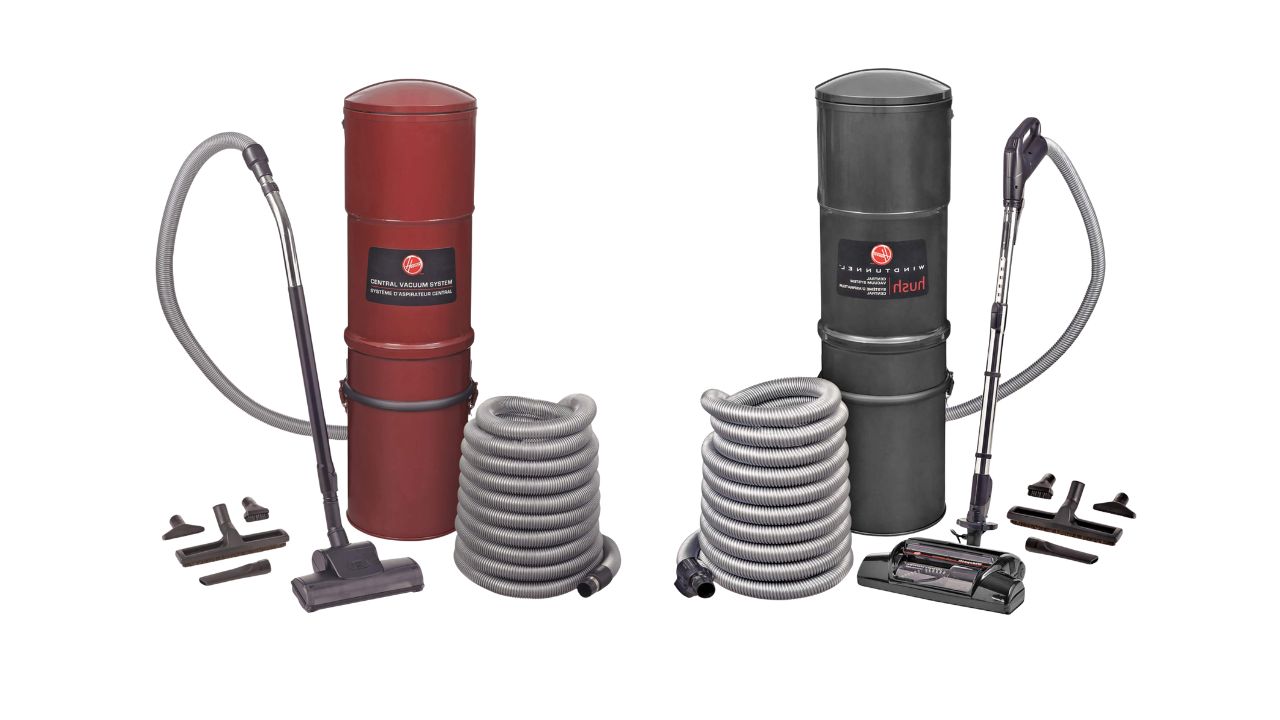
What “Hush” actually promises versus delivers
Hush refers to the sound-dampening insulation packed around the power unit, nothing more. The motor still runs loud. It just sits in your basement or garage, far from your ears, so you never hear the full roar while you clean upstairs.
One owner on a vacuum forum described his unit’s startup growl carrying straight through the basement ceiling on day one. The foam muffles. It does not silence.
So why does a central vacuum feel quiet at all?
Distance does the work. The motor lives 40 or 60 feet of pipe away from the inlet you hold, so the hose end stays peaceful while the unit growls in another room. Location buys the calm, not a Hoover trick.
Power units commonly run 75 to 95 decibels at the unit itself. Loud enough to talk over. Not loud enough to hear from upstairs.
What you’re really buying with a Hush unit
You’re buying a mid-power power unit from a discontinued line, badged Hoover but engineered elsewhere. We evaluated it by cross-referencing the factory owner’s manual, the bare replacement-motor spec sheet, and owner reports posted on central vacuum forums.
Is a hoover hush central vac still worth installing today?
Only if you already own the pipes. Installing a discontinued unit from scratch makes little sense when current power units push past 600 air watts and ship with stocked parts. The Hush lineup runs S5610 through S5640, pulling about 465 air watts and 136 inches of water lift.
| Spec | Hoover Hush (S5620) | Current 600+ AW unit |
|---|---|---|
| Air watts | 465 | 600 to 700 |
| Water lift | 136 in | 130 to 150 in |
| Parts supply | Aftermarket only | In production |
| Factory warranty | 5 years | 5 to 10 years |
Watch the warranty line. Retailers advertise 7 and 10-year terms, but the factory owner’s manual lists a 5-year power-unit warranty, so trust the manual, not the listing.
Want a sense of where the live market sits? Browsing Eureka systems and key specs shows the air-watt and warranty baseline a fresh install should clear.
Who built it, and why that matters now
The Hoover badge hides the real builder. Industry forums report that Cana-Vac, a Canadian central vacuum maker, produced Hoover’s central units for years. That heritage decides which replacement parts physically drop into your unit and which ones only look close on a listing. Confirm the lineage before you trust any compatible label.
The spec sheet, in plain language
Numbers mean nothing until they touch real cleaning. The S5620 label commonly lists 465 air watts, 97 CFM, and 13.5 amps, driven by an American-made Ametek Lamb Electric three-stage motor, the same motor family behind many North American central vacuums.
That motor draws enough current to need its own line. Following a manufacturer install guide specifying a dedicated 20-amp branch circuit keeps the breaker from tripping every time the unit kicks on.
Still with me? Good, because the next number is the one dealers hope you skim past.
The number dealers bury: 465 air watts
465 air watts is the ceiling on what this system can clean, and dealers rarely explain it. That figure is the marketed system rating. The bare Ametek Lamb replacement motor actually tests at 404 air watts, 112 CFM, and 107 inches of water lift. That gap is why your replacement part should match the motor, not the brochure.
Why air watts beat the wattage on the box
Air watts measure true suction at the cleaning head under load, the only number that predicts how the hose pulls. The 13.5 amps on the label tells you what the motor eats, not what it delivers. Read air watts. Ignore the amp brag.
Water lift is a close cousin: it’s the pull that drags debris up a vertical run, like a straw fighting gravity, while air watts blend that pull with airflow.
How far does 465 air watts really stretch?
Far enough for a compact single-story home, not the mansions dealers promise. One listing claims 4,500 square feet, another claims 8,000 on the same 465 air watt motor. Both cannot be right, and the bigger claim ignores how suction fades down a long pipe run.
How far is too far? The farthest inlet always pulls weakest.
When 465 air watts simply isn’t enough
You feel the shortfall in the room farthest from the unit. A two-story home with a 60-foot run to the back bedroom leaves that inlet pulling noticeably softer than the one beside the power unit. Match the motor to your longest run, not your total floor area.
Larger or stacked homes outgrow 465 air watts fast. Comparing Bosch systems and key specs shows the higher-output range a long-run, two-story layout needs.
See the pattern? The name never mattered. The pipe run does.
Hush filtration: HEPA or just HEPA-style?
Most Hush units filter well enough for general dust but fall short of certified HEPA. They lean on a washable cloth filter and a marketing micron claim, not a tested capture rating. For allergy and pet households, that gap matters.
The filter most Hush units actually ship with
Many Hush units carry a self-cleaning cloth filter, 11 or 14 inch, sized to the canister. It rarely needs replacing. It also clogs slowly and holds moisture, which breeds odor and mold if you never wash it.
| Setup | Filtration | Odor risk | Upkeep |
|---|---|---|---|
| Bagged | Fine dust sealed in the bag | Low | Swap bag 2 to 3x/year |
| Bagless cloth | Good, drops as it loads | Higher | Wash filter, empty often |
“0.1 micron at 95%” is not HEPA. Here’s the standard.
A 0.1 micron at 95 percent claim is a sales line, not a certified rating. True HEPA captures 99.97 percent of particles at 0.3 microns, the hardest size to trap, a benchmark set by the US Department of Energy. No certifying body has verified the dealer micron figure.
Read the EPA’s definition of a true HEPA filter and the Hush micron claim falls apart.
What to do if asthma or allergies are in the home
Vent the exhaust fully outside, or fit a certified HEPA exhaust filter. Do not stake someone’s lungs on a HEPA-style label. Outdoor venting removes fine dust and odor from your indoor air entirely, which forum owners rate above any internal filter.
The setup that actually protects an allergy household:
- Vent the power unit exhaust to the outdoors.
- Add a certified HEPA exhaust muffler when outdoor venting is impossible.
- Empty the canister outside, never over an indoor trash can.
Breathing easier about the filter? Then let’s talk about the part nobody at the showroom mentions.
The discontinued brand problem nobody warns about
Hoover left the central vacuum business, and the showroom will not tell you. Units, filters, and motors now come almost entirely from aftermarket sellers. Are Hoover central vacuums still made? No, not under the Hoover name.
Hoover left the central vacuum business
Enthusiast forums report that Hoover and parent TTI exited central vacuums entirely. One major parts site now lists Hush components as out of stock, pointing buyers to a service center instead. The line is closed.
Plenty of makers still build and stock new systems, like still-active central vacuum manufacturers like H-P Products (Vacuflo, Element), which matters when you want a unit you can service in ten years.
Can you still get filters, bags, and motors?
Yes, for now, through cross-referenced parts. Some Cana-Vac and universal components still fit Hush units, and the bare Ametek Lamb replacement motor is the most reliable swap. Confirm your exact model number before you trust any compatible listing.
| Part | Source today | Note |
|---|---|---|
| Motor | Ametek Lamb replacement | Fits S5610 to S5640 family |
| Cloth filter | Universal 11 / 14 in | Match canister size |
| Hose / inlets | Standard 2-inch fittings | Confirm bore on older units |
Hoover central vacuum parts, where to buy? Aftermarket vacuum specialists, not Hoover.
Why owners rip these systems out
Sometimes walking away is the honest call. Owners report tearing out aging systems after finding hidden in-wall pipe leaks that no power unit upgrade fixes. A discontinued brand plus 25-year-old tubing stacks repair risk you cannot see behind drywall.
Repairing a discontinued unit means a replacement motor, fresh carbon brushes, and labor, against a current power unit that mounts on your existing pipes and restarts the parts clock. When the motor is the failed part, replacement wins the math.
Where you mount it decides how loud it feels
Placement, not the Hush badge, controls the noise you live with. Mount the unit far from finished rooms and you barely notice it. Mount it next to a basement playroom and the calming name means nothing.
Is a central vacuum really quieter than my upright?
Yes at the hose, no at the unit. The inlet stays quiet because the motor is rooms away, but the power unit itself growls. One forum owner called his older unit a jet engine on startup, and he was not exaggerating much.
The placement mistake that ruins the “Hush” feeling
Mounting the unit beside living space wastes every bit of sound insulation. One owner bolted his to the wall of a finished basement playroom and regretted it within a week.
Mount it right:
- Pick a detached garage or a far utility corner.
- Keep it off shared walls with bedrooms or play areas.
- Add a sound-reduction muffler if the growl still carries upstairs.
Should you vent the exhaust outside?
Yes, vent it outside whenever the run allows. Outdoor venting pushes fine dust and odor out of your living air, and it cuts the noise you hear inside the utility room. The exhaust has to go somewhere, so send it out, not back into the house.
Inlet placement and pipe runs that kill suction
Inlet placement and pipe length decide whether the farthest room cleans well or barely pulls. Plan inlets by square footage per floor, not the whole-home total, and keep runs short to protect suction.
How far is too far from the power unit?
Past roughly 60 to 70 feet of pipe, suction drops enough to notice. Air loses energy traveling longer runs and rounding each elbow, so the farthest inlet always pulls weakest. Count inlets per floor so no single hose has to reach across the house.
Mistakes that quietly leak your suction away
A whistling pipe is money escaping through a bad joint. Unglued or cracked fittings pull in outside air and drop suction at every inlet downstream. A resonating, free-floating pipe points to the same leak.
Glue every fitting. Strap loose pipe to the joists.
Matching inlets to how you actually clean
Place inlets so one 30-foot hose reaches every room without dragging it through doorways. A pet owner with shedding goldens swears by an inlet at the top of the carpeted stairs, where hose-only reach beats hauling an upright step by step.
Keeping a Hush system alive past 20 years
A Hush unit runs well past 20 years on simple upkeep, and a discontinued line makes that maintenance more important, not less. The motor is the part you cannot easily replace, so protect it.
The maintenance rhythm that protects your motor
A clogged filter starves airflow and slowly cooks the motor. Empty the canister two to three times a year, and clean or replace the filter on schedule. One owner skipped filter cleaning for two seasons and burned out a motor he then struggled to source.
How do you replace the bag? Open the canister, lift the old bag off the collar, seat the new one, snap the lid shut.
Cleaning the pipes you can’t see
Run cleaning sheets through the system about once a year to clear debris from tubing you never see. Catch reduced suction, odd noise, or a burning smell early, before a small clog becomes a dead motor.
Conclusion
You walked in trusting a quiet-sounding name. You walk out judging air watts, filter grade, and whether parts still ship, which is the lens that stops you overpaying. Tonight, find the model number on your power unit lid, somewhere in the S5610 to S5640 range, then check current filter and motor availability before you spend a dollar. A central vacuum you can service in the garage outlasts any upright you ever dragged upstairs, but only while the parts pipeline stays open. Verify that first, then enjoy the quiet you actually came for.
Frequently Asked Questions
What is the Hoover Hush central vac and is it still made?
It’s a rebadged, mid-power central vacuum from a now-closed line. Hoover left the central vacuum business, so units and parts survive only through aftermarket sellers.
What are the air watts and water lift specs on a Hoover Hush central vac?
About 465 air watts and 136 inches of water lift on the system label. The bare Ametek Lamb replacement motor tests lower, near 404 air watts and 107 inches.
What is the difference between the Hoover S5615, S5626, and S5636?
Mostly motor stages and capacity across the S5610 to S5640 lineup. Higher models step up from two-stage to three-stage motors, yet all sit around the same 465 air watt ceiling.
What replacement motor fits a Hoover Hush central vacuum?
An Ametek Lamb two or three-stage bypass motor, 5.7-inch fan, rated near 404 air watts. Confirm your exact S-model before ordering, since fitment varies across the family.
Where can I still buy parts, bags, and filters for a Hoover central vac?
Aftermarket vacuum specialists and cross-referenced Cana-Vac or universal parts. Hoover no longer stocks them, so match every part to your model number first.