You searched miele central vacuum systems expecting a German engineered power unit to mount beside your furnace. Here’s the snag: Miele has never built one. Retailers shelve Miele canisters next to the main players in ducted vacuums, and that phantom pairing keeps buyers chasing a product that does not exist.
This guide settles the question in plain terms. You’ll learn what Miele actually sells, how its sealed HEPA filtration stacks up against a true built-in system, and which purchase fits your home, your allergies, and your back.
Miele Central Vacuum Systems
Miele does not manufacture a central vacuum system in any market. Its floorcare line is entirely portable: bagged canisters, bagless canisters, cordless sticks, and robot vacuums. The brand earns its reputation on filtration and build quality, so your real choice sits between a sealed Miele canister and a ducted system.Why You Cannot Buy a Miele Central Vacuum
You cannot buy a Miele central vacuum because Miele & Cie. KG, the family owned German appliance maker behind the brand, has never entered the built-in vacuum category. The company builds portable floorcare only. Every listing suggesting otherwise is a retailer menu accident, not a product.
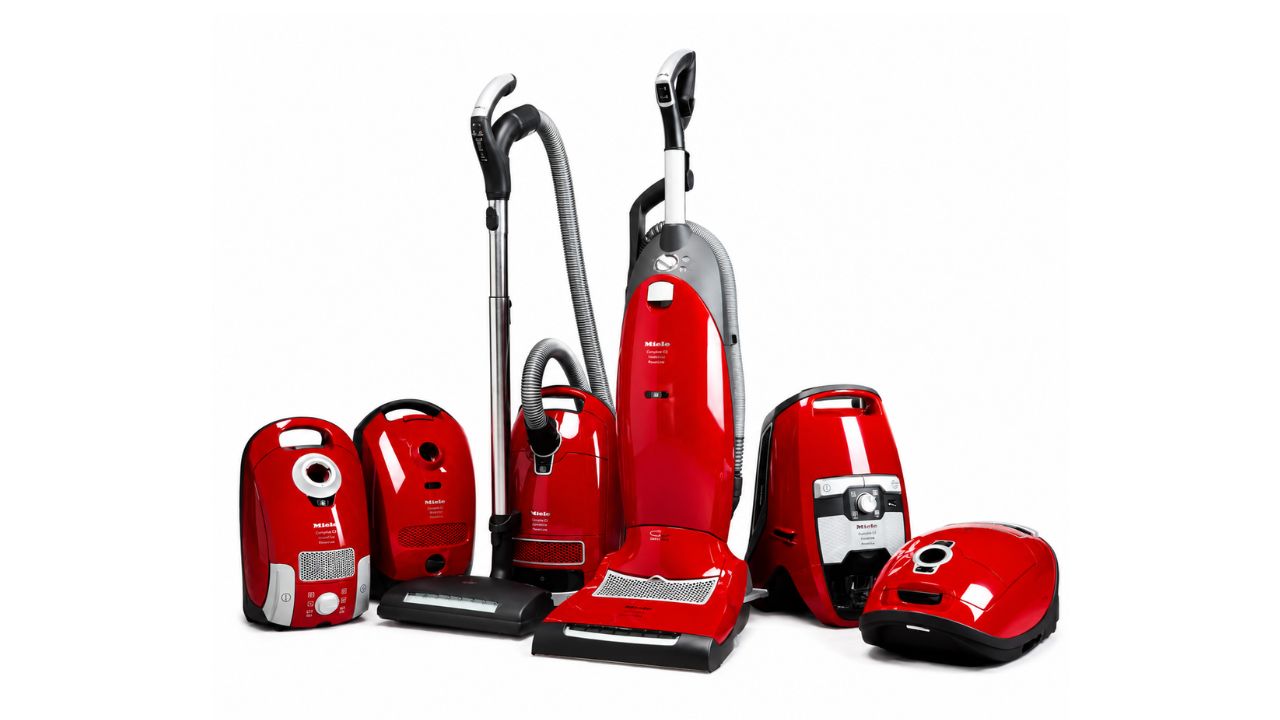
Do miele central vacuum systems actually exist today?
No. There is no Miele power unit, no Miele inlet valve, and no Miele branded tubing in any catalog, in any country. The product you imagined was never discontinued. It was never made.
A central vacuum buries the motor in a garage or basement and pulls debris through in-wall tubing to a collection canister, which is why the category demands installed hardware Miele never developed. Read how a built-in ducted vacuum system works and the gap becomes obvious: Miele engineers machines you carry, not systems you plumb into walls.
Is there a Miele central vacuum power unit? No. Full stop.
What Miele actually builds instead of ducted units
Miele builds four portable families: bagged canisters like the Classic C1 and Complete C3, bagless canisters, the Triflex cordless stick line, and robot vacuums. Browse Miele’s official vacuum cleaner lineup and you will not find a built-in category anywhere on the page.
Every one of those machines rolls or glides behind you. None of them feeds a fixed wall inlet, and none of them ever will without a category launch Miele has shown zero sign of planning.
Stop hunting ghosts. The lineup is the lineup.
Where the central vacuum mixup usually starts
The mixup starts on dealer shelves. Vacuum retailers stock Miele canisters beside CycloVac, built by Trovac Industries in Quebec, and Vacuflo, manufactured by H-P Products in Ohio, then file all three under one navigation menu. The phantom match is born there, not in any Miele catalog.
One AnandTech forum member captured the confusion perfectly, weighing a new Miele canister against the 1982 central unit already piped through his house. Two product types, one shelf, zero clarification.
A note on method: this guide draws on spec comparison across manufacturer documentation plus owner threads on VacuumLand, AnandTech, and Slickdeals. No dealer paid for placement here, and no recommendation earns us an install commission.
Miele Canister Versus a Real Central Vacuum
The matchup comes down to reach versus refinement. A central vacuum moves far more air through in-wall tubing across an entire house. A Miele canister delivers superb close-range cleaning with certified filtration you carry from room to room. Your square footage picks the winner, not the badge.
Suction you feel at the cleaning head
Central vacuum power units deliver 500 to 600 plus air watts and around 125 CFM of airflow, while premium portable canisters top out near 200 to 230 air watts. Air watts are a measure of sealed suction power calculated at the hose end under load, so the figure reflects what the carpet feels, not what the motor label brags.
Here’s the counter-intuitive part. Inside a small condo with a 12-foot hose, 230 air watts at the nozzle cleans as well as 600 air watts traveling 60 feet of tubing and five elbows to a far bedroom inlet, because every foot of pipe and every fitting bleeds suction. Big numbers only matter when the run is long.
Noise, weight, and the stairs you still climb
You still carry the canister. Up every flight, every single time, the Miele rides your arm while the hose drags behind, and that’s the trade no spec sheet records.
A central vacuum flips the burden. The motor roars away in the basement where nobody hears it, and upstairs you grab a lightweight hose from a closet and plug it into a wall inlet. The loudest thing in the room is moving air.
Which sound do you want living with you for the next 20 years?
Air watts nobody prints on the box
Retailers quote motor wattage because the number looks bigger, and air watts measured under ASTM F558, the standard test method for vacuum cleaner air performance, tell the truth about suction at the hose end. A 1,400 watt motor sticker proves nothing about cleaning power.
Demand tested air watt figures before any glossy spec sheet wins you over. And ask installers about elbow count: every 90 degree fitting added to a pipe run costs measurable suction, which is why careful installers route with long sweep elbows instead of sharp turns.
Where Miele Filtration Beats Cheap HEPA Claims
Miele wins the filtration paper trail. Its HEPA AirClean filter carries a certified rating under the European EN 1822 standard, while plenty of central vacuum filters lean on a vague HEPA style label with no lab number behind it. Certification, not marketing, is the dividing line.
True HEPA versus the HEPA style label trap
HEPA style is a marketing phrase, not a certification, and it promises no capture rate at all. Per the EPA’s definition of a true HEPA filter, the U.S. benchmark requires 99.97% capture of particles at 0.3 microns. A filter without a tested number behind it earns the label the way a knockoff watch earns a logo.
Plenty of central vacuum filters wear that HEPA style badge with no published lab proof. Allergy relief built on an unverified filter is a coin flip.
What the HA50 HEPA filter actually certifies
Miele’s HA50 filter is certified H13 under EN 1822, the European filtration standard, which requires 99.95% capture at the most penetrating particle size, near 0.1 microns. That differs from the U.S. benchmark of 99.97% at 0.3 microns, so the two figures describe different tests, not different honesty.
One caution. The number floating around for Miele’s standard AirClean filters, roughly 94% capture at 0.3 microns, comes from filter retailers rather than a published Miele standard sheet. Confirm it against Miele’s own documentation before you build an allergy plan on it.
Why a sealed system matters for allergies
A sealed system stops dust from leaking around the filter edges, so the only air leaving the machine has passed through the certified media. Miele gaskets the entire airflow path, which is the whole point of paying for an H13 filter in the first place.
A central vacuum attacks the same problem from a different angle. Most installations vent exhaust outdoors or into a utility space, so fine particles leave the living area entirely instead of recirculating through any filter at all. Asthma households on owner forums describe the difference bluntly: vacuuming stopped triggering symptoms once the exhaust stopped blowing back into the room.
Sealed indoor recirculation or outdoor exhaust? That single question is the real decision axis for allergy buyers, and almost no comparison article frames it.
Can Your Miele Tools Fit a Central Vacuum
Some Miele attachments adapt to a central vacuum hose, within limits. Miele wands and floor tools use a 35 mm fitting while North American central vacuum systems standardize on 32 mm, so a simple reducer bridges air driven tools. Electric powerheads refuse to make the trip.
The 35 to 32 mm adapter forum owners use
A 35 mm to 32 mm reducer lets Miele floor tools mount on a standard central vacuum wand, and VacuumLand members run exactly this setup to keep a favorite Miele parquet brush in service. Treat it as a tinker fix, not a factory solution; the friction fit varies and nothing about it is warrantied.
Compatibility note: standard 32 mm wands and fittings fit Beam, owned by Electrolux Group since its acquisition of the brand’s central vacuum assets, plus CycloVac and most North American systems. Exceptions exist. Older Vacuflo hoses used a proprietary low-voltage connection, and some early installations used non-standard bores that need their own adapters.
Why electric powerheads complicate the swap
Miele’s electric brushes draw power through contacts built into the wand and hose, and a central vacuum hose does not carry matching wiring or connectors, so the brush motor never spins. Air driven turbo nozzles dodge the wiring problem, and they agitate deep carpet less aggressively than a powered brush roll.
Electrified hoses are brand specific territory. See Broan central vacuum features explained for how Broan, the residential ventilation maker behind Broan-NuTone LLC, handles direct-connect powerhead wiring on its units.
What You Really Pay and What You Get
A Miele canister costs $400 to $1,250 with nothing to install. A central vacuum system runs $1,000 to $3,000 or more once professional installation is counted, and retrofits push higher. The gap buys whole home reach, hidden noise, and a system that stays with the house.
Miele canister price bands you will see
New Miele canisters run from about $400 for the entry Classic C1 to roughly $1,250 for a loaded Complete C3. Owners on Slickdeals report the entry model pulls with the same suction as its pricier siblings, because the upgrade dollars buy controls, tools, and trim, not a stronger motor.
You pay once, plug in, and clean. No wall piping, no install crew, no drywall dust.
Central vacuum install costs dealers soften
A complete system with professional installation clears $1,000 to $3,000 in most homes, and dealers soften that figure by quoting the power unit alone. Retrofit labor is where budgets break: one two-story retrofit stretched from one day to three because the wall cavities hit a fire block at every floor joist.
| Cost line | Miele canister | Central vacuum system |
|---|---|---|
| Equipment and install | $400 to $1,250, no install needed | $1,000 to $3,000 installed |
| Retrofit risk | None | Finished walls add labor and surprise costs |
| Yearly upkeep | Bags and filters | Bags or filter cleaning, periodic motor service |
Where the long term value actually lands
Think marathon, not sprint. Spread across decades of ownership, the central vacuum’s install premium shrinks to pennies per cleaning session, and the in-wall system adds resale appeal for some buyers because it transfers with the house.
The Miele plays the opposite card. It moves with you to the next address, which makes it the obvious pick for renters and frequent movers.
Staying or going? That one answer settles most of the money question.
How Long Each System Lasts in Real Homes
Both choices are built for decades when serviced. Miele tests many of its vacuums to the equivalent of 20 years of household use. Central vacuum power units run for decades too, with motors and bags needing periodic attention. Upkeep decides lifespan far more than the badge on the front.
The 20 year claim and what backs it
Miele’s 20 year figure comes from its own endurance protocol, which runs components through the equivalent of two decades of average household cleaning. It is a manufacturer test, not an independent certification, and owner longevity reports back it up better than most marketing claims do.
Central units make the same case with fewer press releases. The motor is the consumable. The tubing in your walls outlives everything.
Owner stories from VacuumLand and AnandTech
The owner record runs deep on both sides. One AnandTech member still runs the central unit piped into his house in 1982, built by Singer, the sewing machine company that once sold central vacuums. Four decades of service on original tubing. Slickdeals threads carry Miele owners praising build quality after years of daily use.
The failure stories matter just as much. Forum archives include inlet valves that seized after years of use and motor brushes worn to stubs. Read those threads before you buy either machine.
Parts and motors when something finally fails
Miele builds its vacuum motors in house, which keeps replacement parts flowing through its own dealer network long after a model retires. Central vacuum brands source motors from Ametek Lamb or Domel, two suppliers shared across the industry, so a generic replacement motor stays available even when a brand fades away.
Brand history decides how painful repairs get. See Pullman central vacuum models reviewed for a line where parts sourcing makes or breaks long term ownership.
Confirm parts availability before you commit to either road.
Which Path Fits Your Home and Body
Match the machine to the building and the body using it. Renters, condo dwellers, and single level homeowners get more from a sealed Miele canister. Owners of larger or multi level homes who plan to stay for years get more from a true built-in system.
Pick a Miele canister when this is you
The Miele canister is the right buy for renters, frequent movers, and anyone who wants certified filtration without construction. The honest checklist looks like this:
- You rent or expect to move within five years, so installed equipment makes no sense.
- Your home spans one or two floors and carrying a canister doesn’t strain you.
- Allergies come first and you want certified H13 filtration this week, not after an install crew leaves.
Choose a true central vacuum when this fits
The built-in system is the right buy for owners of larger homes who plan to stay. You hate hauling a unit up stairs, you want the motor noise hidden in the basement, and your walls allow piping, or new construction makes routing simple before drywall closes.
Brand routing for Miele loyalists: CycloVac and Beam both sell filtered power units that accept certified HEPA bags, the closest match to Miele’s sealed bag philosophy in the built-in world. One caution: CycloVac’s dealer network runs thin across parts of the southern US, so check service coverage before you order.
What brand of central vacuum is most like Miele? Start with those two.
The allergy buyer decision in one minute
Need certified HEPA today? Buy the sealed Miele canister and breathe easier this week. Want whole home reach with exhaust vented away from your living space? Price a central system and ask the installer exactly where the exhaust terminates.
Either way, skip the myth. There is no Miele branded middle path, and waiting for one wastes cleaning years you could spend on either real option.
Conclusion
You arrived half convinced the Miele badge hid a built-in option, and you leave knowing the category simply does not include Miele. The real decision was always a sealed canister versus a ducted system. Tonight, measure your square footage per floor, list who in the house has allergies, then price one Miele canister against one system from our complete vacuum brand reference. Either path beats the tangled cord and dust blowback of the portable you resent now, and the right pick will serve you quietly for decades.
Frequently Asked Questions
Does Miele make a central vacuum system?
No. Miele has never manufactured a built-in central vacuum in any market, and its floorcare line is entirely portable. Retailer menus listing Miele canisters near central vacuum brands created the confusion.
What kind of vacuums does Miele actually make?
Miele makes bagged and bagless canisters, cordless sticks, and robot vacuums. The Classic C1 and Complete C3 canisters anchor the line, with the Triflex sticks covering cordless cleaning.
Is a Miele canister vacuum as good as a central vacuum for a whole house?
No for large or multi level homes. Central units deliver roughly double to triple the air watts through wall inlets, while the Miele wins in smaller spaces where you never fight long pipe runs or stairs.
Which central vacuum brand has filtration closest to Miele?
CycloVac and Beam come closest. Both offer filtered power units that accept certified HEPA bags, mirroring Miele’s sealed bag approach, and most central installations also vent exhaust outdoors, which no portable matches.
Is a central vacuum worth it, or should I just buy a high-end Miele?
Staying years in a larger home, go central. The install premium spreads across decades and the system transfers with the house. Renting or living on one level, the Miele canister is the smarter spend.