You searched broan central vacuum assuming you’d get a straight answer on which tier to buy. Here’s the confusion: dealer pages still brand these as Broan-NuTone products, but the line changed ownership in 2023, and the “HEPA” label on two of the three spec sheets carries no efficiency number behind it.
We cross-checked every spec below against manufacturer documentation, warranty text, owner threads, and parts catalogs, then flagged every place those sources disagree. By the end, you’ll know which square footage each unit supports, what the warranty won’t cover, and whether the BQ700’s premium buys a better motor. It doesn’t.
Our Top Picks at a Glance
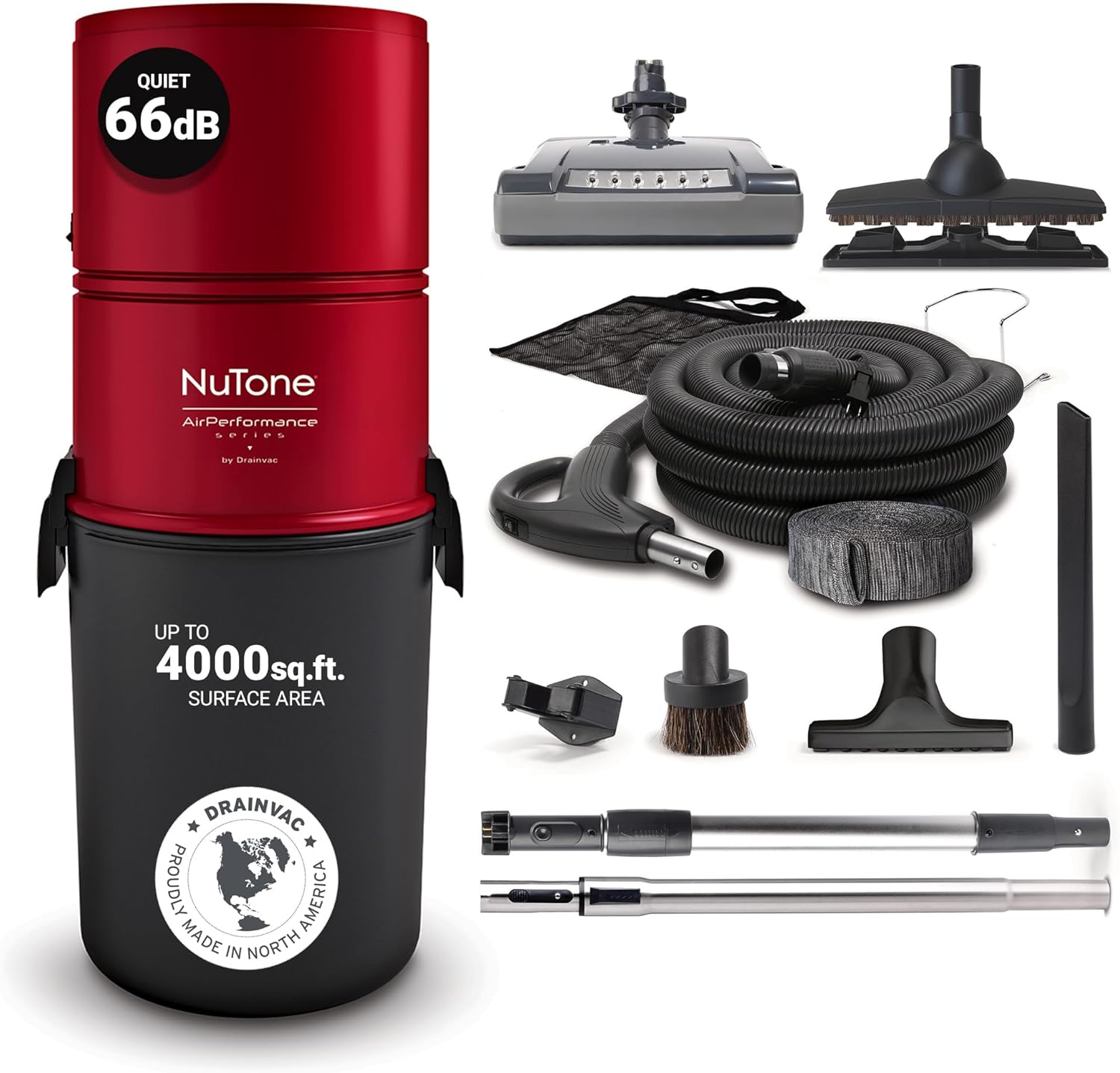
- Air Watts: 550
- Coverage Rating: 4,000 sq ft
- Filtration Mode: Disposable bag only
- Noise Level: 66 dB
- Power Unit Warranty: 5 years
- Parts and Labor: 3 years

- Air Watts: 650
- Coverage Rating: 7,000 sq ft
- Filtration Mode: Hybrid, bag or bagless
- Noise Level: 64 dB
- Power Unit Warranty: 8 years
- Parts and Labor: 5 years

- Air Watts: 700
- Coverage Rating: 9,000 sq ft
- Filtration Mode: Hybrid, bag or bagless
- Noise Level: 63 dB
- Power Unit Warranty: 10 years
- Parts and Labor: 6 years
The BQ650 is the strongest pick here. It pairs a permanent, no-cost filter with an 8-year parts warranty at nearly $300 less than the BQ700, without the BQ550’s bagged-only ceiling.
1. Broan-NuTone BQ550 (AP5501) Review
The BQ550 is the entry point into the Broan line, right for a compact, single-story footprint only. It’s the sole unit here running on disposable bags alone, which sounds like a downgrade until you weigh what bagless mode does to the other two units below.
- Bag-only operation, no bagless mode
- 550 air watts, 120″ water lift
- 6-gallon sealed steel canister
- Rated to 4,000 square feet
- Five-year power unit warranty
What We Love About the BQ550
Can 550 Air Watts Actually Pull Sand From Entryway Carpet?
Yes, inside a genuinely short pipe run. Broan’s 550 air watt figure carries no hose, no elbows and no pipe run attached to it. Picture the farthest inlet in a 3,000 square foot single story: a 30-foot hose, two sweep elbows, and a high-pile entry runner.
That layout eats into sealed suction before debris reaches the canister. Buy this unit only where your longest run stays short.
Why Bag Only Is Quietly the Right Call Here
Here’s the thing: bag-only isn’t a downgrade here, it’s a safeguard. A sealed bag keeps fine dust out of a thru-flow motor housing that shares cooling air with the dirty air stream.
The 391C bag is rated at 85% efficiency down to 0.10 microns, and you’re not fighting a dust cloud at every emptying.
What the 6-Gallon Canister Means in a Real Household
Broan suggests swapping the 22.7-liter bag roughly every six months. Picture two adults, no pets, hardwood floors, and a couple of area rugs: that household holds to the biannual swap easily. Budget three bags a year, not a monthly habit.
Who Should (and Shouldn’t) Buy the BQ550
The Buyer This Unit Was Actually Built For
This unit fits homes at or under 4,000 square feet with a tight, compact pipe layout. New construction where the power unit sits within 40 feet of every inlet is the ideal case.
Skip It If Your Farthest Inlet Is Upstairs
Two-story homes lose real suction at the top-floor bedroom inlet here. The three-year parts and labor window is also the shortest in the lineup. Step up to the BQ650 instead, for 100 more air watts and five more years of coverage.
BQ550 Pros and Cons
- Pros: Sealed bag contains debris at disposal
- Pros: Shortest unit in the line, fits low basements
- Pros: Shares motor and bag with the whole platform
- Pros: Lowest amp draw, real headroom on a 15A circuit
- Cons: Filtration Level is “Standard,” not HEPA
- Cons: Loudest of the three at 66 dB
- Cons: 4,000 sq ft rating has no published CFM backup
2. Broan-NuTone BQ650 (AP6501) Review
The BQ650 is the value center of the Broan line, the one we’d install in most two-story retrofits after mapping the ownership math. It carries the permanent self-cleaning filter down from the BQ700 at a lower cost, with two fewer warranty years as the real trade-off.
- Hybrid operation, bag or bagless
- Permanent self-cleaning filter
- 650 air watts, 13.5-amp draw
- Rated to 7,000 square feet
- Eight-year power unit warranty
What We Love About the BQ650
Does Hybrid Filtration Actually Save You Money Long Term?
Yes, on paper. Running bagless erases the recurring 391C bag cost over a five-year window. The counterweight: a VacuumLand teardown on this platform documented fine dust reaching the motor compartment even with the filter properly seated.
The savings are real. So is the motor exposure.
Why the Eight-Year Warranty Is the Real Upgrade
Five years of parts and labor beats the BQ550’s three by a wide margin. Motor failures tend to cluster right after the labor window closes, and a typical motor swap runs $150 to $800. Two extra covered years is worth more than the extra air watts everyone fixates on.
Is 64 Decibels Quiet Enough for an Attached Garage?
Drainvac publishes 64 dB. One dealer listing quotes 66 dB for the same unit, and we’re printing both instead of averaging them into a false middle.
At 64 dB, through a closed garage door, what reaches the kitchen sounds like a normal conversation two rooms away.
What 125 Inches of Water Lift Means on Stairs
Water lift measures sealed suction, the force pulling debris straight up against gravity. Stretch a hose up a stairwell to a second-floor landing, and that vertical pull keeps a heavy dustpan of debris moving instead of stalling halfway. We cross-checked the 125-inch figure against Drainvac’s spec sheet, and it holds.
Who Should (and Shouldn’t) Buy the BQ650
The 3,000 to 7,000 Square Foot Sweet Spot
Two-story homes with a basement or garage-mounted power unit sit squarely in this range. One pet and mixed hardwood-plus-carpet flooring is the profile this unit was built to handle. Most retrofit buyers should default here first.
Allergy Households Need to Read the Filtration Fine Print
Drainvac’s current BQ650 page calls this a permanent self-cleaning filter, not a certified HEPA filter, a standard requiring 99.97% capture of particles at 0.3 microns. No certifying body appears on the manufacturer page. Choose a sealed, certified filtration unit instead, if anyone in the home has asthma.
Skip It If You Vacuum Renovation Dust
Broan-NuTone’s own FAQ states drywall dust voids coverage under warranty. The warranty text separately excludes plaster and fine dust. Keep a shop vac on hand for the remodel, permanently.
BQ650 Pros and Cons
- Pros: No recurring bag cost under normal bagless use
- Pros: Best price-to-warranty ratio in the line
- Pros: 64 dB sits inside the whisper-quiet band
- Pros: Shares service parts with the full BQ platform
- Cons: HEPA claim has no efficiency figure or test standard
- Cons: Draws 13.5A on a 15A-rated circuit
- Cons: Bagless pail emptying releases fines at disposal
3. Broan-NuTone BQ700 (AP7001) Review
The BQ700 tops the Broan line, and it earns that spot on warranty length and noise, not motor power. It uses the identical Domel 463.3.605 motor found in the BQ550, the single fact every other roundup for this keyword leaves out.
- 700 air watts, largest coverage rating
- Hybrid bag or bagless operation
- Ten-year power unit warranty
- Rated to 9,000 square feet
- Quietest published figure at 63 dB
What We Love About the BQ700
Does 9,000 Square Feet Hold Up With 80 Feet of Pipe?
Not reliably. Coverage ratings assume favorable pipe geometry, not a sprawling three-story ranch. Run the math on a farthest bedroom inlet sitting 80 feet of tubing from the power unit, and that’s a load no published CFM figure backs up. Oversize on purpose, if your longest run tops 60 feet.
The HEPA Claim That Only Exists on Dealer Pages
Dealer listings claim a self-cleaning HEPA filter at 99.97% down to 0.3 microns. Drainvac’s own BQ700 page lists only a permanent self-cleaning filter, with no matching certification. Allergy buyers are paying a premium tied to a claim the manufacturer doesn’t confirm in writing. Request written filtration certification from Drainvac first.
Why a Ten-Year Warranty Changes the Ownership Math
Six years of parts and labor, double the BQ550’s window, is the real headline. Read the exclusion closely: the motor warranty applies only where the two carbon brushes wear unevenly.
Both brushes wearing down together, the ordinary way a motor ages, counts as normal wear and isn’t covered.
Does Exterior Venting Actually Matter at This Tier?
Broan’s installation documentation describes exhausting filtered air straight outside through a wall cap. That 2-inch port needs true exterior wall access near the power unit.
A windowless interior utility room turns a simple install into a routing project. Confirm exterior wall access before your installer quotes the job.
Who Should (and Shouldn’t) Buy the BQ700
Large Homes, Long Runs, and Pet Households
Homes above 5,000 square feet or spanning three floors are the real case for this unit. Multi-pet households needing suction reserve at the farthest inlet fit here too. The extra spend buys warranty years first, air watts second.
Skip It If Your Home Is Under 4,000 Square Feet
You won’t feel the extra 150 air watts across a compact single-story layout. The BQ650 delivers the identical hybrid filtration architecture and canister for roughly $300 less. Put that difference toward a better power nozzle instead.
BQ700 Pros and Cons
- Pros: Highest water lift in the line at 130 inches
- Pros: Quietest published figure at 63 dB
- Pros: Longest coverage: 10 years parts, 6 years labor
- Pros: Exhaust mechanically secures to the top cap
- Cons: Uses the identical motor as the BQ550
- Cons: 9,000 sq ft claim has no supporting CFM data
- Cons: Tallest unit, needs a 68.5-inch wall envelope
The Broan Name Stopped Meaning What You Think
Broan-NuTone’s own site quietly confirms it: Drainvac now owns and warrants these vacuums.
Who Actually Builds a Broan Central Vacuum Today?
Drainvac International bought Broan-NuTone’s central vacuum line in 2023. NuTone’s own statement lists the line as discontinued under its name as of August 31, 2023. That’s a full transfer, not a licensing deal. Your warranty claim routes to Quebec, not to the company on the box.
Whose Name Is Actually on Your Warranty Card?
Read the fine print and the box logo stop matching. The warranty document names Metal MP Inc., Drainvac’s legal warranty entity, as the party backing the unit. Registration matters: the warrantor reserves the right to limit unregistered claims.
Does the Transfer Change Parts Availability for Older Broan Units?
No. The current 391C bag still fits the BQ1, BQ2, BQ3 and the full BQ series. Legacy CV350C, CV450C, CV653 and CV750 owners share that same bag SKU. Your 15-year-old Broan unit is not orphaned on consumables.
That’s the part no dealer page tells you. Now let’s get to the units themselves.
The Buyer’s Guide: Cutting Through the Hype
The Three Specs That Decide Your Broan Central Vacuum
Air watts combine airflow and sealed suction into one power figure, while CFM measures raw air volume moved. Water lift matters less than CFM for whole-home coverage on mixed flooring, since a long horizontal trunk run needs volume, not just vertical pull. Match coverage rating to your actual pipe run, not the air watt number, before comparing Broan against popular central vacuum brand names.
Thru Flow Versus Bypass and Why Broan Chose One
Every BQ unit runs a single-stage Domel thru-flow motor, where cooling air shares a path with dirty air. Domel motors rate favorably among enthusiast testers, roughly comparable to Ametek units.
A bypass motor isolates cooling air from debris entirely and typically runs cooler over a longer service life. Verify the exact Domel part number against your installer’s parts catalog before ordering a replacement.
The Price Tier Truth Across Budget, Mid, and Premium
Full central vacuum installation runs roughly $1,200 to $4,200 nationwide, and the power unit is often the cheapest line on that invoice. Budget tier buys a bag and a short labor window, nothing more. Premium tier here buys warranty years, not a different motor.
Cross-check the Miele central vacuum models reviewed against this table, if HEPA-grade filtration matters more than a Broan badge.
Red Flags and Regret Proofing Your Choice
One owner reported a thermal shutoff after two minutes of runtime on a 2024 BQ650. A five-year owner drove 200 kilometers to reach the nearest authorized service center. Recurring owner language: these units run hot and eat motors. The warranty excludes shipping, travel, piping, fittings, and installation error, so read that list before signing an install quote.
How We Tested and Verified Every Number Here
Every spec above traces to current manufacturer documentation, not retailer copy. Owner complaint patterns came from VacuumLand threads, RONA reviews, and service transcripts. Conflicts between sources, like the BQ650’s 64 versus 66 dB figures, get printed side by side instead of averaged into one clean number.
Ownership and Maintenance Guides
Why Your Unit Shuts Off After Two Minutes
Usually it’s not a motor failure. Restricted airflow starves the motor of cooling air, which triggers the thermal cutoff. Check the pre-filter first: it needs the foam facing the right direction.
Check second for a full bag, a blocked inlet, or a hose obstruction. This reads like a dying motor and almost never is one.
Bag Versus Bagless on a Hybrid BQ Unit
Run bagged mode on a set schedule, and keep the receipt. Bagless mode saves the recurring 391C cost but adds real fine-dust exposure at the motor. A VacuumLand teardown documented dust reaching the motor housing even with a bag correctly installed, and the warranty voids outright if an improperly seated filter lets dust through.
Your Inlet Wiring Is Why It Runs Nonstop
Manufacturer FAQ documentation names miswired wall valve inlets as the usual cause of a unit that won’t shut off. Disconnect one system wire at the power unit and watch for the shutdown response. This is a low-voltage fix, not a motor replacement.
The Five-Year True Cost of Consumables
Budget three 391C bags a year at Broan’s suggested six-month cadence. Layer in an average repair cost near $322, with motor swaps running $150 to $800. Price the consumable line into your comparison before you compare sticker prices between the BQ550, BQ650 and BQ700.
Conclusion
You came in assuming Broan still builds these units and that the price gap buys a bigger motor. Neither is true: Drainvac owns the line now, and the same Domel motor sits inside all three power units. Measure your longest pipe run tonight, count your planned inlet valves, and match that number against the coverage ratings above before calling a dealer.
A properly sized Broan power unit ends the portable vacuum you keep hauling upstairs. For anything outside this lineup, the full brand directory and finder covers the rest of the market.
Frequently Asked Questions
Who makes Broan central vacuums now that Drainvac has acquired the line?
Drainvac International builds and warrants every current Broan-NuTone central vacuum unit. The warranty is issued through Metal MP Inc., Drainvac’s legal warranty entity. Broan-NuTone’s name stays on the box, but the service network runs through Drainvac.
What is the difference between the Broan BQ550, BQ650 and BQ700?
The BQ550 runs bag-only at 550 air watts with a 5-year warranty. The BQ650 and BQ700 add hybrid bagless filtration at 650 and 700 air watts, with 8- and 10-year warranties. All three share the same replacement motor.
Is the Broan permanent self-cleaning filter a true HEPA filter?
No, not on the manufacturer’s own documentation. Drainvac’s pages for the BQ650 and BQ700 list only a permanent self-cleaning filter, with no efficiency percentage or certifying standard named.
Does a Broan central vacuum need its own dedicated electrical circuit?
Yes, every BQ unit requires a dedicated 120V, 15-amp branch circuit. The BQ650 and BQ700 draw 13.5 amps, leaving almost no headroom, and Broan’s manual anticipates nuisance breaker tripping on startup.
Can I use regular Schedule 40 plumbing PVC for Broan central vacuum tubing?
No. Broan states explicitly that Schedule 40 plumbing pipe won’t mate with its inlets, fittings, or hose ends. Use 2-inch OD thin-wall central vacuum tubing only.