A shop vac as central vacuum setup sounds like a free upgrade. You already own the vac, so running PVC through the garage walls feels like skipping a $1,200 power unit for the price of pipe and fittings.
Here’s the catch nobody on the forums spells out. That “6 peak HP” sticker on a $60 shop vac looks stronger than a real power unit, and it isn’t, which is why DIY conversions cook a motor within a year. Finish this guide knowing where the hack holds against a dedicated central vacuum setup, and where it fails.
Shop Vac As Central Vacuum
A shop vac as central vacuum means plumbing a portable wet/dry vac into fixed PVC pipe and wall inlets instead of buying a power unit. It holds up fine for short garage runs on hard floors. It fails at whole-house scale because the motor wasn’t built for sustained pipe restriction.Why This Shortcut Tempts Almost Every Homeowner
It tempts you because you already own the tool, and the spec sticker makes it look like more vacuum than it is. That gap between perceived power and real engineering is where most DIY regret starts.
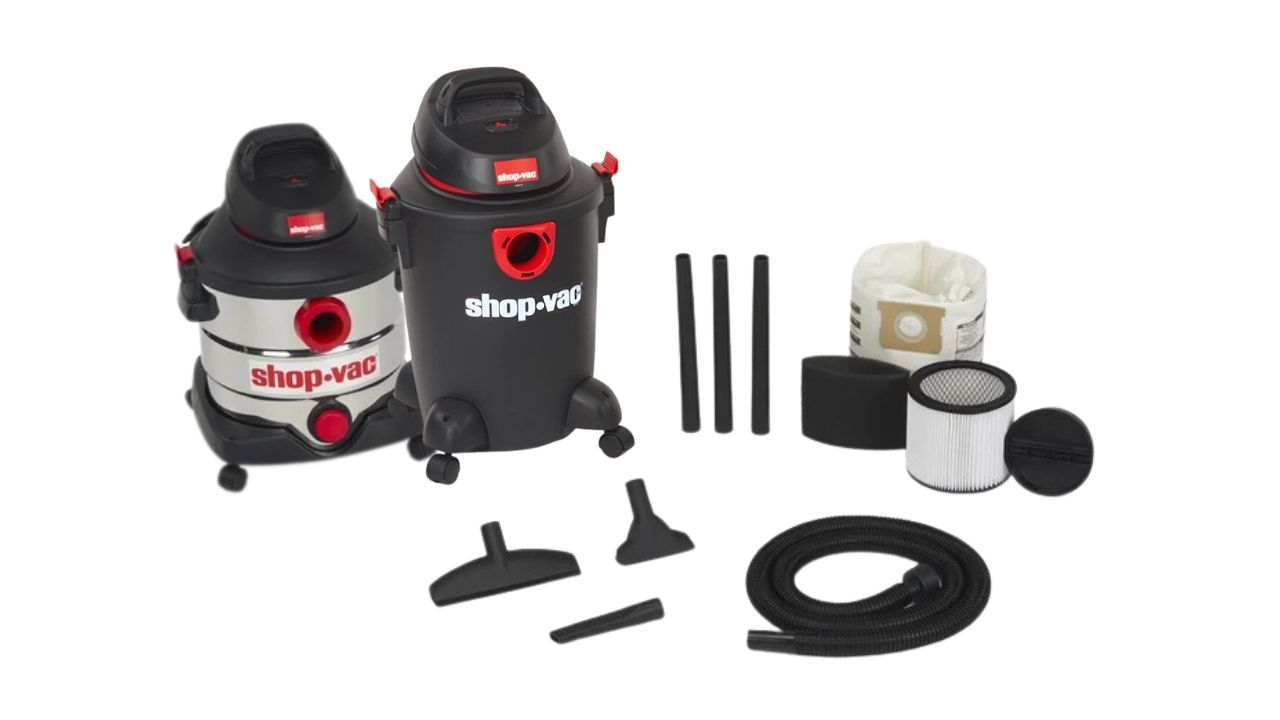
The Sixty Dollar Fantasy Versus the Real Unit
The math looks unbeatable on paper. A shop vac you already own against a new power unit running $400 to $1,200 feels like an easy call.
It isn’t free. You still need 2-inch PVC pipe, sweep elbows, wall inlet valves, a switched outlet or relay, and the labor to fish it through studs or a slab. Add those up and the gap between garage hack and real system shrinks fast.
Shop-Vac, made under license by GreatStar Tools USA after Hangzhou GreatStar Industrial’s acquisition of the brand, backs its consumer line with a Limited Lifetime Home Use Warranty. It covers the original purchaser only, isn’t transferable, and excludes commercial and continuous-duty service, exactly the condition a piped conversion creates.
What You Actually Want Here Is the Convenience
What you’re really chasing isn’t suction. It’s one hose, no cord to untangle, and never lugging a canister up a flight of stairs again.
That ache is real. Anyone who’s hauled a 40-pound shop vac up from the basement to vacuum a bedroom knows the appeal of a hose that’s already mounted and ready.
What A Shop Vac And Central Vac Really Are
Both pull air through a hose and trap dirt before it escapes. They were built for different jobs, and that difference decides whether this hack survives past the first winter.
Same Idea Inside, Very Different Engineering
A shop vac sprints. A central vac runs marathons. One’s a portable canister you roll to the mess; the other’s a power unit bolted to a wall, feeding inlets through buried pipe.
The shop vac assumes short bursts, then a rest, then unplug and move on. A power unit assumes someone starts it, walks the hose through three rooms, and doesn’t stop for twenty minutes.
The Motor Is Where These Two Split Apart
Most shop vacs run a thru-flow motor that cools itself with the same dirty air it just sucked up. Central vacuum power units favor a tangential bypass motor instead, and that single design choice is the whole story.
According to Cana-Vac’s own central vacuum motor types compared, a thru-flow motor has no dedicated cooling fan and runs roughly 33 percent hotter under load. A tangential bypass motor uses a separate fan to cool the armature, then vents that heated air out through a horn and muffler, away from the motor chamber and your living space.
Verify exact motor type from the product’s own spec sheet before you buy anything; manufacturers mix thru-flow and bypass models within the same product line.
Why Continuous Duty Is the Dealbreaker Word
A continuous duty motor is rated to run for hours straight without overheating. A shop vac’s universal motor was never designed for that job.
Industrial vacuum suppliers report that a thru-flow motor pushed nonstop through a restricted pipe run can fail in roughly a month of regular whole-house use, a rough warning sign rather than a guarantee since failure timing depends on pipe length and runtime. That’s the exact workload continuous duty central vacuum systems exist to survive.
Would your shop vac survive twenty straight minutes of cleaning three bedrooms back to back? That’s the real test, not the HP sticker.
The Specs That Decide This, Not Horsepower
Ignore the peak horsepower number on the box entirely. Air watts, water lift, and CFM are the three numbers that actually predict how this hack performs once it’s piped into walls.
Why Peak Horsepower Is Mostly Marketing Theater
Peak horsepower measures a split-second spike at motor stall, not the power delivered while you’re cleaning. Universal motors in shop vacs run at roughly 40 to 70 percent of that peak number in normal use, per widely shared forum testing among woodworking builders.
Here’s the number that matters more. A Shop-Vac model rated at 2.5 peak HP lists just 60 CFM of airflow, 53 inches of sealed water lift, and 120 peak air watts, per the manufacturer’s own listing. That’s the real ceiling for a fixed-pipe install, no matter what the box says.
Air Watts, Water Lift, and CFM Explained Simply
Air watts measure true suction power at the cleaning head, combining airflow and vacuum pressure into one number. Water lift is the pulling force behind that air, and CFM is the literal volume of air the motor moves per minute.
Compare these three numbers side by side when comparing air watts across systems, and skip the horsepower sticker completely. A 700-air-watt central vacuum power unit and a “6 peak HP” shop vac are not playing the same sport, even though both numbers sound impressive on a shelf tag.
How Suction Quietly Fades Over Long Pipe Runs
Every foot of pipe and every elbow steals a measurable slice of suction. A basement power unit feeding a bedroom inlet 60 feet away, through four or five fittings, loses real performance before air reaches the hose end.
Think of the loss as a slow leak, not a cliff. Each 90-degree elbow costs roughly the equivalent of several extra feet of straight pipe, and a shop vac’s smaller motor has far less reserve power to absorb that than a purpose-built unit.
Pull the manufacturer’s airflow chart for your model before trusting any flat “loses X percent” rule online; losses vary by motor type and pipe diameter.
What Real Owners Say After Trying It
Yes, it runs, and builders confirm that. What they also report is a list of daily annoyances that never show up in the spec sheet.
Can You Really Use a Shop Vac as Central Vacuum?
Builders on the Fine Homebuilding forum who’ve wired one up report it holds suction well for several months, then performance drops as the filter loads with fine dust. One owner summed it up bluntly: it beats a central vac until the filter clogs, and then it doesn’t.
Set your expectations here before you cut a single hole in drywall.
The Filter That Clogs in Minutes, Not Months
Fine drywall dust and pet dander pack a shop vac’s small filter shockingly fast next to a central vacuum’s larger canister filtration. You feel it the moment the brush head stops gripping carpet pile and starts skating across it.
Cleaning the filter every session gets old. A cyclone pre-separator ahead of the intake catches the bulk of the debris before it reaches the filter, stretching the time between cleanings.
Why One Forum Veteran Says Just Skip It
A longtime Garage Journal poster put it plainly: skip the shop vac conversion and track down a used, sealed continuous-duty power unit instead, since the wiring and plumbing labor is identical either way.
That advice deserves a fair hearing. Running pipe and cutting inlets is the same job either way, so the motor is the only thing you’re actually saving money on.
Where This Hack Actually Works Well
It earns its keep in a garage or workshop with a short pipe run and hard floors. That’s the actual sweet spot, not a whole house.
The Garage and Workshop Are the Real Sweet Spot
A short run, concrete or hard flooring, and bigger debris like sawdust and metal shavings all suit a shop vac’s strengths, a pattern reported consistently on Sawmill Creek’s woodworking forum. Vent the dust outside through the wall and stop dragging a canister between work stations.
A purpose-built power unit does the same job quieter, vented outdoors the same way, just at a higher upfront cost.
Vac Pan and Toe Kick Inlets for the Kitchen
A vac pan lets you sweep crumbs straight into the pipe with your foot, no bending and no dustpan. Mount it at the cabinet base, run rigid pipe back to the power unit, and a kitchen annoyance becomes a five-second habit.
When a Dedicated Shop Unit Beats a Shop Vac
A shop vac, a garage central vacuum kit, and a dust collector solve three different problems, and confusing them is where most garage conversions go wrong.
| System | CFM | Water Lift | Noise | Duty Cycle |
|---|---|---|---|---|
| Shop vac | ~60 CFM | ~53 in. | Loud, closet-rattly | Intermittent |
| Garage central vac kit | ~100+ CFM | ~90+ in. | Moderate, ventable outdoors | Continuous |
| Dust collector | 300+ CFM | Low | Moderate | Continuous |
Dust collection needs high CFM at low water lift to move bulky chips, a job a shop vac’s high-lift, low-CFM motor isn’t built for. Any woodshop running a piped dust system should plan around combustible wood dust safety standards, since accumulated fine sawdust inside ductwork is a recognized fire hazard.
Where It Fails As A Whole House System
Past roughly 40 feet of restricted pipe, and without automatic start wiring, a shop vac stops behaving like a real central vacuum and starts behaving like a struggling appliance.
Long Pipe Runs Strangle A Shop Vac Fast
Suction drops noticeably past 35 to 40 feet of 2-inch pipe, a threshold worth confirming against your unit’s airflow curve rather than assuming. You’ll notice the brush head skating over carpet instead of lifting embedded dirt.
No Automatic Start Without Extra Wiring
Real central vacuum inlets trigger a low-voltage circuit, around 18 to 24 volts, that signals the power unit to start the instant you plug in the hose. A shop vac’s switch is a standard 120-volt toggle, not a low-voltage contact, per wiring discussions on the Houzz forum.
Bridging those two systems safely means adding a relay:
- The inlet door switch closes the low-voltage circuit when you insert the hose.
- That low-voltage signal triggers a relay coil.
- The relay closes the 120-volt side, switching the shop vac’s motor on.
- Removing the hose breaks the circuit and shuts the motor off automatically.
Small Tank Means Constant Trips To Empty It
A two-gallon shop vac canister fills before you’ve finished a single bedroom, especially with pet hair or drywall dust in the mix. A central vacuum’s larger canister goes weeks between empties.
That gap matters even more next to a true portable central vacuum, which carries a bigger tank while still rolling room to room.
The Wiring And Install Reality Nobody Mentions
The part nearly every DIY thread skips is the relay that bridges a low-voltage inlet switch to a 120-volt motor, and that wiring has to follow your local electrical code, not just a forum diagram.
The Low Voltage Relay You Will Probably Need
Most inlet valves ship wired for a low-voltage start circuit, not a shop vac’s household plug. A relay sits between the two, translating a harmless 18-volt signal into the switch that powers the motor.
Have a licensed electrician check the mains-side wiring once it’s installed. A miswired relay on a 120-volt circuit isn’t a place to guess.
Pipe Size And Routing That Protect Your Suction
Builders on the Garage Journal forum report a common mistake: oversizing the pipe to 4 inches because bigger sounds better. It isn’t. Match pipe diameter to your hose diameter instead.
- Use 2-inch Schedule 20 PVC to match a standard central vacuum hose, not 4-inch drain pipe.
- Keep the total run as short as the layout allows.
- Use sweep elbows instead of sharp 90-degree fittings wherever the pipe turns.
- Count every elbow before you commit, since each one costs real suction.
Venting The Exhaust And Taming The Noise
A shop vac running inside a closed closet is loud and genuinely rattly, the kind of noise that makes you avoid using the system. Vent the exhaust outside through wall ducting and add a muffler, the same way a real power unit does, and the install becomes something you’ll actually live with.
Filtration And The Health Question You Cannot Skip
A filter labeled “HEPA-style” is not the same thing as a certified HEPA filter, and that distinction matters most in a home with allergies or asthma.
HEPA Versus HEPA Style Is Not The Same Thing
True HEPA, by the U.S. Department of Energy’s own standard, captures 99.97 percent of particles at 0.3 microns, the size range filters struggle with most. Many shop vac filters are labeled “HEPA-style” rather than certified to that standard, so check the product listing rather than trusting the word HEPA on the box.
Why A Clogged Filter Hurts More Than Suction
A choked filter doesn’t just slow you down. It pushes fine dust past the filter media into the motor, and dirty cooling air shortens the life of a thru-flow motor that already runs hotter than a bypass design.
Bags, Cyclones, And Keeping Dust Out Of The Air
A cyclone separator ahead of the shop vac spares both the filter and the motor by spinning out the bulk of the debris first. Oneida Air Systems’ Dust Deputy line uses centrifugal force to pull roughly 99 percent of dust out of the airstream before it hits your filter; the static-dissipative DIY version costs more but matters when piping through PVC, where static buildup is a real grounding concern. Review the cyclone separator static-grounding guidance before final assembly.
Use sealed collection bags instead of a bare canister when anyone in the household deals with allergies or asthma, since a bag keeps captured dust from re-entering the air during emptying.
How To Decide For Your Home Tonight
Measure your longest planned run, decide whether this covers a garage or a whole house, and check your shop vac’s motor rating before you commit to cutting anything.
A Quick Checklist Before You Cut Any Pipe
- Measure the single longest run from planned power unit location to the farthest inlet.
- Count every elbow that run will need.
- Decide honestly whether this project covers just the garage or the entire house.
- Confirm whether your shop vac’s motor carries any continuous-duty rating at all.
- Check the warranty fine print for exclusions on commercial or continuous use.
When Buying A Real Power Unit Wins
For whole-house use, a real central vacuum power unit pays for itself over years of daily cleaning without a burned-out motor. For a short garage run with hard floors, the shop vac hack genuinely holds up, and there’s no shame in starting there.
Conclusion
You walked in believing a shop vac and some pipe could quietly replace a central vacuum. Now you know it can, but only in the right spot, with the right motor and wiring behind it.
Tonight, measure your longest planned pipe run, count the elbows, and check whether your shop vac’s motor carries a continuous-duty rating. A real central vacuum earns its keep by running for years while you never lift a canister again, a promise no garage shop vac conversion was built to make.
Frequently Asked Questions
Can you use a shop vac as a central vacuum system?
Yes, for a garage or workshop with a short pipe run and hard floors. It struggles as a whole-house system because the motor isn’t rated for the continuous duty longer pipe runs demand.
Why aren’t shop vacs designed to run continuously like a central vacuum?
Their thru-flow motors cool themselves with the same air they vacuum, running hotter under sustained load than a tangential bypass design. That heat buildup eventually kills the motor.
Will a shop vac lose suction over long PVC pipe runs?
Yes, noticeably past roughly 35 to 40 feet of 2-inch pipe. Every added foot and every elbow chips away at the airflow a shop vac’s smaller motor has to spare.
Is a shop vac the same as a dust collector for a woodshop?
No, they solve opposite problems. A shop vac delivers high water lift at low CFM, while a dust collector needs high CFM at low lift to move bulky wood chips.
Is it cheaper to convert a shop vac or buy a used central vacuum power unit?
A used power unit wins this comparison once you add up pipe, relays, and inlet valves either way. Labor cost is identical, so the motor is the only real variable.