You typed beam easy living expecting a model number, and got a storefront instead. That mix-up matters, because dealers still brand the company “by Electrolux,” a relationship that ended years ago, and the gap between the sign and the company behind it leaves buyers guessing at warranty coverage, parts, and price.
Finish this guide and you will fully understand beam vacuum systems, which air watt rating fits your square footage, and when a local Easy Living Center beats ordering online.
Beam Easy Living
Beam easy living is the retail banner independent Beam dealers use, not a company-owned chain. Grass Valley, California’s location has sold Beam systems since 1979. Beam now belongs to Les Industries Trovac Ltd., which bought the brand in June 2024. New buyers need a dealer guide, not a spec sheet.What that Beam storefront name really means
A storefront name, not a product line. That’s the short version, and it explains most of the confusion buyers run into before they ever talk price.
Is beam easy living a product or a store?
Beam easy living is a store, not a product. The phrase points to a dealer’s retail name, and searching for it like a model number explains why the results felt off.
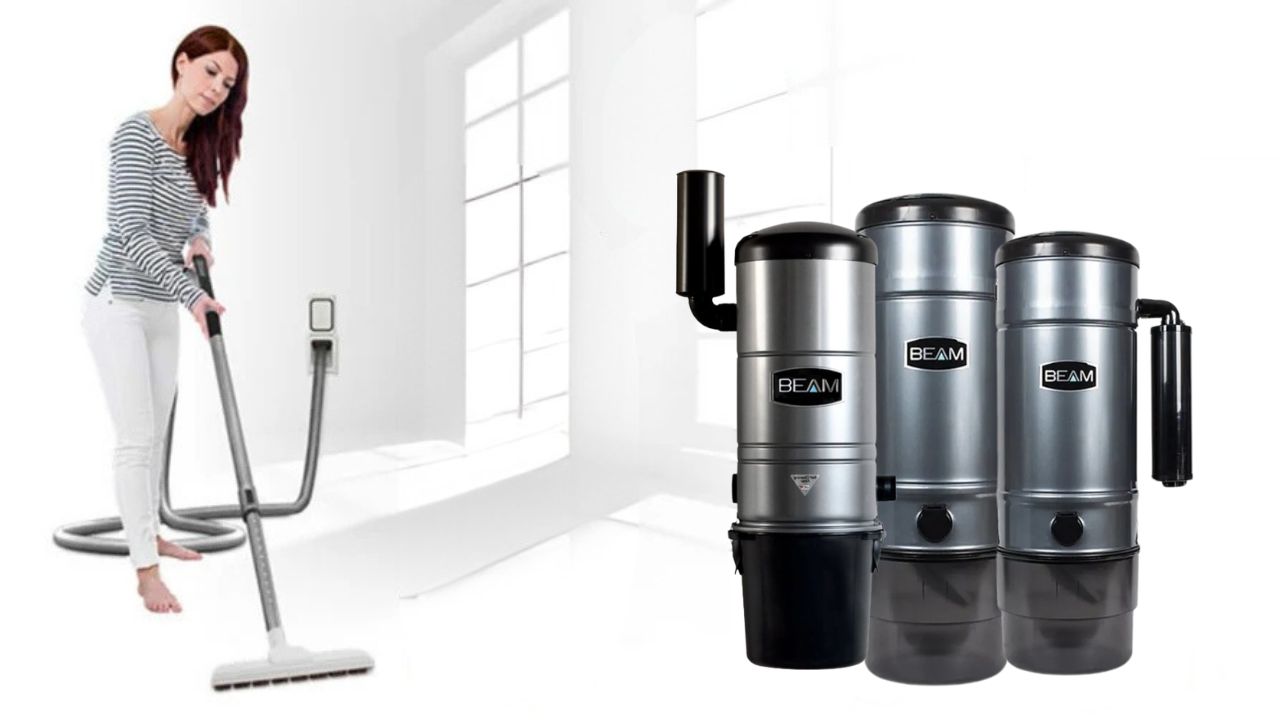
No Beam catalog lists an “Easy Living” unit, despite how naturally the name reads as one. Easy Living is the storefront brand a Beam dealer chose, the kind of name built to sound like comfort and convenience rather than describe a motor or a filter. Landing on a shop page after searching for a product feels like a bait and switch, even though nobody set out to mislead anyone.
Is beam easy living center a beam company store? No. It’s an authorized Beam dealer trading under its own name.
Why local dealers adopted the Easy Living banner
Dealers picked the Easy Living name to sell a lifestyle, not a single Beam spec sheet. The banner let one storefront carry central vacuum installs alongside security, audio, and home theater work under a softer brand than “vacuum store.”
Beam itself supplied the power units and powerheads. The Easy Living dealer supplied the rest of the wish list: cameras, intercoms, whole-house audio, generators. Knowing that split matters, because the dealer sets the install price and the service relationship, not Beam corporate.
So who do you actually call when the unit acts up, the dealer or the brand? Almost always the dealer.
The Grass Valley shop most searches actually find
The Grass Valley, California Easy Living Center is the dealer most beam easy living searches surface, and it has sold Beam systems since 1979. That tenure is most of why it dominates the results page.
That store closes Beam systems on roughly three out of every four custom homes it bids, according to a trade-press profile of the Beam Easy Living Center dealer model, a close rate builders in most regions never see. It built that number over four and a half decades of walking builders through inlet placement before drywall goes up, not by buying the loudest ad on a directory page.
Your own local Easy Living dealer might sell a different mix, security one year, home theater the next. Confirm what’s actually in stock before you assume the same lineup.
The ownership story your dealer skips
Beam has changed owners twice since 1987, and the dealer sign out front rarely mentions either deal. Iowa-built Beam moved to Swedish, then Canadian ownership, and each handoff changed who actually answers your warranty call.
This guide leans on Beam’s and Trovac’s own warranty pages, owner accounts on the VacuumLand forum, and trade press coverage, checked against the ASTM F558 air watt standard instead of marketing copy.
From Iowa workshop to Electrolux to Sweden
Beam started as an Iowa appliance shop, not a Swedish import, and stayed independent for thirty years before its first sale. The company’s roots have almost nothing to do with the brand most shoppers picture today.
Robert Sampson founded Beam in 1957 in Webster City, Iowa, building central vacuum units out of a former washing machine plant. AB Electrolux, the Swedish appliance giant, bought Beam in 1987 and ran it for two decades before formally renaming the line Beam by Electrolux in 2007. Production then moved to Juarez, Mexico in 2010, putting the factory floor a long way from the Iowa shop where the brand began.
Why 2018 changed who answers warranty calls
Electrolux sold Beam to Nuera Air in August 2018, and most owners never noticed the change happen. Nuera Air, a Canadian central vacuum manufacturer, took over production and warranty support while the units already installed in American walls stayed exactly where they were.
That’s the part dealer pages skip. Your paperwork might still say Electrolux. Your actual warranty contact, by 2018, sat in Canada under a different company name, which is why calling the number on an old manual sometimes goes nowhere.
Trovac took over Beam in June 2024
Nuera Air stopped making Beam in 2024, and Les Industries Trovac Ltd. bought the brand that same June. Trovac, a Canadian manufacturer that now builds roughly a third of the central vacuum systems sold worldwide, became the company behind every Beam unit shipped after that date.
Beam’s official warranty terms under Trovac Industries confirm coverage up to 15 years on motors, electrical components, and dirt receptacles, but only for units built under Trovac’s watch. Anything manufactured before September 2024 still falls under the terms in the original owner’s manual, whichever company’s name was on it at the time.
Keep your bill of sale. Trovac’s own warranty language says proof of purchase sets your coverage window, and without it, the clock starts from the manufacture date instead, which is rarely the date you’d choose.
Who owns beam central vacuum now? Trovac, as of June 2024, full stop.
What Beam owners say after years of use
Owner reports split sharply by build era. Older steel Beam units earn loyalty for lasting decades, while the more recent Alliance-era powerhead draws real complaints about short life and weak filtration.
The Alliance motor complaints you should read first
Enthusiasts on the VacuumLand forum single out the Alliance single-stage motor as the weak link in recent Beam lineups. Owners describe it failing well short of what a central vacuum motor should deliver, alongside filtration several call disappointing.
These are forum accounts, not lab data, gathered from people who repair and collect vacuums as a hobby and tend to compare every newer unit against decades-old steel workhorses. Treat the complaints as a pattern worth asking your dealer about directly, not as a guaranteed failure rate for your specific unit.
Owners who still love their older Beam units
Plenty of Beam units built before the Nuera and Trovac handoffs still run quietly after twenty or thirty years. Owners praise the heavier steel canister construction and the suction those older bypass motors hold onto.
Satisfaction tracks build year more than the badge on the front. A Beam built under the Electrolux name on the older bypass platform often outperforms a newer plastic-canister unit in owner reports, simply because the older design used heavier components and a motor that ran cooler.
Build year, not brand year, predicts how your unit ages.
Reading Beam specs without the marketing fog
Beam’s spec sheet uses the same numbers every central vacuum brand uses: air watts, water lift, CFM. Those numbers hide real differences if you don’t know what each one actually measures.
Air watts matter more than the wattage sticker
Air watts measure suction at the hose end, and that number tells you more than the motor’s electrical wattage ever will. It’s the figure worth demanding before anything else on a spec sheet.
The ASTM F558 standard defines air watts as airflow in cubic feet per minute multiplied by water lift in inches, then divided by 8.5. A power unit advertised with a high amp draw can still produce mediocre air watts if the impeller design wastes that electricity as heat instead of suction. Ask for the air watt rating specifically. The motor wattage printed on the box is marketing, not performance.
HEPA filter or HEPA style, the difference is real
True HEPA captures 99.97 percent of particles at 0.3 microns, the size EPA’s HEPA filter standard treats as the hardest to trap. Some Beam literature lists a 98 percent capture rate, which falls short of that bar even though the word HEPA shows up in the same sentence.
That two-point gap matters more than it sounds. Anyone in the home with asthma or allergies should ask the dealer for the certified HEPA rating in writing, model number included, rather than trusting the word HEPA printed loose on a brochure.
Bypass motor or flow through, why lifespan differs
A bypass motor cools itself with clean outside air, so it tends to outlast a flow-through motor that pulls dirty, dust-laden air across its own windings. That single design choice explains most of the durability gap between old and new Beam units.
Ametek and Lamb, among other motor makers, built much of the central vacuum industry’s bypass hardware, the same design behind those decades-old steel Beam units still running today. Flow-through motors run cheaper to build but breathe the same dirt the canister collects, which wears the bearings faster. Ask which design sits inside your specific Beam model before any dealer promises a fifteen or twenty-year lifespan.
Why suction fades past 35 feet of pipe
Suction drops with every elbow and every extra foot of pipe, and inlets past 35 feet from the power unit feel noticeably weaker than the lab number printed on the box. Lab ratings assume a short, straight test run no real house has.
Three things change that math inside your actual home:
- Each 90-degree elbow costs roughly the same suction as several extra feet of straight pipe.
- Pipe runs past 35 feet start losing noticeable air watts at the inlet, even with a correctly sized power unit.
- A power unit centered near the middle of the pipe network beats one stuffed in a far corner of the basement, regardless of its rated air watts.
Walked the hose to your farthest bedroom yet? Do that before you sign anything, not after.
The current Trovac Beam lineup and prices
Trovac’s current ABEAM lineup scales from condo-sized homes to 20,000-square-foot estates, and every unit runs a hybrid filter that switches between bag and bagless. Beam central vacuum air watts by model now top out far higher than the old single-motor Classic ever reached.
Five ABEAM models from condo to commercial
Beam’s ABEAM generation spans several power tiers, each built around the same hybrid filtration core. Every unit uses a self-cleaning, HEPA-certified Gore-Tex filter that clears itself on shutdown, the upgraded Beam Hybrid option that replaced the older bag-only Classic design.
| Model | Air Watts | Rated Coverage | Best Fit |
|---|---|---|---|
| ABEAM205A | 610 | 3,000 sq ft | Condos, small ranch homes |
| ABEAM475A | 659 | 8,000 sq ft | Mid-size two-story homes |
| ABEAM495A | 695 | 10,000 sq ft | Larger single-family homes |
| ABEAM4500A | 1,354 (dual motor) | 20,000 sq ft | Estates, commercial builds |
Halve the manufacturer’s square footage claim for honest two-story performance. A unit rated for 10,000 square feet on a single straight run will feel tighter once a second floor and its extra elbows enter the math.
What the flagship 1,354 air watt unit costs
The dual-motor ABEAM4500A produces 1,354 air watts on two 240-volt motors, Trovac’s most powerful residential and light-commercial unit. It sits well above anything the old Classic platform offered.
Entry ABEAM models list from roughly 785 to 1,431 dollars online before installation, though dealer pricing through an Easy Living Center often runs higher once labor, pipe, and inlets get added. Budget-minded buyers who don’t need hybrid filtration can still spec a comparable Beam Classic system instead, trading the self-cleaning filter for a lower sticker price. Treat any number here as a starting point, and get a written quote broken into unit cost and labor cost before you commit.
Whether new Beam still fits your old pipes
Most Beam fittings have matched standard 2-inch central vacuum pipe for decades, so a new ABEAM unit mates to an existing Beam, NuTone (now built under license by Broan-NuTone LLC), or generic PVC network. That compatibility is one of the few things buyers can count on across eras.
Exceptions exist. Beam’s Alliance and Q Series hose lines broke from that standard cuff, so test your old hose against a new inlet before you assume it fits. Bring your existing inlet valve and hose end to the dealer counter and have them check it against the new unit in person, not over the phone.
Repair your old Beam or replace it
Repairing an old Beam beats replacing it whenever the pipe network and inlets are still sound, since a new motor costs far less than a full system swap. Replacement only earns its price once the canister itself fails.
When a motor swap beats a whole new unit
A motor swap on an older steel Beam often runs a few hundred dollars in parts, a fraction of a new power unit’s price. That math favors repair in most cases where the rest of the system still works.
Replace the whole unit once the canister cracks, the circuit board fails outright, or parts for that specific model stop shipping anywhere. Short of those three triggers, a motor swap almost always wins on cost.
What that surprise replacement quote really covers
One owner reported paying 995 dollars to swap a power unit that retails closer to 360 dollars on its own, and the gap was almost entirely labor, not parts. That split surprises most people the first time they see the invoice.
Wall-mounted power units in tight utility closets take real time to disconnect, lift, and remount, and that labor adds up fast on an hourly quote. Ask any dealer, Easy Living Center or otherwise, for the unit price and the labor price as two separate line items before you approve the work.
Parts you can still source after the buyouts
Beam parts remain available through Trovac’s own site and a wide network of third-party vacuum shops, even for units built under Electrolux or Nuera. Are beam central vacuum parts still available after the changeovers? Yes, for both current and legacy models.
Trovac now publishes manuals, filter part numbers, and replacement bag listings for legacy Beam models on its site, not just the current ABEAM line. Independent shops still stock motors, inlet valves, and powerhead parts for units that are decades old. Write down your model number tonight, before the sticker fades past reading, since that number is what every parts search starts with.
Installation truths that protect your warranty
A Beam warranty covers the unit, not a bad installation, and the two most common mistakes, wrong inlet spacing and poor exhaust routing, both happen before the drywall goes up.
Match inlet count to square feet per floor
Plan inlet count by square feet per floor, not by the whole home’s total square footage, or you’ll end up paying for hose you never actually use. That single planning error shows up in nearly every retrofit complaint.
One inlet placed wrong on a two-story home can kill the convenience the whole system was supposed to deliver, forcing a long hose drag from the wrong end of the hall. Walk the actual hose length to your farthest planned inlet before any wall gets sealed, using the hose you intend to buy, not the shortest one on the showroom floor.
The exhaust mistake that melts PVC pipe
One builder vented a Beam unit’s exhaust directly against the home’s PVC ductwork, and the heat melted the pipe within months. That single routing decision turned into a warranty dispute nobody budgeted for.
Exhaust needs to vent outdoors or into open, unobstructed space, never against ductwork or insulation. A bad exhaust install can void the part of your warranty that depends on correct setup, exactly the kind of detail a rushed builder-grade installation skips.
Conclusion
You came in thinking Easy Living was a Beam model, and you’re leaving knowing it’s a dealer’s storefront name layered over a brand that changed owners twice since 1987. Tonight, pull the model number off your power unit and check the build date against 2018 and 2024, so you know which company actually owes you support. A repaired or correctly sized Beam system keeps running for twenty years, longer than any portable vacuum you’ve dragged up a flight of stairs ever managed.
Frequently Asked Questions
Is a Beam Easy Living Center owned by Beam, or is it an independent dealer?
No. Easy Living Centers are independently owned Beam dealers, not Beam-operated stores, though they sell genuine Beam units and parts.
Who makes Beam central vacuums now that Electrolux and Nuera are gone?
Les Industries Trovac Ltd. makes Beam now. The Canadian manufacturer bought the brand in June 2024 after Nuera Air, which had owned Beam since 2018, stopped production.
How many air watts does a Beam central vacuum have, and how much do I need?
Current ABEAM units span 610 to 1,354 air watts. Match that number to your home’s actual pipe-run length and floor count, not just total square footage, since long runs and extra elbows eat into the rated suction.
Are Beam central vacuum parts and filters still available after the Trovac acquisition?
Yes. Trovac publishes parts and filter listings for both current and legacy Beam models, and independent vacuum shops stock motors and valves for older units too.
Should I buy a Beam system from a local Easy Living Center or order one online?
Buy locally for installs, order online for single parts. Choose a local Easy Living Center for installation, pipe-run planning, and bundled warranty support, and reserve online ordering for owners replacing one known part themselves.