“Beam pro” is the phrase that brought you here, and it isn’t an actual model on any Beam spec sheet. You’re left guessing between Classic, Serenity, and Alliance while a dealer points at whatever box sits in the warehouse, trusting an air watt number that shifts between listings for the same unit.
This breakdown and our Beam central vacuum guide together cover the full lineup. Finish reading and you’ll know which tier performs like a pro unit, the 2024 ownership shift that decides whether parts exist in ten years, and the filtration claim worth checking first.
Beam Pro
“Beam Pro” means Beam’s top-performing tier, not an actual product name. Trovac Industries, which acquired the brand in 2024, builds that pro-grade unit as the Alliance 700TC, rated for homes up to 10,000 square feet. Skip it in homes under 2,500 square feet with short pipe runs.What Beam Pro really means when you search it
“Beam Pro” isn’t a SKU. It’s shorthand for whichever Beam unit performs like a professional-grade central vacuum system, and that ambiguity is exactly what lets a dealer steer the sale. This guide is built from spec comparison across Beam’s own product pages and manufacturer documentation, plus aggregated owner feedback from forums like VacuumLand, not a single dealer’s inventory or a paid placement.
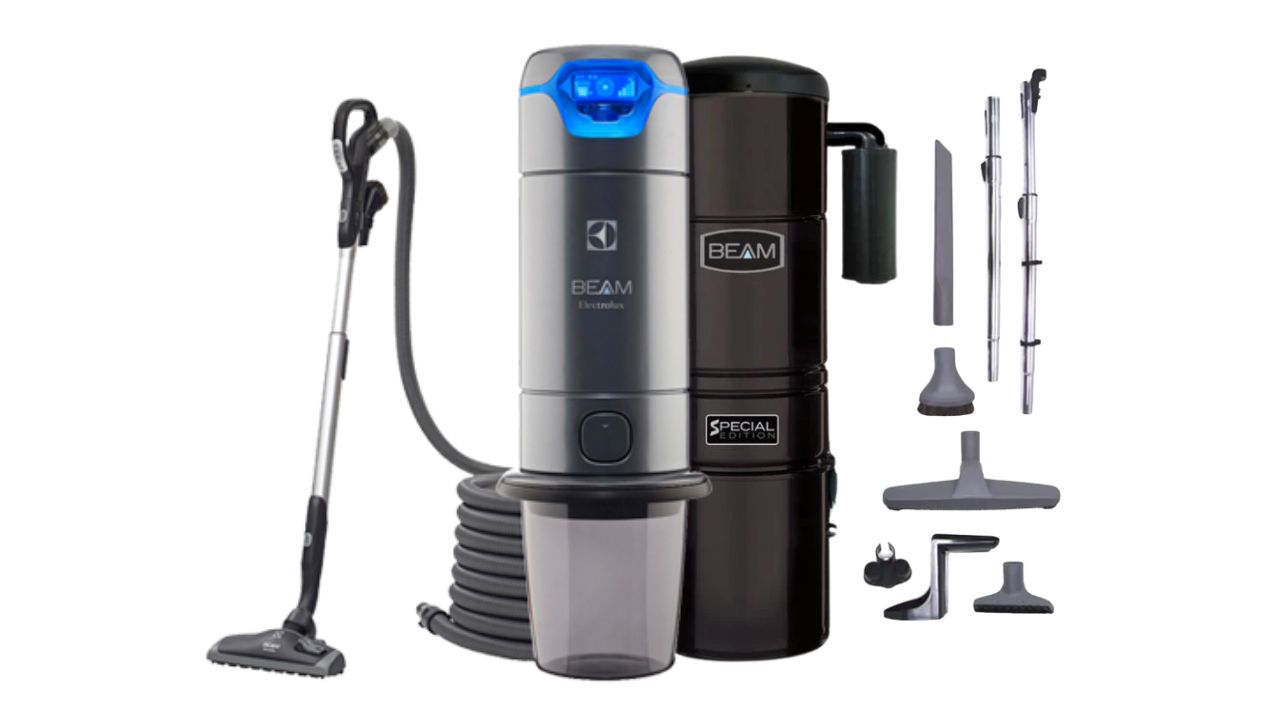
What does Beam Pro actually mean for buyers?
It means you typed a phrase, not a part number, so the lineup decides the answer for you. Beam sells three tiers built around that gap: Classic for entry-level homes, Serenity for mid-range performance, and Alliance for genuine pro-grade suction. None of them wears a Pro badge anywhere on the unit, the box, or the warranty card. Strip the marketing labels off all three and the only honest way to sort them is by water lift, CFM, and air watts, the same three numbers this guide keeps returning to.
That blank space is where a dealer’s highest-margin model conveniently fits.
The Alliance 700 is the real pro tier
Alliance is Beam’s pro tier, and the 700TC sits at the top of it. The 700TC delivers 700 air watts, the combined suction-and-airflow score explained below, at 125 CFM and 122 inches of water lift, enough to cover roughly 10,000 square feet from a single power unit. It pairs a Smart Screen control panel with a stage of Beam’s self-cleaning filtration, and a companion 700TB model serves equally large floor plans at the same 125 CFM rating.
Homes beyond that range need more. Check whether you should step up to Beam Premium or the dual-motor Platinum SC3500, which Beam rates between 590 and 1,200 air watts for homes up to 12,000 square feet on 220/240V power, before assuming a single Alliance unit reaches every inlet.
Why dealers let the Pro label stay fuzzy
A fuzzy label benefits the seller, not you, because it leaves room to recommend whatever sits on the showroom floor. Here’s what actually protects you before you talk price:
- Ask for the exact model number, never a tier name.
- Request the printed spec sheet first.
- Compare that sheet against Beam’s own product page, not the dealer’s brochure.
A vague request for “the pro one” gets filled with margin, not need.
The ownership story no dealer mentions
Beam has changed hands three times since 1957, and the dealer pitching you a unit today rarely mentions the most recent switch. That switch decides who answers the phone when a part fails in year twelve. Three different parent companies in under seventy years is a lot of turnover for a system bolted into your walls, and each change reset who actually staffs the support line.
From Beam Industries to Electrolux to Trovac
Beam started under Beam Industries in 1957, was later owned by Electrolux, and now belongs to Trovac. Electrolux divested the Beam central vacuum business in August 2018 as part of Electrolux’s divestment of the Beam central vacuum brand, a deal that sold Beam to Nuera Air and moved the Sanitaire commercial line to BISSELL. Nuera Air ran Beam for six years before Les Industries Trovac Ltd. acquired the brand in June 2024, documented in Beam’s company history and 2024 Trovac acquisition. The 2018 sale bundled Beam together with Sanitaire’s commercial vacuum line, a divestment covering roughly 70 million dollars in combined 2017 revenue, a sign that Electrolux already viewed central vacuum as a non-core category years before Beam changed hands again. Forget anything you’ve read calling Beam “an Electrolux brand.” That chapter closed in 2018, and Trovac is the company that matters now.
Why the April 2024 production halt matters to you
Nuera Air stopped manufacturing on April 2, 2024, and that freeze briefly stranded every brand under its roof, including Beam, DuoVac, Husky, Soluvac, Smart, and Intervac. Trovac restarted production within months and now runs the line, but owners hunting parts during that gap learned how fast one corporate decision can strand a built-in system bolted into a wall.
A current catalog exists under Trovac, yet long-term support for older Alliance units bought during the Nuera Air years remains the open question no dealer wants to answer directly. Ask any dealer quoting a Beam unit today whether their warranty paperwork still references Nuera Air, since outdated paperwork is a clue the listing hasn’t been updated since the acquisition closed.
Beam USA versus Beam UK confusion
They’re different companies entirely. The Beam selling central vacuums across North America is the Trovac-owned brand covered throughout this guide, while Beam Vacuum & Ventilation has installed systems across Ireland and the UK since 1977 under separate ownership. Confuse the two and you’ll compare North American pricing against a UK installer’s warranty terms, or chase parts from a supplier that has never shipped to your address.
Will parts still be here in ten years?
Central vacuum bodies run 20 years or more, which makes parts continuity the real gamble, not motor specs. Bags and basic hoses cross brands easily since most fittings share a standard bore, but Beam’s Smart Screen boards and hose ends are brand-locked and stocked only by authorized dealers.
A motor mount, a circuit board, or a proprietary low-voltage inlet plate can sit on backorder for months when a manufacturer changes hands the way Beam just did, so the dealer’s actual shelf stock matters more than any catalog promise. Buy from a dealer who has the exact replacement filter and hose end on the shelf today.
A dealer who has to special-order it tells you something about year eight.
The air watt number Beam hopes you skip
Air watts measure real cleaning power, and Beam’s own listings for the same unit don’t always agree on the figure. That inconsistency matters more than any single spec on the page. A unit pulled off a showroom floor and the same model ordered online can carry two different printed ratings, and only one of those numbers survives the math once you check it.
How air watts are really calculated
Air watts combine airflow and suction into one figure using a fixed formula, not a marketing multiplier. The ASTM F558 standard for vacuum air performance sets the math: airflow in CFM multiplied by water lift in inches, divided by 8.5. Two brands testing identical motors should land on the same air watt score if both follow that formula honestly, and when they don’t, the gap usually means someone rounded a measurement in their favor.
The SC325 spec that flips from 550 to 650
The Serenity SC325 has carried three different power figures across Beam’s own retail network, and that’s not a typo, it’s a moving target. Older retailer listings rated the SC325 at 550 to 600 air watts covering 3,500 to 4,500 square feet. Beam’s current product page now lists the same model family at 650 air watts covering up to 8,000 square feet.
Treat any single listing as a snapshot, then confirm the exact figure on the unit you’re actually buying before it ships.
A forum owner caught the math not adding up
Owners on forums like VacuumLand have run the ASTM formula backward against printed CFM and water lift figures, and the air watt rating on the box hasn’t always matched what that math produces. The recurring complaint: a unit’s published CFM and water lift point to a higher air watt score than the number stamped on its own spec sheet, which means either the printed CFM, the water lift, or the headline air watt figure is the one quietly rounded.
Treat any single forum post as one data point, never gospel, then run the same backward math yourself before trusting the headline number.
HEPA on the box is not always true HEPA
Beam’s self-cleaning filter is not a true HEPA filter, even though the marketing language sits right next to that word. The gap between 98 percent and the certified standard matters most for anyone with asthma or allergies.
98 percent versus the true HEPA standard
Beam’s GORE CleanStream filter, built with material from W.L. Gore & Associates, the maker of Gore-Tex fabric, captures 98 percent of particles at 0.3 microns using cyclonic separation to pull larger debris out first. The U.S. Department of Energy defines true HEPA as capturing 99.97 percent of particles at that same 0.3-micron size, a benchmark confirmed on the EPA’s HEPA filter standard page. That gap sounds small written out, but it means more than 60 times more fine particulate slips through Beam’s standard filter than through a certified HEPA stage at the same particle size.
Do not call the GORE filter “HEPA.” Call it what Beam calls it: a 98 percent self-cleaning filter.
When the sealed HEPA upgrade is worth it
The sealed HEPA upgrade earns its price when exhaust air has nowhere outdoors to go. Alliance units that route exhaust through ductwork to the outside keep fine dust out of the living space regardless of filter grade, which is why Beam reserves its sealed HEPA stage mainly for installs where outdoor venting isn’t possible.
Vent the power unit outdoors whenever the layout allows it. It beats any filter claim printed on a box.
What allergy sufferers should actually ask
One question separates marketing from medicine: ask whether the filter is certified true HEPA or only “HEPA-style.” Demand the micron rating and the certifying body in writing, not a verbal promise at the counter. A power unit vented outdoors solves more of the allergy problem than any filter swap ever will, and bringing that question to the dealer counter before the demo starts beats raising it after a deposit is already down.
Bagless freedom or a quiet trade off?
Beam’s bagless design saves you the cost of replacement bags, but it trades that savings for filter maintenance and a louder unit than most buyers expect. Owners are split on whether the trade is worth it, and that split only shows up once you read enough individual ownership threads instead of a single dealer’s product page.
Why some owners say avoid bagless Beam units
Owners on VacuumLand have specifically warned newcomers to skip Beam’s bagless line, citing build quality more than the bagless concept itself. Complaints cluster around three points: powerhead motors reported to fail within five years, plastic housings that crack under normal use, and a fine dust cloud that escapes the moment you empty the bucket.
These are forum accounts, not lab results, but the pattern repeats across enough threads to take seriously before buying sight unseen.
The hidden cost of the self cleaning filter
The self-cleaning filter skips the recurring bag expense, but it doesn’t skip maintenance, it just moves the work to a different schedule. Fine dust eventually packs into the pleats over several years and quietly drops suction long before the unit feels broken, and most owners don’t notice the drop until they compare a fresh inlet reading against one from a year earlier.
Owners who want a cleaner emptying step without losing self-cleaning convenience often look at the Beam Hybrid alternative, which blends a removable liner with cyclonic separation instead of going fully bagless.
Table comparing bagged and bagless ownership
Laid side by side, bagged and bagless ownership trade convenience for different kinds of upkeep, not one clear winner. Weigh the comparison against your own tolerance for either a recurring bag bill or an occasional filter rinse before picking a side.
| Factor | Bagged | Bagless (Beam self-cleaning) |
|---|---|---|
| Recurring cost | New bag every 6 to 12 months | No bags, occasional filter rinse |
| Suction over time | Drops as the bag fills | Steadier, then drops slowly as pleats clog |
| Emptying mess | Sealed bag, minimal dust release | Dust cloud possible when emptying the bucket |
| Best fit | Allergy-sensitive households | Owners who hate buying bags |
What real owners say after years of use
Real ownership accounts swing harder than any spec sheet, from owners who call the Electrolux-era Beam lineup a disappointment to owners who kept one power unit running for two decades after a single motor swap. Neither extreme tells the whole story by itself, which is exactly why both deserve a look before you commit to a unit.
The absolute garbage reviews you should read
Some of the harshest owner reviews target the Electrolux-era Beam lineup specifically, not the brand as a whole. Forum posters on VacuumLand have called the powerhead build “garbage” quality and argued Electrolux-era ownership dulled a brand that used to build a sturdier machine.
Anger like that is one account, not a verdict, but it’s worth reading before buying a used or older unit instead of a current Trovac-built one.
The owners who swapped a motor and kept going
A failed motor doesn’t have to end a Beam system’s life, since most central vacuum motors share a common supplier across brands. Ametek/Lamb builds the tangential bypass motors inside the vast majority of central vacuum power units on the market, Beam included, which means a worn-out original motor often gets replaced with a compatible aftermarket unit rather than the whole power unit.
A repairable system beats a sealed, throwaway one when you’re planning for decades, not years.
Reading between the dealer five star reviews
Dealer websites rarely host the one-star story that would actually change your decision, so read past them. Cross-check forum threads and independent repair shops before trusting a perfect rating on a sales page, since a dealer page curating only five-star quotes tells you nothing about how the same unit sounds in a cramped utility closet three years in. Owners who found the Alliance’s 80 dBA motor unbearable in that kind of tight space have switched to the noise-reduced Serenity Plus model for quieter daily operation.
A brand worth buying survives the unfiltered threads, not just the showroom floor.
Matching a Beam pro unit to your home
The right Beam unit comes down to square footage per floor, inlet placement, motor type, and the dedicated 20-amp circuit the NEC requires for the power unit, never the tier name on the box. Get those right and the rest of the spec sheet barely matters.
Size to square footage per floor not total
Dealers quote total home square footage, which oversells the unit you actually need for daily cleaning. Plan around the largest single floor you’ll clean in one pass, not the sum of every level in the house. A 4,200 square foot two-story colonial with 2,100 square feet per floor needs a unit sized for that single floor, not the combined total, since the power unit only ever pulls air through one floor’s pipe run at a time.
Cut the dealer’s quoted coverage rating roughly in half for a realistic number in a multi-story layout.
Keep inlets within 35 feet of runs
Suction fades over distance, so keeping each inlet within about 35 feet of practical hose reach protects real-world performance. Every extra length of pipe run and every 90-degree elbow beyond the manufacturer’s stated maximum costs measurable suction at the farthest inlet. A corner inlet at the end of a long, elbow-heavy run can lose a meaningful share of a 700-air-watt power unit’s rated suction before the hose ever touches carpet.
Add another inlet to a far corner rather than stretching one hose across an entire second floor.
Bypass motor versus thru flow for lifespan
A tangential bypass motor outlasts a thru-flow motor because it cools itself with clean air pulled in separately from the dirty airstream, the same way a car engine stays cooler running clean coolant instead of whatever is splashing through the radiator.
A thru-flow motor instead runs cooling air straight through the dirt stream, wearing the motor faster over the same years of use. The Alliance 700TC runs a thru-flow motor, which is why its rated coverage assumes regular filter maintenance rather than years of neglect. Power units pulling enough amperage also need that dedicated circuit under NEC Sections 210.23(A)(2) and 422.15, typically a 20-amp circuit, not a shared outlet behind the water heater.
Ametek/Lamb builds both motor types across most competing central vacuum brands, Beam included, so motor type matters more than the logo on the case.
The one question to ask before you buy
One question separates an informed buyer from a margin sale: ask for water lift, CFM, and the air watt formula used to calculate the headline number. Demand all three before any price talk:
- Water lift in inches of water column.
- Airflow in CFM.
- Confirmation that the air watt figure follows the ASTM F558 formula.
A dealer who can’t produce all three on request isn’t the dealer who earns your signature.
Conclusion
You arrived hunting a model called Beam Pro and you’re leaving knowing it’s a tier you judge by water lift, CFM, and air watts, never a badge on a box. Pull the model number off whatever unit a dealer recommends tonight and check it against Beam’s own spec page before you sign anything. A correctly matched system keeps cleaning the same on year fifteen as it did on day one, something no portable canister you’ve hauled up the stairs has ever managed.
Frequently Asked Questions
Is there a Beam central vacuum model actually called “Beam Pro”?
No. Beam’s real lineup runs Classic, Serenity, and Alliance, and the Alliance 700TC is the closest thing to a pro-grade unit the brand sells. Anyone quoting you a “Beam Pro” is translating your search term into one of those three tiers, so ask which exact model number they mean.
Who owns Beam central vacuum now?
Trovac Industries owns Beam, having acquired the brand in June 2024 after previous owner Nuera Air ceased manufacturing that April. Electrolux sold Beam to Nuera Air back in 2018, so any listing still calling Beam an Electrolux brand is years out of date.
Which Beam central vacuum is the most powerful?
The Platinum SC3500 dual-motor unit, rated up to 1,200 air watts for homes as large as 12,000 square feet on 220/240V power. For single-motor homes, the Alliance 700TC tops out at 700 air watts and covers roughly 10,000 square feet on standard household current.
Is the Beam GORE self-cleaning filter a true HEPA filter?
No. It captures 98 percent of particles at 0.3 microns, below the U.S. Department of Energy’s 99.97 percent true HEPA threshold at that same size. Anyone with asthma or significant allergies should weigh the sealed HEPA upgrade or outdoor venting instead of trusting the standard filter alone.
Are Beam central vacuum parts still available after the 2024 acquisition?
Yes, through Trovac-authorized dealers, though stock for older Nuera Air-era Alliance units depends on which dealer you ask. Confirm parts availability for your exact model number before you buy a used or secondhand system.