You searched beam premium expecting the same name a neighbor swore by for fifteen years, and the lineup that shows up now looks unfamiliar. Most buyers trust the biggest air watt number on the box and assume nothing changed about Beam after 2024.
By the time you finish this guide, you’ll know who actually builds Beam Premium today, which single spec deserves your trust over the marketing copy, and where the brand’s real strengths and weak spots sit for your specific home.
Beam Premium Central Vacuum
Beam Premium today is a Trovac-built lineup, so judge the unit in front of you on verified air watts and tested filtration, not the brand’s old reputation. It spans the Beam 345 and 4500 power units and the CV-2 Premium synthetic bags. This guide weighs all three against manufacturer data, not dealer talking points.What Beam Premium Actually Means Now
“Beam premium” isn’t one product. It covers the higher-output power units in Beam’s current line, the CV-2 Premium synthetic filter bags sold for bagged installs, and a marketing label Beam itself uses loosely across both. This guide built its claims from Beam’s own product documentation at beamvac.com, ownership records from Electrolux Group and the SEC, and unfiltered owner reports from the VacuumLand forum, not a dealer’s sales sheet.
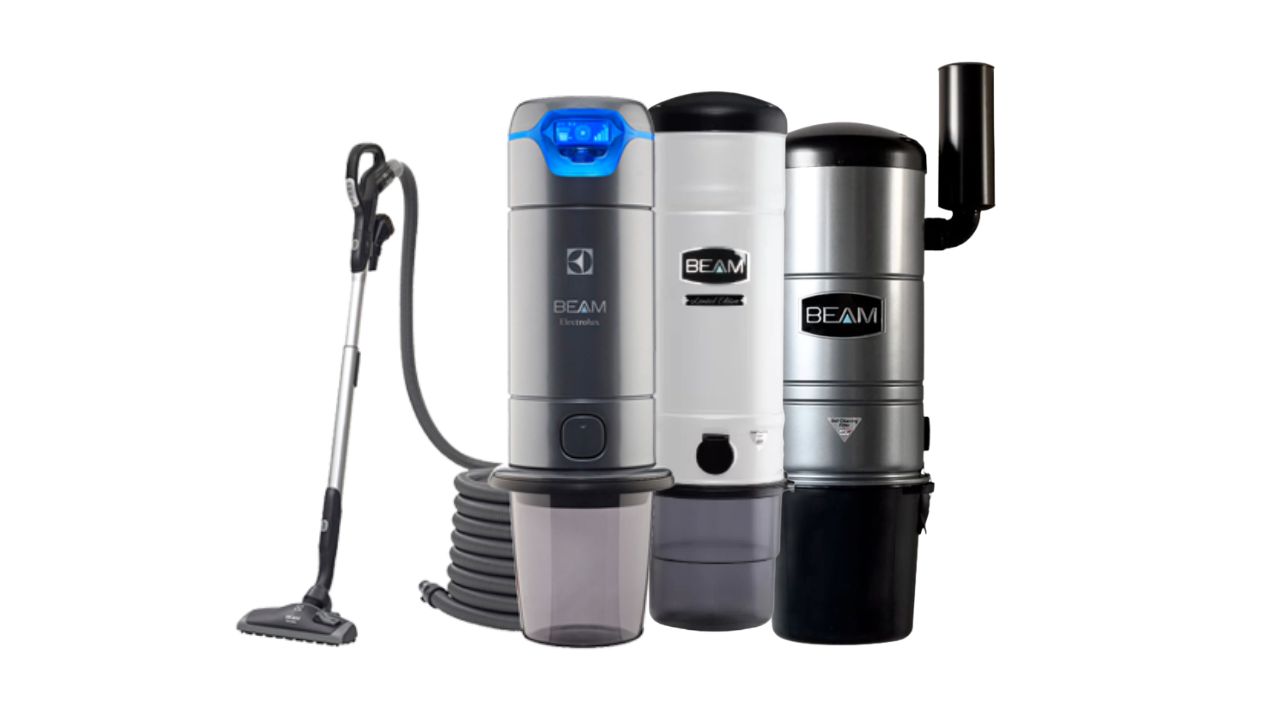
Is Beam Premium Still the Same Brand You Remember?
No, it isn’t the same company, even though the name on the canister looks unchanged. A homeowner shopping to replace a Serenity bought back in 2015 will find that model filed under “Archives” on Beam’s own site today, with the active catalog built around newer units like the 345 and 4500.
That gap trips up returning buyers more than first-timers.
- You loved your old Beam, so you assume buying another one is the safe, familiar choice.
- Trovac Industries now owns the Beam trademark and engineers the current lineup.
- The Serenity, Alliance, and Classic models you remember sit in the discontinued archive, not the active catalog.
Ask your dealer for the current model number before you compare anything else.
Who Owns Beam After the 2024 Production Halt?
Trovac Industries, based in Blainville, Quebec, owns Beam after acquiring it from Nuera Air in 2024. Nuera Air, which had owned Beam since buying it from Electrolux Group in 2018, stopped manufacturing Beam, Husky, and DuoVac that year. Electrolux’s divestiture of the Beam brand sent the global central vacuum business to Nuera Air in August 2018, with that deal and the Sanitaire sale to BISSELL carrying combined 2017 revenue of roughly $70 million.
That timeline matters for anyone holding a warranty card.
- Nuera Air stopped production of Beam, Husky, and DuoVac in 2024.
- Trovac, the same parent now behind CycloVac and DuoVac, took over Beam’s parts and service.
- Warranty claims and replacement parts now route through Trovac’s network, not the company that originally sold you the unit.
Why the Dealer Page Won’t Mention the Handoff
Dealers sell continuity, so a quiet ownership change rarely makes the sales pitch. A 2018-to-2024 manufacturer swing this size means little to a salesperson trying to close a quote this week.
VacuumLand forum members flagged the Nuera Air shutdown months before most retail sites updated their copy. Ask your dealer directly who manufactures the unit you’re buying and which company actually honors the warranty. A dealer who can’t answer in one sentence has just given you a signal worth weighing against the price.
The Air Watt Numbers Worth Trusting
Air watts measure real cleaning power only when they follow the ASTM F558 test method, and plenty of listings don’t. Trust the figure tied to a documented test, not the biggest number printed on a box.
Why CFM Is the Number That Fools You Most
CFM, or cubic feet per minute, measures how much air moves through the hose, and it climbs highest when nothing blocks the airflow at all. Think of it like a wide-open garden hose with no nozzle: water rushes out fast, but it has no force behind it to scrub a driveway clean.
Water lift measures the pull, the force that actually drags embedded pet hair off a baseboard or out of carpet pile. Air watts combine both numbers into the cleaning power you feel at the hose end, which is why a unit with modest CFM and strong water lift often outcleans a high-CFM unit with weak suction.
Here’s the thing: neither number alone tells you anything useful.
How Beam Premium Air Watt Claims Get Inflated
The ASTM F558 air-watt test standard defines air watts as CFM multiplied by water lift, divided by 8.5, measured at the hose end under load. Peak CFM and peak water lift never happen at the same instant inside a running motor.
Multiplying a unit’s peak CFM by its peak water lift, instead of measuring both at the same operating point, inflates the printed number well above what the vacuum actually delivers. The Beam 345, tested correctly, delivers 655 air watts with 142 CFM and 115.6 inches of water lift through its 5.7-inch bypass motor, enough sealed suction to hold strong cleaning power across a typical single-story pipe run. The Beam 4500, built for larger and commercial-style jobs, runs dual 6.6-inch motors rated to 1,354 air watts.
That gap between 655 and 1,354 air watts isn’t marketing fluff. It’s the difference between a unit sized for a 5,000-square-foot home and one built for a job twice that size.
Which Printed Figures Contradict Each Other Across Sellers
| Retailer Listing | Air Watt Figure Shown |
|---|---|
| Beam’s own product page | 655 AW |
| Independent dealer site A | 655 AW |
| Independent dealer site B | 700 AW (rounded marketing copy) |
Always trace a printed air watt figure back to Beam’s own documentation at beamvac.com before you believe a retailer’s number. A 45-point gap on the same physical unit tells you which seller copy-pasted an old catalog sheet instead of checking the current spec.
Where Beam Premium Filtration Really Lands
Beam’s premium filtration uses a self-cleaning Gore filter membrane, not a certified HEPA cartridge, and that distinction matters most to allergy and asthma households. Know which standard a filter actually meets before you assume it protects your air.
Is the Self-Cleaning Gore Filter Actually HEPA?
No, Beam’s permanent Gore filter media isn’t independently certified to the HEPA standard, even though it markets near that performance tier. True HEPA filtration, as defined by the US Department of Energy, captures 99.97 percent of particles at 0.3 microns, the hardest particle size for any filter to trap.
An allergy sufferer asking whether the filter protects them deserves a direct answer: verify the capture rate and the testing body behind it, not the word “premium” on the canister. Beam’s hybrid design lets the same power unit run bagged or bagless, and switching to the CV-2 Premium synthetic bag adds a filtration layer the self-cleaning membrane alone doesn’t provide.
What “Hospital Grade” Really Tells an Asthma Sufferer
Almost nothing, because no single certifying body governs the phrase “hospital grade” in vacuum marketing. A parent choosing a system for a child with asthma should ask for a tested capture rate and the name of the standard behind it, not a label with no enforcement.
Demand the number. Demand the standard. A vented bagless canister, even a well-built one, still releases fine dust back into the utility room air when you empty it, away from living spaces but not eliminated.
The Motor and Hose Truths Dealers Skip
Beam Premium’s motor architecture and hose connection decide how long the system lasts and what accessories will actually fit it, and most sales conversations skip both. A bypass motor and a proprietary hose end shape your ownership experience for the next decade.
Single-Fan Versus Two-Fan Motors Explained Simply
A single motor draws less power and suits condos and townhouses under roughly 5,000 square feet, like the Beam 345’s 5.7-inch bypass design. Dual-motor units chase bigger square footage and commercial-style jobs, the way the Beam 4500’s twin 6.6-inch motors push 1,354 air watts.
More motors mean more power draw, more generated heat, and more parts that can eventually fail. Match the motor count to your actual square footage, not the biggest number on the showroom floor. Beam Pro for smaller homes sits in a lower air watt tier built specifically for that smaller footprint, and it costs less to run and replace than oversizing into a unit your pipe runs don’t need.
Why the Proprietary Hose End Frustrates Real Owners
VacuumLand owners report that Beam’s hose end forces a proprietary adapter to fit certain third-party power nozzles and attachments. That lock-in limits which accessories you can swap in later without buying Beam-branded parts or an adapter piece.
Standard 2-inch central vacuum fittings work across Beam, Drainvac, CycloVac, OVO, and most North American systems at the pipe level. The exception sits at the hose-end connection itself, where Beam’s design narrows your accessory choices more than open-standard competitors. Factor that adapter cost into your real purchase price before you compare sticker prices across brands.
Bypass Versus Thru-Flow Motors and Lifespan
A bypass motor cools itself with a separate stream of clean air pulled in from outside the dirty airstream, the way a car radiator stays cool without sitting in the exhaust pipe. A thru-flow motor pulls the same dirty air across its own windings to cool down, picking up fine dust and wear with every pass.
Bypass motors, like the 5.7-inch unit in the Beam 345, tend to outlast thru-flow designs because the cooling air never carries debris. Ask which motor type sits inside the specific Beam Premium model you’re considering. For households that notice operating noise the most, the whisper-quiet Serenity Plus upgrade pairs that same bypass cooling logic with added sound dampening.
Which matters more to you: a quieter motor today, or a motor still running in year twelve?
Match a Beam Premium Unit to Your Home
Sizing a Beam Premium unit to your real square footage, not the brochure’s coverage claim, decides whether the farthest inlet still pulls strong suction. Dealer coverage numbers assume conditions your house probably doesn’t have.
Why Total Square Footage Ratings Overpromise Badly
Dealer coverage ratings assume a short, straight pipe run with zero elbows and zero suction loss, conditions that almost no real installation matches. Halve the rated coverage, or budget by square footage per floor instead of one blended whole-home number.
A 12,000-square-foot rating printed on a commercial-tier box rarely survives a real two-story install with multiple turns and a long basement run to the second floor. The Beam 345’s 5,000-square-foot rating already assumes a reasonably efficient layout, so a sprawling single-story ranch with a far utility room placement should plan conservatively against that number.
How Far Can an Inlet Sit From the Unit?
Suction drops with every added foot of pipe between an inlet and the power unit, and with every 90-degree elbow beyond the layout Beam’s documentation assumes. Keep inlets within roughly 35 feet of the power unit to preserve usable pull at the hose end.
Plan inlet count and placement by floor coverage, not by one tidy whole-home total. A 2,400-square-foot two-story home needs separate inlet planning for each level, since the vertical pipe run to a second floor eats into the same suction budget as horizontal distance does.
When Repair Beats Replacing an Archived Beam
Many strong older Beam units, including the Serenity line, now sit in Beam’s discontinued archive, but that doesn’t mean the unit in your utility room is junk. An owner of a Serenity weighing whether to rebuild it should price a motor or filter swap before assuming a full replacement is the only path.
Confirm parts availability through Trovac directly before you write off an existing unit. A motor or filter swap on a working power unit frequently costs a fraction of a new system, and Trovac’s consolidation of Beam, Husky, and DuoVac parts under one roof gives older units a real shot at staying serviceable.
What Real Owners Complain About Most
Owner forums surface two recurring frustrations with Beam Premium: the mess of emptying a bagless canister, and a price tag some owners feel outpaces the build quality. Both complaints come straight from people who actually live with the system, not spec sheets.
The Bagless Mess Nobody Warns First-Time Buyers About
Bagless canisters hold gallons of fine debris, and emptying one releases a visible dust cloud directly into the utility room air. Owners with allergies who skipped the optional CV-2 Premium synthetic bag at purchase report regretting that choice once they’re the one holding the canister.
Budget for bags from day one if dust sensitivity runs anywhere in your household. The hybrid design that lets Beam run bagged or bagless is a genuine strength, but only if you actually use the bagged side when it matters.
Is Beam Overpriced for the Quality You Get?
Some owners think so, and the complaint shows up often enough on VacuumLand to take seriously. A shopper cross-shopping the 345 against Canadian rivals like CanaVac will find regulars on those forums calling Beam pricey relative to the build they receive for the money.
Cross-shop at least one competing brand at a similar air watt tier before you commit to the Beam name alone. Reputation carries weight, but it shouldn’t carry the entire purchase decision when a comparably specced competitor sits within the same budget.
Buying, Warranty, and the 100-Mile Catch
Beam Premium’s authorized dealer network and tiered warranty terms quietly limit where you can buy and how long coverage actually lasts. Both details belong in your decision before you sign a quote, not after.
The 100-Mile Dealer Shipping Rule That Traps Buyers
Authorized Beam dealers frequently ship and service only within roughly 100 miles of their physical store. That radius rule shrinks your real shopping options far more than a quick online search suggests, since the lowest listed price often comes from a dealer who legally can’t service your address.
Confirm a local authorized dealer exists, and will actually service your install, before a tempting online price pulls you in. A unit you can’t get serviced locally isn’t actually the deal it looks like on the screen.
How Beam Premium Warranties Differ by Model Tier
Warranty length swings from five to ten years depending on the model tier, with the Beam 345 carrying a 10-year parts warranty as one of its stronger selling points. Labor coverage and motor coverage frequently run on shorter, separate terms from the headline parts number.
Ask specifically which Trovac entity backs the warranty on the model you’re buying, given the 2024 ownership change. Beam Alliance as a mid-range pick sits between entry and premium tiers and is worth a direct warranty-term comparison against the 345 before you pay the premium-tier price difference.
Conclusion
You arrived assuming Beam Premium was the unchanged brand of memory, ready to trust the biggest air watt number on the box. You leave knowing Trovac builds it now, and that water lift and properly tested air watts matter more than CFM alone.
Tonight, pull up your floor plan, count the inlets each floor needs, and write down the model’s air watt and water lift figures to check against Beam’s own documentation. Browse this complete Beam systems guide to see every active model side by side before you call a dealer. A unit matched honestly to your home outlasts and outcleans any portable you’ve owned, without recirculating dust back into the air you breathe.
Frequently Asked Questions
Who makes Beam central vacuums now?
Trovac Industries, based in Blainville, Quebec, makes Beam central vacuums today. Trovac acquired the brand in 2024 after Nuera Air, which had owned Beam since 2018, stopped manufacturing it.
What is the difference between the Beam Serenity, Alliance, and Resilience series?
The Serenity sits in Beam’s discontinued archive, while Alliance and the current power units like the 345 and 4500 make up the active lineup. Compare a unit by its current model number and documented air watt rating, not by which older series name it resembles.
How many air watts does a premium Beam central vacuum deliver?
The Beam 345 delivers 655 air watts, and the larger dual-motor Beam 4500 delivers up to 1,354 air watts. Match the figure to your square footage rather than assuming higher is automatically better for a smaller home.
Are Beam central vacuum parts still available after the Nuera Air shutdown?
Yes, parts remain available through Trovac, which consolidated Beam, Husky, and DuoVac service and parts under one company after the 2024 acquisition. Confirm availability for your specific model directly with Trovac before assuming an older unit is unsupported.
Is Beam still worth buying compared to other central vacuum brands?
Yes, for a household that wants hybrid bagged or bagless flexibility and a 10-year parts warranty on units like the 345. Cross-shop a comparably specced brand like CanaVac first, since some owners report Beam’s price runs ahead of its build quality at the same air watt tier.