You typed beam alliance central vacuum into Google because one number caught your eye: 700 air watts on a glowing Smart Screen that promises to end the dust-bunny war for good. Then you compared five sites and none of them agreed, and you learned the brand quietly changed owners.
Here’s the real confusion: HEPA is stamped across the line, and one dealer swore it never loses suction. Neither claim survives a closer look. By the end, you’ll know which model fits your square footage, which spec to trust, and whether to check our complete Beam systems overview instead.
Beam Alliance Central Vacuum
Beam Alliance is a now-archived line of built-in vacuum power units running 600 to 700 air watts on a thru-flow motor. A Gore self-cleaning filter handles daily dust, with true HEPA limited to the 700TC’s add-on cartridge. Trovac Industries owns the brand. It suits owners needing a like-for-like swap.Why Your Beam Alliance Search Just Got Complicated
The Beam Alliance line is real, but Beam, now controlled by Trovac Industries after its June 2024 acquisition of the brand, no longer treats Alliance as a current product. That single fact reshapes every spec and price you’re about to compare.
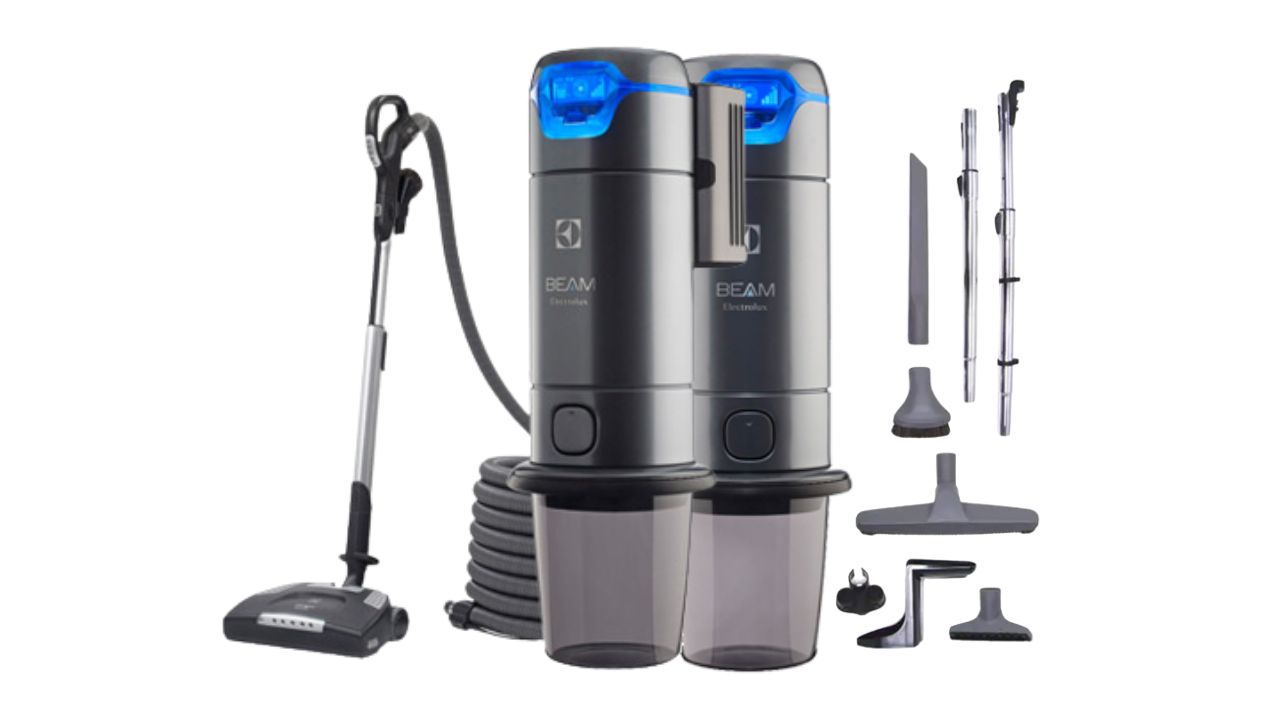
This guide pulls from Beam’s own product pages, side-by-side retailer spec sheets, parts-house listings, and owner threads on vacuum forums, not a single dealer’s sales pitch. We don’t install or sell Beam units, so there’s no commission riding on which model you pick.
Why the Alliance landed in Beam’s archive section
Beam now files every Alliance power unit, including the range-topping 700TCN01A, under its site’s Archives category instead of its current lineup. You found rave specs on a retailer site, then noticed the manufacturer’s own page tells a different story.
Beam still lists the 700TCN01A in full detail, complete with photos and a spec sheet. It just doesn’t call it current anymore. That one word, archive, changes the whole math of this purchase.
Is beam alliance discontinued? Yes, in every way that matters to a buyer comparing it against Beam’s active lineup today.
What a discontinued line means for you
A discontinued line isn’t junk, but its parts clock started ticking the day Beam filed it under archives, so plan around availability, not nostalgia. You’re buying remaining inventory and remanufactured stock, not a freshly supported product line.
That distinction matters more for the electronics than the motor.
Who Actually Owns Beam Right Now
Trovac Industries, a Quebec-based manufacturer, has owned Beam outright since June 2024, after buying it from Nuera Air, which bought the brand from Electrolux Group in 2018. Three owners in six years explains the confusion on buyer forums today.
From Electrolux to Nuera to Trovac ownership
Electrolux Group sold its North American central vacuum business, including Beam, to Nuera Air for roughly $37 million in August 2018, a deal that also moved the commercial Sanitaire line to Bissell. Electrolux’s divestiture of the Beam brand ended the company’s six-decade run of owning Beam directly.
Nuera Air, based in Laval, Quebec, ran Beam alongside Husky, DuoVac, SoluVac, and InterVac for the next six years. Who makes beam central vacuums now? Trovac Industries, full stop, after picking up the brand in June 2024.
Why the April 2024 production halt rattled owners
Nuera Air reportedly halted manufacturing across its entire brand portfolio in April 2024, and owner forums lit up within days. One longtime collector on a vacuum enthusiast forum worried out loud about whether replacement bags and filters would keep shipping at all.
That fear was reasonable. Bag and filter supply for a discontinued brand is the first thing to dry up, not the last. Trovac’s acquisition a few months later kept the lights on, but the scare itself tells you how thin the margin for error gets once a brand changes hands mid-cycle.
Does your warranty still mean anything today
Trovac states it now backs Beam’s warranty obligations following the June 2024 buyout, so coverage transfers in principle. Confirm your specific model and original purchase date with a dealer before you lean on that promise for a repair.
Warranty transfers after an acquisition hold up for parts still in production, but get murkier fast for anything Beam has already flagged as discontinued.
The Specs No Two Listings Seem To Agree On
The same 700TC model shows three different coverage claims and two different sound ratings depending which retailer you trust, and almost nobody calls that out. Treat any single listing as one data point, not the final word.
The air watt number dealers love to inflate
Air watts measure suction work at the cleaning head under load, tested per ASTM F558, the industry’s standard method for comparing vacuum performance. Listings agree the 700TC pulls 700 air watts, but the rest of the spec sheet falls apart fast.
Beam alliance 600sa vs 650sb vs 700tc comes down to one number: how many square feet you’re actually cleaning, not which box has the biggest watt count printed on it.
| Model | Air Watts | CFM | Water Lift | Coverage |
|---|---|---|---|---|
| 600SA | 600 AW | 96 CFM | 132 in | up to 4,000 sq ft |
| 650SB | 650 to 700 AW, depending on the retailer | 121 CFM | 122 in | roughly 8,000 sq ft |
| 700TC | 700 AW | 107 to 125 CFM | 146 in | 8,000 to 13,000 sq ft, disputed |
Notice the 650SB row. One retailer lists it at 700 air watts, the same figure as the model above it, while most others list 650, matching the name on the box. That’s a 50-air-watt gap on the identical unit.
How the same model shows three coverage numbers
Beam’s own page lists 10,000 square feet of coverage for the 700TCN01A, and two retailers selling that exact same power unit publish 8,000 and 13,000 square feet instead. A 5,000-square-foot swing on one model is not a rounding error.
| Source | Claimed Coverage, 700TCN01A |
|---|---|
| Beam (manufacturer) | 10,000 sq ft |
| American Vacuum Company | 8,000 sq ft |
| CityHome Vacuum | 13,000 sq ft |
Halve any dealer’s footage claim before you plan around it, then size your model by floor, not by whole-house square footage. We’ll show you exactly how to do that later in this guide.
Reading water lift and CFM the honest way
Water lift measures raw pulling strength, the way a straw pulls harder on a thick milkshake than a thin one, and it swings from 122 inches on the 650SB to 146 inches on the 700TC. CFM, or airflow volume, swings just as much, from 107 to 125 depending which page you trust for the same model.
The 650SB draws 11.7 amps, which is why Beam, like every central vacuum maker, requires a dedicated circuit rather than a shared household outlet. The dedicated branch-circuit requirement under NEC 210.23 kicks in once a unit’s draw exceeds half the circuit’s rating, and a 20-amp circuit covers the Alliance line comfortably.
When numbers move this much per model, treat marketing CFM the way you’d treat a used car’s odometer. Ask for the test method, not just the figure.
What The Smart Screen Really Costs You Later
The Smart Screen interface is genuinely useful day to day, but it’s also the single point of failure that plain-switch power units don’t have. Know what you’re trading convenience for before you pay the premium.
What the LCD smart screen actually controls
The screen shows motor speed, bucket fill level, and a hose-linked icon confirming the Alliance hose-handle communication system has found the handle’s signal. Fingertip suction control lets you dial power up or down from the wand itself, a real upgrade over walking back to the unit.
It feels great until the electronics behind it quit. And that’s not a hypothetical with this particular line.
Why the control board is your weak point
Every smart feature on the 650 and 700 series routes through one electronic control board inside the power unit, part number 100638. More electronics between you and suction means more points of failure than a basic single-speed unit has.
When that board dies, the screen and the fingertip controls go dark together, while the motor itself keeps running on a default setting. That gap, smart features dead, motor still spinning, confuses owners into thinking the whole unit failed.
The part Beam already marks no longer available
Beam alliance central vacuum filter replacement is one thing, control board replacement is another problem entirely. Parts retailers list the 100638 board for the Alliance 650 and 700 series at roughly $260, and several already flag it as discontinued by the manufacturer, pointing buyers toward the newer 100550 board as a substitute.
The brain of your smart vacuum is already the hardest single piece to source on this entire line. Worth knowing before you fall for the screen.
Filtration Claims Versus What HEPA Actually Means
Only the 700TC carries true HEPA filtration, and even then it comes from a separate add-on cartridge, not the standard Gore filter every Alliance model ships with. Get this distinction wrong and you could be buying allergy protection that doesn’t exist.
What HEPA means under the DOE standard
True HEPA captures 99.97% of particles at 0.3 microns, the benchmark set by the U.S. Department of Energy and adopted across the filtration industry. The EPA’s definition of a HEPA filter confirms there’s no such thing as an official “HEPA-type” or “HEPA-like” rating; a filter either clears that bar or it doesn’t.
Why 98 percent at 0.3 microns is not HEPA
The Gore self-cleaning filter standard across the Alliance line is rated near 98% capture at 0.3 microns, strong filtration by any measure, but short of the DOE’s HEPA threshold. That gap sounds small. It isn’t, once you’re counting the particles a true HEPA filter would have caught and this one let through.
The actual HEPA badge on the 700TC comes from a separate exhaust cartridge, sold and installed apart from the everyday Gore filter. Skip that cartridge and you’re running the same hybrid filtration as the 600SA and 650SB below it.
Allergy homes need this filtration setup verified
Confirm the true HEPA exhaust cartridge is physically installed, if anyone in the home has asthma or severe allergies, rather than trusting the word HEPA printed on a box without that cartridge inside. Venting exhaust outside the home beats relying on any indoor filter alone, because the air never recirculates through the living space at all.
Suction, Sound, And The 35 Foot Reality
Suction performance and noise both look great on a spec sheet and both change once you’re standing in a real hallway with a 60-foot hose run behind you. Lab numbers and lived experience tell two different stories here.
Why one listing says 68 dB and another 80
Beam’s own page rates the 700TCN01A at 80 dBA measured at the unit, while a major retailer selling the identical model lists 68 dB instead.
| Source | Sound Rating, 700TCN01A |
|---|---|
| Beam (manufacturer) | 80 dBA |
| eVacuumStore | 68 dB |
A 12-decibel gap is roughly twice the perceived loudness, not a rounding difference. Stand a power unit far from bedrooms regardless of which number you believe.
Flow through motors and the lifespan question
The Alliance runs a thru-flow motor, also called an HE Flow-Thru motor and built on an Ametek/Lamb motor platform common across the industry, cooled by the same dirty airstream it’s pulling dust through. Tangential bypass motors cool on a separate path of clean air instead, and they outlast flow-through designs by a meaningful margin.
That’s a counterintuitive tradeoff most buying guides skip entirely. A higher air watt number on a thru-flow motor doesn’t buy you a longer service life, it buys you stronger suction today at the cost of a shorter motor lifespan tomorrow.
Knowing your motor type tells you what reliability to honestly expect, not what the brochure implies.
Why suction fades past the 35 foot mark
Suction drops with every additional foot of pipe run and every 90-degree elbow beyond a manufacturer’s tested maximum, because moving air loses energy to friction against PVC walls and fittings. Past roughly 35 feet of hose reach from the nearest inlet, real-world performance trails the lab rating on every model in this line.
A sweep elbow, the gentle curved fitting installers use instead of a sharp 90-degree turn, costs a little more in PVC and saves measurable suction at the far inlet. Place inlets so no point in the house sits beyond comfortable hose reach of one, rather than stretching a single inlet to cover an entire wing.
What a 34 year old Beam taught one owner
One owner profiled in a vacuum-enthusiast online discussion ran a 34-year-old Beam power unit that still held respectable suction decades later, credit less to luck than to the older tangential bypass motors Beam built before the thru-flow era. Their verdict on the noise, though, was blunt: it roars like a jet engine.
A central vacuum power unit running 600 air watts still dwarfs a typical Dyson canister vacuum’s roughly 230 air watts. That gap is the whole reason built-in systems exist, even with the noise and the motor tradeoffs spelled out above.
Repair It, Buy It, Or Replace It
Buy the Beam Alliance only if you’re matching an existing unit or accepting thin parts support on purpose. For a brand-new install, current Beam units carry safer long-term backing than chasing archived stock.
Is the Beam Alliance central vacuum still worth buying?
Worth it only if you accept thinning parts availability and an already-discontinued control board on the smart models. The motor and the dust bucket are both serviceable for years yet; the electronics are the real gamble in this purchase.
For an entry-level, single-speed alternative with a simpler parts picture, Beam Classic as an alternative skips the Smart Screen entirely and sidesteps the control-board risk altogether. It trades the fingertip suction display for a switch that has nothing electronic left to fail.
When repairing your existing Alliance makes more sense
Your pipes, inlets, and attachments stay exactly where they are; only the power unit in the utility closet changes. Replacing just the power unit takes most owners under 30 minutes, since the low-voltage inlet wiring and 2-inch PVC trunk line don’t need to be touched at all.
Standard 2-inch fittings are compatible with Beam, Drainvac, CycloVac, OVO, and most North American built-in systems, so a new power unit will almost always mate to your existing Alliance pipework. Exceptions exist: older Vacuflo installs use a proprietary low-voltage connection, and early Sears or Kenmore central vac jobs used a non-standard bore that needs an adapter before a modern hose will seat.
Repair pays off when the motor still runs fine and only one part failed underneath it.
When the current Beam line beats hunting stock
Trovac now sells Beam’s current lineup, and those units fit your existing in-wall ducting the same way a replacement Alliance unit would, without the orphaned-electronics chase. Stepping up to the premium-tier Beam upgrade path buys you a power unit still in active production, with a parts pipeline that isn’t already drying up.
That upgrade does cost more than scavenging discounted Alliance inventory. It also means you won’t be sourcing a discontinued control board from a third-party seller in three years.
Living With It For The Next 20 Years
A central vacuum built and maintained correctly should outlast two or three portables bought over the same stretch of time. Getting there is mostly inlet placement and a couple of cheap habits.
Inlet count by floor not total square footage
Match inlet valves to square footage per floor, not to the home’s total square footage added together, since hose reach is what actually limits each inlet’s coverage. What size beam alliance for 3000 sq ft home depends entirely on whether that’s one floor or three; a single-story layout needs fewer inlets than the same square footage stacked over two levels with longer vertical pipe runs.
Each well-placed inlet, fed by Schedule 20 PVC and routed through sweep elbows rather than sharp turns, covers roughly 700 to 800 square feet of real cleaning radius. Stretch that further and you’re back to the 35-foot suction drop-off covered earlier.
Simple habits that keep suction strong for decades
- Empty the 4-gallon canister before it packs solid against the filter, not after suction has already dropped.
- Check for clogs at the power unit first, then work backward toward the hose, since most blockages sit closer to the inlet than owners expect.
- Wipe down the Gore self-cleaning filter housing at each bucket change instead of waiting for a deep clean.
One clean pass lifting pet hair off the carpet without you bending over once is the entire payoff. No bag to lug upstairs, no canister to drag, ever again.
Conclusion
You arrived chasing a smart screen and a 700-air-watt headline. You’re leaving knowing the Alliance line is archived, the published specs disagree with each other, and the control board is already getting hard to find.
Tonight, open Beam’s site, find your exact model under Archives, and write down the control board part number before you spend a dollar. Our page on Beam stockists and dealers points you toward someone who still stocks them, or toward Beam’s current lineup instead, once parts run thin.
A central vacuum still earns its keep in a way no portable ever has: one quiet utility closet, no dragging a canister up the stairs, decades of pull if the motor holds up. Just buy this one with your eyes open, not on faith in a glowing screen.
Frequently Asked Questions
Is the Beam Alliance series discontinued, and can I still get parts and service?
Yes, Beam now lists every Alliance model under its Archives category rather than its current lineup. Parts are still available through retailers and remanufacturers today, but availability is shrinking, and the smart control board is already flagged discontinued by some sellers.
Which Beam Alliance model do I need for my home’s square footage?
Match the model to your largest single floor, not your whole home’s total footage. The 600SA suits homes up to about 4,000 square feet, the 650SB covers roughly 8,000, and the 700TC is built for larger layouts, provided you size inlets by floor rather than trusting any single coverage number on a box.
Does the Beam Alliance have a true HEPA filter, or is it a HEPA-type filter?
Only the 700TC offers true HEPA, and only with its separate add-on exhaust cartridge installed. Every other Alliance model, and the 700TC without that cartridge, runs the standard Gore self-cleaning filter rated near 98% at 0.3 microns, which is strong filtration but not HEPA.
Is the Beam Alliance’s thru-flow motor as durable as a tangential bypass motor?
No, a tangential bypass motor generally outlasts a thru-flow motor because it cools on clean air instead of the dirty airstream it’s pulling dust through. The Alliance’s HE Flow-Thru motor trades some long-term durability for strong suction numbers today.
Who owns Beam central vacuums now, and what does that mean for my warranty?
Trovac Industries owns Beam outright since its June 2024 acquisition, and Trovac states it now honors existing Beam warranty obligations. Confirm your specific model and purchase date with a dealer before relying on that coverage for a repair.