“Beam where to buy” sounds like a simple question until you start searching and half the listings look abandoned. A dead category page next to a “discontinued” rumor makes you wonder if the brand even survived 2024.
It didn’t die. Beam, now owned by Les Industries Trovac Ltd. after Trovac’s June 2024 acquisition of the brand, changed hands but kept making units. This guide walks through the full range of Beam vacuum systems by purchase channel, so you know which dealers protect your purchase and which listings to skip.
Beam Where To Buy
Buying a Beam central vacuum now means picking a channel: authorized local dealer, authorized online dealer, the manufacturer’s locator, or a marketplace listing. Each carries different warranty backing under current owner Trovac Industries. First-time buyers, inherited-system owners, and replacement shoppers all need that distinction before paying.This guide is built from Beam’s own warranty and dealer pages, current authorized-dealer listings, manufacturer spec sheets, and owner discussion on forums like VacuumLand, cross-checked against each other rather than taken from a single retailer’s marketing copy.
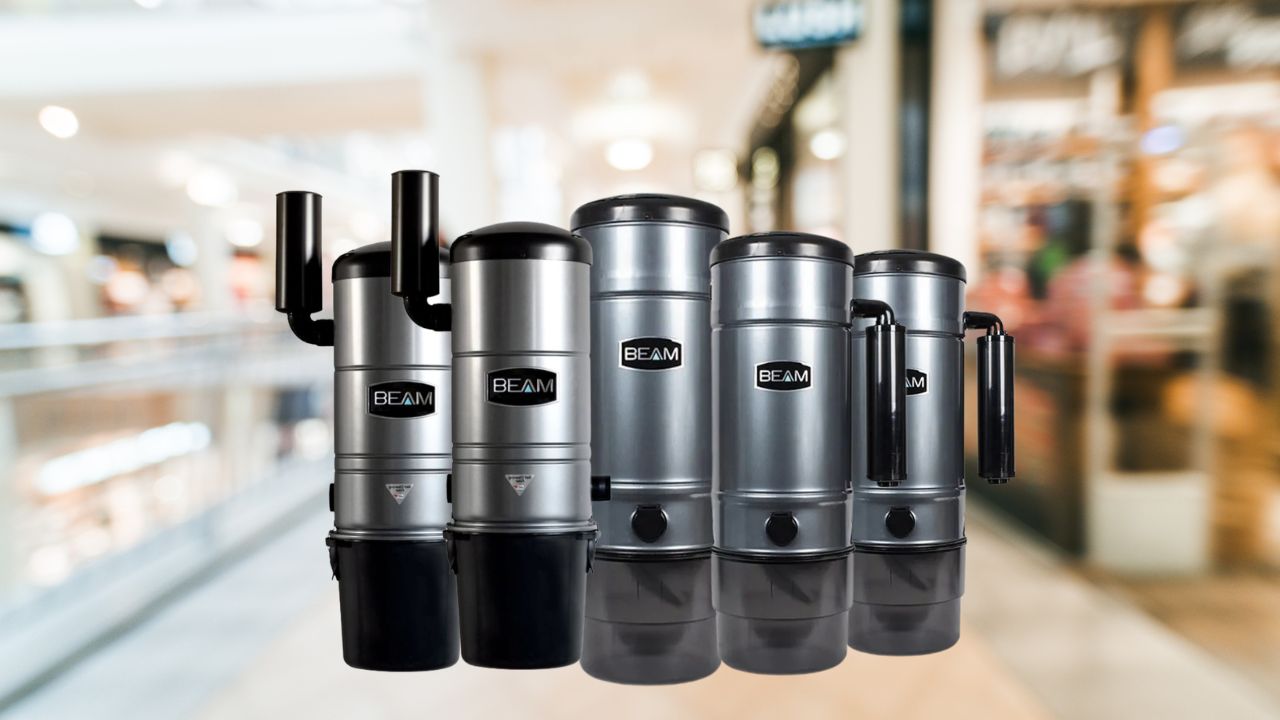
Why buying a Beam feels confusing right now
Buying a Beam feels confusing because the brand changed hands twice in six years while most dealer pages never got updated. Dead checkout buttons, stale stock photos, and a warranty page that contradicts the contact page all live on the same domain right now.
Is Beam still made or quietly discontinued?
Beam is still made. Production paused for about two months in 2024, then resumed under a new owner.
Nuera Air, the company that bought Beam’s global central vacuum business from Electrolux in 2018, stopped manufacturing on April 2, 2024, along with sister brands Husky and DuoVac. That single shutdown announcement is why half the dealer pages you found look frozen. You likely landed on one that never got updated after the news broke.
Who owns Beam after the 2024 shakeup?
Les Industries Trovac Ltd. owns Beam now. Trovac Industries, Beam’s current parent company bought the brand in June 2024 and restarted production within months of the Nuera Air halt.
That’s the second ownership change for Beam since Electrolux’s divestiture of the Beam business sent it to Nuera Air back in 2018. Knowing the current owner tells you who actually answers a warranty claim. Beam’s own warranty page credits Trovac with backing maintenance and repair, but its contact page still lists Nuera Air as the owner. A dealer repeating the old name isn’t lying to you. They’re just quoting Beam’s own outdated page.
Is Beam still being made in 2026
Yes, current production is real, not legacy stock. Beam’s warranty page draws a hard line at units manufactured as of September 2024, the cutoff where Trovac’s coverage begins.
That date matters more than the model number on the box.
What changed between Nuera and Trovac units?
The motor and housing look the same, but the warranty backing them does not. A unit built in March 2024, sitting unsold in a warehouse, carries Nuera-era paperwork that nobody answers anymore. A unit built in October 2024 carries Trovac’s active warranty and a working parts pipeline behind it.
Two boxes can look identical on a showroom floor and mean two very different ownership experiences five years from now.
Why the manufacture date matters more than the model
Place the declaration first: a discounted “new old stock” Beam means orphaned warranty support, full stop. Match the build date stamped in the manual or on the unit’s label against the September 2024 cutoff before you commit to anything.
- Ask the seller for the manufacture date, not just the model name.
- Confirm it falls after September 2024 in writing.
- Walk away from sellers who can’t or won’t answer.
The unit still runs fine either way. You’re the one who carries the repair risk on anything built before the cutoff.
So is the 2026 lineup actually trustworthy?
Yes, the current lineup is healthy, not a wind-down. Trovac kept Beam in production alongside Husky and DuoVac rather than folding the names together.
VacuumLand’s forum thread on the ownership shift, started right after the Nuera Air news broke, shows owners working through the same fear you had. The consensus that emerged once Trovac’s purchase became public: the brand kept moving, parts kept shipping, and the panic settled. You’re buying into a living product line again, not a museum piece.
Beam where to buy when stores keep vanishing?
The three real channels are authorized online dealers, authorized local shops, and marketplace listings you should treat with caution. Ranked by warranty safety, that order holds for almost every buyer.
Authorized online dealers that still stock Beam
eVacuumStore, ThinkVacuums, and CentralVacuumDirect have carried Beam for years and remain active sellers of current units. eVacuumStore specifically lists itself as an authorized Beam online dealer for power units, parts, and accessories.
| Dealer | Channel | What it’s good for |
|---|---|---|
| eVacuumStore | Authorized online | Power units, parts, accessories |
| ThinkVacuums | Online | Builder’s packages, full systems |
| CentralVacuumDirect | Online | Complete system packages |
Authorized status is what keeps your factory warranty intact, so check for that label before you check the price. Buyers leaning toward a packaged setup gravitate to the popular Beam Pro unit line, which several of these dealers carry as a complete kit.
Local brick and mortar shops near you
A local dealer lets you hear the unit run before you pay for it, which no product photo can replicate. Capital Vacuum in Raleigh, North Carolina, stocks a full Beam lineup, attachment sets, and installation parts, and has serviced central vacuums in that market since 1953.
Walking the hose to a far corner of the showroom and feeling suction hold steady tells you more than any spec sheet. And a shop that installs what it sells will still be there when your inlet valve seizes in year seven.
Big box and marketplace listings to approach carefully
Treat marketplace listings as parts sources, not full-system warranty channels. Amazon carries Beam accessories and replacement parts more than complete power units with installation support behind them. eBay listings come from sellers with no authorized dealer relationship behind them, which puts your warranty at risk before you even plug the unit in.
Third-party sellers on sites like Walmart’s marketplace have a documented pattern: a buyer pays, the listing disappears, and nothing ships. That risk doesn’t exist with an authorized dealer who has a storefront and a service department to answer to.
So which channel actually fits your situation, the dealer who’ll answer the phone in five years, or the listing with the lowest number on screen right now?
What the dealer page won’t tell you
Dealer pages skip the rules that limit their own inventory, because disclosing them loses sales. Two of those rules decide which seller you’re even allowed to buy from.
The 100 mile shipping rule almost nobody mentions
Several Beam authorized dealers, including Schrimpf Plumbing in Jefferson City, state plainly that they can only ship Beam power units within about 100 miles of their location. That single rule explains why a dealer with the best price online still refuses your order once you check out.
Verify a dealer’s shipping radius before you fall for a distant deal that never gets fulfilled.
Gray market sellers and the warranty trap
Buying from a non-authorized seller works like buying a car with no title. The vehicle runs fine on the lot, but you own none of the protection that’s supposed to come with it.
eBay shows both new and used Beam units from sellers with no verified dealer relationship. A non-authorized seller means no honored manufacturer warranty, no matter what the listing claims. The cheaper sticker price costs you the entire repair bill the day the motor fails.
Why some online prices look too good
A dealer admitting it outright is rare, but old pre-2024 inventory does get dumped at steep discounts because nobody wants to carry orphaned stock. A rock-bottom price with no listed build date is a warning sign, not a win.
Ask why it’s cheap before you celebrate the savings.
Specs to check before you spend a dollar
Two numbers decide whether a Beam fits your home: air watts and pipe-run distance, not the headline wattage printed on the box. Confirm both before comparing any price.
Air watts versus the wattage marketing trick
Air watts measure real suction at the cleaning head, the way water pressure measures force coming out of a hose rather than how hard the pump motor works. Motor wattage on the box tells you electricity drawn, not cleaning power delivered. ASTM F558, the industry’s standard test method, defines air watts as airflow times suction divided by 8.5, run under controlled lab conditions.
One retailer lists the Beam Serenity SC375 at 650 air watts. Confirm that figure on the listing you’re buying from, since dealers occasionally round it differently.
Square footage claims you should cut in half
A listing claiming 8,000 square feet of coverage rarely means real-world reach to every inlet in a home that size. Suction fades with every added foot of pipe and every elbow the air has to turn through past the manufacturer’s tested maximum.
Size the unit to your floor plan, not the headline number. A two-story 2,400 square foot home with a basement power unit and inlets on both upper floors behaves nothing like a single-level ranch of the same total area.
Filtration grade if anyone has allergies
True HEPA filtration captures 99.97% of particles at 0.3 microns, the U.S. Department of Energy’s official threshold. “HEPA style” and “HEPA type” labels carry no certified capture guarantee behind them, and some have tested far below that number.
Demand the certified rating in writing if asthma or pet dander is a daily issue in the house. Buyers shopping the top of the line tend to look at the high-performance Beam Premium series, which pairs stronger filtration with the self-cleaning GORE-TEX bag that keeps suction from dropping as the canister fills.
Used and discontinued Beam units worth the risk
A used Beam is worth buying when parts and bags stay available for that model. It’s a bad bet the moment a seller can’t confirm either one.
When a used Beam still makes sense
A used unit suits you if you’ve confirmed bags, filters, and motor brushes are still being made for that exact model year. Beam’s older steel-bodied power units, built around Ametek/Lamb motors that most central vacuum brands sourced from for decades, can genuinely outlast two cheap portables bought back to back.
Buyers chasing a deal start by browsing used Beam central vacuum deals before deciding whether a new unit makes more sense for their home.
What forum owners regret buying secondhand
Some VacuumLand members call older Electrolux-era Beam units overpriced for what the build quality actually delivers, especially once parts sourcing got murkier after the 2018 divestiture. Read up on a powerhead’s serviceability before buying anything sealed shut that you can’t inspect first.
A sealed motor housing that can’t be opened for inspection is a gamble on every used purchase, full stop.
Where to find genuine Beam parts now
Authorized dealers, not marketplace listings, are where current parts actually live. Both eVacuumStore and Capital Vacuum stock motors, hoses, belts, and filters for current and recent Beam models.
Trovac’s continued production keeps the parts pipeline flowing for anything built after the September 2024 cutoff. Buy a spare bag pack the same day you buy the system, while you’re already talking to someone who can confirm fit.
You walked in worried Beam had quietly died. It didn’t, it just changed hands, and now you know how to tell a supported unit from an orphaned one before you pay. Tonight, call one authorized dealer, ask for the manufacture date on the unit you’re considering, and confirm it lands after September 2024. A properly bought Beam runs quietly in the basement for two decades, while the portable vacuums you’ve dragged up and down stairs for years end up retired in a closet within five.
Frequently Asked Questions
Is Beam central vacuum still made, and who owns it now?
Yes, Beam is still made. Les Industries Trovac Ltd. acquired the brand in June 2024 after previous owner Nuera Air halted production that April, and current units carry Trovac’s warranty.
Where can I buy a Beam central vacuum near me?
Start with Beam’s official dealer locator to find an authorized shop in your area. Local dealers like Capital Vacuum in Raleigh stock full lineups and handle installation directly.
Is it safe to buy a Beam central vacuum on Amazon or eBay?
No, not for a full system. Amazon mostly carries parts and accessories rather than complete power units, and eBay listings come from sellers with no authorized dealer relationship, which puts your warranty at risk.
Does buying a Beam online from a non-local dealer void the warranty?
Yes, when the seller isn’t authorized for your area, regardless of how far away they sit. Authorized dealers face a roughly 100-mile shipping radius on power units, so an order from far outside that radius signals an unauthorized sale, and that’s what voids coverage.
How much does a complete Beam central vacuum system cost?
Expect a complete Serenity-tier package to land somewhere in the $849 to $1,199 range before installation labor, though dealers revise pricing on their own schedule, so confirm the current number before buying. Add professional installation cost separately if you’re not doing a retrofit yourself.