You started searching for central vacuum installers expecting a contractor list. Instead you found dealer websites pushing one brand before you said a word about your house. That’s not an accident. Nearly every installer also sells equipment, so the quote in your inbox was shaped by inventory, not your pipe run.
By the end, you’ll know why a mid-tier unit on a clean pipe run beats a premium unit installed sloppy. You’ll have nine checks that separate a real specialist from a handyman with a shop-vac attitude, plus the line items worth questioning before you sign.
Central Vacuum Installers
A central vacuum installer pipes and wires a built-in vacuum system into your home’s walls, and the quality of that pipe run matters more than the brand of unit at the end of it. Most installers are also brand dealers. Vet the installer’s craft first, the equipment second.Who Actually Installs Central Vacuum Systems Anyway
No licensing board issues a “central vacuum installer” credential, which is why the job never shows up on general contractor directories. The work of installing a central vacuum system falls to a narrow trade: specialist vacuum shops, not HVAC crews or general electricians.
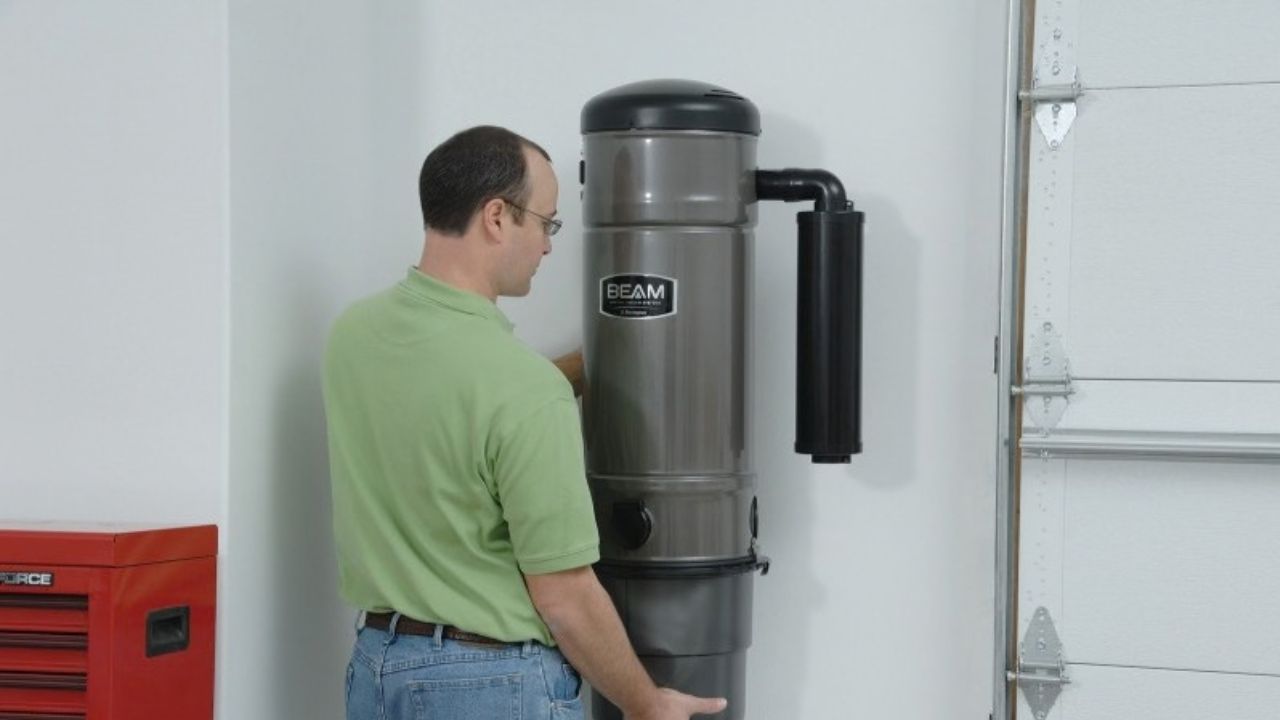
The Specialist Vacuum Shop Is a Different Animal
Independent vacuum shops win this job because they install, service, and stock parts under one roof, unlike a subcontractor who touched one system last spring. Veteran shop owners on the VacuumLand forums swap the same story: homeowners calling after a big-box crew left the trunk line full of hardware-store 90-degree elbows. That’s also who you call for removing an old system before a replacement goes in.
Ask how many systems the shop installed in the last year. Under five, and they’re still learning your house on your dime.
Can Your Electrician or HVAC Contractor Do This Job?
No, not alone. HVAC pros understand airflow, but vacuum tubing uses fittings and a pipe standard that plumbing and duct work never touch. Electricians handle the low-voltage 20-gauge stranded pair, not the pipe layout logic that keeps debris moving, and central vacuum PVC tubing runs a 2-inch bore built for this trade alone.
Ask the crew to name a wye fitting. Keep dialing if they can’t explain why it beats a tee at a branch junction.
Why Builders Keep Getting This Wrong in New Construction
Builders keep shipping underpowered, poorly routed systems because the rough-in gets handed to the lowest bidder on the framing schedule. That’s the real source of the “central vacuums clog constantly” myth. One owner on a renovation forum traced years of weak suction to a builder-grade power unit rated for a 2,400 square foot home, dropped into a 4,000 square foot build. The unit wasn’t broken, just mismatched from day one.
Before closing on new construction, request these in writing:
- The pipe layout diagram showing trunk line diameter and every inlet location.
- The power unit’s air watt rating matched against square footage and longest pipe run.
- Confirmation of who installed the rough-in and whether that company still operates locally.
What Central Vacuum Installers Really Charge in 2026
A full installed system runs between $800 and $3,500, with most homeowners landing closer to the middle. This section breaks down typical installation pricing into the pieces most quotes leave vague.
The Numbers Dealers Quote and the Numbers You Pay
The national installed average sits around $1,583, and most jobs fall between $1,094 and $2,194 according to central vacuum installation cost data from HomeGuide and Fixr. That range covers a typical 2,000 square foot home with a straightforward pipe run.
Two identical homes can still produce wildly different quotes. Demand equipment, materials, and labor as separate line items, not one bottom-line number.
Labor Is the Cost Lever Nobody Itemizes
Labor is the biggest variable in your quote, and most dealers never explain why.
| Line Item | Typical Range |
|---|---|
| Labor rate per hour | $50 to $120 |
| Labor share of total cost | 25% to 40% |
| Minimum service call fee | $100 to $250 |
A shop charging $120 an hour on a clean, pre-planned pipe run can beat a $50-an-hour crew that gets lost fishing walls. Ask for an estimated labor-hour count, not just a rate.
The Retrofit Premium on Finished Walls
Retrofitting a finished home adds $400 to $1,000 in labor over a new-construction rough-in, since every inlet requires cutting into drywall instead of stubbing pipe first. A two-story colonial with no attic path pushes toward the top of that premium, though most retrofits still wrap in one to two days when access exists.
Permits, Inspections, and the Fees Quotes Skip
Permit and inspection fees rarely show up on the first quote. Budget $50 to $200 for permits and another $50 to $150 if your municipality requires an inspection.
Confirm in writing who pulls the permit before work starts. Before you call anyone, estimate your installation costs against your square footage so you can spot a padded quote.
Sound like a lot to track before a single wall gets opened?
The Dealer Network Nobody Explains to Homeowners
Almost every central vacuum installer is also a brand dealer, and that affiliation shapes every quote before you describe your home. Knowing which brand family you’re talking to changes how you read the proposal.
Your Local Installer Probably Sells One Brand Family
Regional installers hold a dealer agreement with one manufacturer, not the whole market. Vacuflo, made by H-P Products, Beam, owned by Trovac Industries, and Hide-A-Hose, made by MD Manufacturing, all run separate authorized dealer networks that rarely overlap in a single shop.
A quote pushing one specific unit hard reflects that shop’s inventory and dealer margin, not necessarily the best fit for your pipe run. That’s not dishonest, just worth knowing before you treat the first quote as gospel.
What Dealer Alignment Means for Your Warranty
Buying a unit outside the authorized dealer channel can void the manufacturer’s limited lifetime warranty entirely. The Vacuflo limited lifetime warranty terms exclude power units purchased from non-authorized dealers and damage traced to faulty installation.
After the first year, in-home labor for permanently installed components gets billed by the authorized dealer, not covered free. Ask whether the labor warranty and the unit warranty run on separate clocks.
How to Use Brand Loyalty to Your Advantage
Brand-locked dealers become useful once you treat quotes like getting three doctors’ opinions on one diagnosis. Collect proposals from dealers of at least two brand families before deciding anything.
Competing dealers will happily critique a rival’s proposed pipe layout and elbow count, since it’s free ammunition for their own pitch. The overlap between their criticisms is the honest truth about what your home needs.
Finding and Vetting an Installer Before Money Moves
Finding a trustworthy installer starts with manufacturer dealer locators, not a fifty-listing directory scroll. This section draws on manufacturer documentation, National Electrical Code text, and aggregated owner reports from vacuum-specific forums, not any single dealer’s sales sheet.
How Do You Find Trusted Central Vacuum Installers Near You?
Manufacturer dealer locator tools filter for factory-trained installation partners, cutting out generic listings claiming to be “premier” with no proof behind the word. Cross-reference that shortlist against independent directory reviews.
Reviews reveal what a sales call never will: response time, cleanup habits, and whether the crew calls back six months later. A shop with a parts counter signals it plans to stick around for service.
The Five Questions That Expose a Pretender Fast
Five specific questions separate a real specialist from someone who read a manual last week. Ask which elbow belongs directly behind the inlet valve and why. Ask how they join branch lines into the trunk run. Ask for the address of an installation you can call the owner of. Ask what happens if they hit a fire block mid-wall. Ask for their VDTA or CEDIA training credentials by name.
A confident installer answers the elbow question in one sentence. Hesitation on any of the five tells you everything you need.
Insurance, Licensing, and Who Actually Shows Up
Confirm liability insurance and workers’ compensation coverage before anyone climbs into your attic or crawl space. Subcontracted crews sometimes fall outside a dealer’s stated coverage, especially when it books more jobs than its technicians can handle. Get the name of the actual installer who will be in your house, not just the salesperson who wrote the quote.
What a Quality Install Looks Like Behind Your Walls
A quality install shows up in fitting choices you can’t see once drywall closes, not in the brand name on the power unit. In a typical two-story, 2,400 square foot home, that means one trunk line, sweep elbows at every bend, and inlets spaced to keep hose runs under 30 feet from any room.
The Elbow Rules That Separate Pros From Pretenders
Elbow placement is the single biggest predictor of future clogs, and it’s the detail every sales pitch glosses over. One short-radius 90-degree elbow belongs directly behind each inlet valve, catching toys and debris before they reach the trunk line. Everywhere else demands long sweep elbows or paired 45-degree fittings instead.
Sharp bends installed downstream become permanent clog traps sealed inside your walls.
Wyes, Tees, and the Fitting Choice That Predicts Clogs
Branch lines should enter the trunk through 45-degree wye fittings, not tees, and this choice predicts clog frequency more than any spec on the power unit’s box. A tee slams debris into a flat wall at full speed; a wye lets it merge at an angle.
A service tech on an industry forum described replacing a grease-packed tee in a kitchen branch line with a wye, and a clog that had plagued the homeowner for three years never came back.
Small Habits That Reveal Craftsmanship
Small, unglamorous habits separate a craftsman from a crew rushing to the next job. None show up on a spec sheet, but all show up in your suction five years later.
- Pipe cut with a dedicated tubing cutter, never a hacksaw that leaves burrs inside the bore.
- Cement applied to the male end of each joint only, keeping the interior ridge-free.
- Hangers placed every four to six feet to stop pipe sag that traps debris.
- Low-voltage wire strapped neatly along the pipe run instead of left loose in the cavity.
An industry FAQ from a vacuum trade association credits proper installation practice with virtually eliminating clogs over a system’s lifespan.
Inlet Placement Math That Beats Square Footage Claims
Inlet count should follow hose-length math, not a vague “one inlet per 700 square feet” rule off a brand’s marketing page. A 30-foot hose realistically covers 700 to 800 square feet of usable reach, not open floor area.
| Hose Length | Realistic Coverage | Best Fit |
|---|---|---|
| 30 feet | 700 to 800 sq ft | Single-story, standard rooms |
| 40 feet | roughly 1,400 sq ft | Larger open layouts |
| 50 feet retractable | roughly 2,300 sq ft | Hide-A-Hose and similar systems |
Count inlets per floor, not total home square footage, since stairs and hallways eat into a hose’s real reach.
Red Flags Hiding Inside Installation Quotes
A quote built without seeing your house is the biggest red flag in this process, and the cheapest bid on paper becomes the most expensive system by year three.
Quotes That Skip the Walkthrough Entirely
A serious installer inspects your attic, crawl space, and wall access before pricing the job, full stop. Phone-only quotes guess at routing, and every guess skews in the installer’s favor.
A fire block hit mid-wall, an unexpected duct run, or a finished ceiling with no attic access can turn a one-day job into three.
Exhaust, Voltage, and the Details Cheap Bids Omit
Exhaust routing and circuit capacity are the two details cheap bids omit most. Outside exhaust venting keeps dust and fine particles out of your living space even if a filter eventually fails, which matters most for allergy sufferers.
Power units can draw up to 15 amps on a single circuit. Under NEC branch-circuit requirements for central vacuums, a listed unit needs a separate branch circuit once its draw exceeds half the circuit’s rated capacity: a separate 15-amp circuit above 7.5 amps, or a separate 20-amp circuit above 10 amps. That’s amperage-dependent, not a blanket rule, so confirm it before an electrician gets a surprise call mid-install.
The DIY Split That Saves Real Money Without Risking the System
Splitting labor between yourself and a pro can trim real money off a quote without risking warranty coverage, as long as you’re clear about which tasks stay off-limits. Think framing a shed yourself but calling an electrician for the wiring.
Which Tasks Homeowners Can Safely Own
Homeowners can safely clear access to basements and crawl spaces, run trunk pipe through open attic space, and handle wall patching and paint after inlet cuts, none of which touches the engineering decisions that determine suction performance.
A retrofit through central hall closets in a 30-year-old colonial, documented on a DIY forum, saved the homeowner an estimated $800 to $1,300 in labor by handling the project yourself for the grunt work and hiring a pro only for final connections.
Where the Pro Earns Every Dollar
A professional earns their fee on power unit sizing and leak detection, two jobs that punish guesswork. Matching air watt rating to pipe-run length takes experience most homeowners never build doing this once, and leak hunting inside finished walls is a specialist’s ear game, not a visual inspection. One loose joint can silently bleed suction for a decade.
The Warranty Trap in Half DIY Projects
Mixing DIY and professional labor creates a documentation gap that can cost you warranty coverage if nobody tracks who installed which section, since some installers refuse service calls on pipe runs they never touched. Document which party installed each section before problems appear, ideally with photos and a written note in your system file.
Worth the extra step to protect a system meant to outlast three portables?
Installation Day and the Walkthrough That Protects You
Installation day determines the next twenty years of performance, and the final walkthrough is where problems get caught before they get sealed behind drywall. Most single-family jobs wrap in one to two days when access is straightforward.
What a Professional Crew Day Actually Looks Like
Expect drop cloths, precise inlet cuts, and zero exploratory demolition from a crew that planned the job before arriving. A typical retrofit day moves from a route walkthrough into inlet cuts and pipe fishing, then wiring the power unit and testing suction at every inlet, not just the nearest one.
Never Let Them Leave Without These Documents
Four documents protect you long after the crew’s truck leaves the driveway.
| Document | Why It Matters Later |
|---|---|
| Pipe layout diagram | Guides any future service call or renovation |
| Unit manuals and warranty registration | Required for warranty claims |
| Maintenance schedule | Prevents filter and motor issues down the line |
| Photos of exposed pipe runs | Your only record once drywall closes |
Photograph exposed pipe runs yourself before drywall goes up, even if the installer says they will. Test hose activation at every inlet the same day.
Conclusion
You started this search thinking any installer with a truck and a price could handle central vacuum installers work. You’re leaving knowing the pipe layout, the fitting choices, and the dealer relationship behind the quote decide more than any spec sheet ever will.
Tonight, pull your floor plan, mark inlet candidates with a tape measure, and book walkthroughs with dealers from two different brand families. A portable vacuum depreciates in a closet within a few years. A correctly piped system becomes part of the house, still pulling strong at the farthest inlet when the third portable would already be dead.
Frequently Asked Questions
Who installs central vacuum systems, an HVAC contractor, an electrician, or a specialist?
A specialist vacuum shop, not a general HVAC contractor or electrician. HVAC pros understand airflow but not vacuum-specific fittings, and electricians handle only the low-voltage wiring, not the pipe layout that determines suction and clog resistance.
How much does professional central vacuum installation cost for new construction versus a retrofit?
New construction runs $800 to $2,500 installed, while a retrofit adds roughly $400 to $1,000 in labor on top of that range, since inlets require cutting into finished walls.
Does hiring an unauthorized installer void the manufacturer’s warranty?
Yes, on many systems it can void coverage entirely. Manufacturer warranties like Vacuflo’s exclude units purchased outside the authorized dealer network, so confirm dealer authorization before you buy.
Can I install a central vacuum system myself instead of hiring an installer?
Partially, for the grunt work like clearing access and running trunk pipe through open framing. Power unit sizing and leak diagnosis inside finished walls still call for a specialist.
How long does a professional central vacuum installation take?
Most single-family installs finish in one to two days when attic or basement access is open. A retrofit with no attic path can stretch past two days if the crew hits unexpected framing.