Central vacuum system installation cost is the number that stops homeowners cold, especially after two contractors quote the same house $1,500 apart. Installed systems run $800 to $3,500, and that range feels less like guidance than a shrug. The real culprit isn’t the power unit on the price tag. It’s the forum myth that square footage sets your price, when pipe routing difficulty and inlet count decide what you pay.
By the end, you’ll price your home within a few hundred dollars before a dealer walks in, and know which line items belong on every honest quote.
Central Vacuum System Installation Cost
Installation cost is a per-inlet calculation multiplied by how hard your walls fight back. Count your inlets, assess your wall access, and every quote turns into checkable math. Built for anyone comparing bids on new construction, a remodel, or a retrofit.Why Two Quotes for the Same House Differ by Thousands
Two quotes differ by thousands because one installer priced open access and the other priced a fight through finished walls. A homeowner in a 2,200 sq ft colonial posted two bids side by side: $1,500 from an installer who could run pipe through an unfinished basement, and $3,600 from one who had to snake tubing through two stories of finished drywall with no attic access. Same square footage. Same inlet count. Different math entirely.
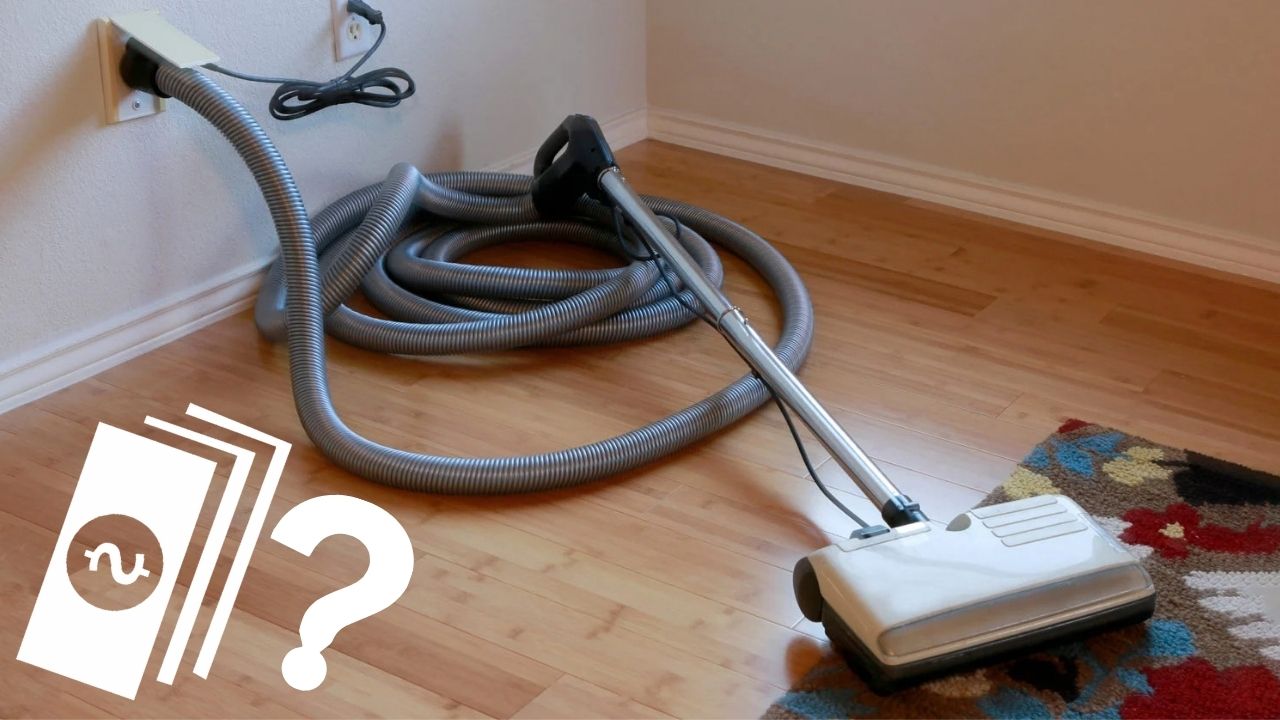
That gap isn’t padding. It’s labor hours, and labor hours track wall access, not floor plan size. Read the full installation process before requesting bids, so you already know which parts of your home make routing cheap or costly.
What the National Averages Actually Say
National averages say professional installation costs $1,094 to $2,194, averaging $1,583, with outliers as low as $240 and as high as $3,000. This guide checks that aggregated data against National Electrical Code documentation and installer-verified forum invoices, not one dealer’s price sheet.
- Averages blend new construction with retrofits, hiding the real price driver: wall access, not house type.
- Cost guide sites disagree by more than $1,000 at the top end, since each samples a different mix of easy and hard installs.
Manufacturer pricing guidance, including manufacturer guidance on installation cost factors from Drainvac, confirms the pattern: equipment tier matters less than routing complexity.
The Quote Isn’t for a Vacuum, It’s for Routing
The quote you’re paying for is mostly a routing bill, not an equipment bill. Think of it as paying for a hidden highway, not the car that drives on it. Equipment, meaning the power unit, inlets, and pipe, runs $400 to $2,000; labor adds another $400 to $1,500 on top and eats 25% to 40% of most project totals.
Routing difficulty, not brand, explains most of the gap between a $1,500 bid and a $3,600 one. Is your installer pricing your actual walls, or a generic house that doesn’t exist?
Why Dealer Sites Show Lower Numbers Than Cost Guides
Dealer sites show lower numbers because dealer figures leave out electrical work, accessories, and drywall touch-ups. A dealer FAQ might list installation “from $900,” while an aggregator’s average sits north of $1,500 for identical scope.
- Dealer figures exclude electrical work, accessory kits, and drywall patching.
- Read every quote asking what’s missing, not what’s included.
The Per Inlet Math No Cost Guide Leads With
Budget $125 to $500 for every wall inlet you add, materials and labor combined. Forum installs report figures across that entire range, and the spread comes down to full dealer labor rates versus handling part of the work yourself.
How Installers Actually Price Your Job
Installers price your job by multiplying inlet count by a per-inlet rate, then adding the power unit and trunk pipe. One forum member paid $125 per inlet total, self-managed. Dealer quotes for identical scope in his region ran $150 to $200 per inlet, the going rate for hiring central vacuum installers instead of self-installing.
- Per-inlet pricing turns a mystery quote into checkable arithmetic: multiply inlet count by the going rate.
- Materials run roughly $65 per inlet for the valve, pipe, and fittings.
- Labor rates of $50 to $120 an hour hide inside flat quotes, invisible unless you ask.
How Many Inlets Your Home Really Needs
Budget one inlet for every 700 to 1,000 square feet, based on a 30-foot hose’s reach. Count inlets per floor by hose reach, not total square footage, and you land on the right number fast.
Picture a two-story, 2,400 sq ft floor plan with reach circles drawn from each proposed valve. Overlapping circles mean you paid for an inlet you didn’t need. Gaps mean an uncovered room.
- One inlet with a 30-foot hose covers roughly 700 to 1,000 square feet.
- More inlets mean more cost, and sometimes weaker suction at the farthest valve.
- Check a central vacuum installation guide with inlet placement standards before finalizing valve locations.
Fewer inlets, placed smart, beats more inlets placed lazy.
Extra Inlets, Extra Dollars
Each additional inlet runs $130 to $300 installed, stacked on your base system price.
| Item | Typical Cost |
|---|---|
| Base install (power unit, trunk line, 2 to 3 inlets) | $800 to $1,800 |
| Each additional inlet | $130 to $300 |
| Added electrical wiring per inlet | $50 to $150 |
- Every added inlet adds materials, labor time, and possible wall repair.
- Stretch one hose length before paying for another wall opening.
- Test reach with a rope or tape measure before signing anything.
New Construction vs. Retrofit: The Biggest Cost Fork
Rough-in during framing runs $400 to $800, while retrofitting into finished walls runs $1,200 to $2,500 and up. The difference comes down entirely to wall access, not equipment.
Why Open Walls Cut Your Bill Nearly in Half
A framer’s exposed stud bays are free access; a finished wall becomes a demolition and repair problem. The identical system, priced during framing versus after drywall goes up, differs by a thousand dollars or more on matching floor plans.
Rough-in during framing costs $400 to $800 with completely open access. Retrofits demand creative routing through closets, attics, and stud bays that are no longer visible. Building or gutting right now? Review new construction vacuum installs before your framer closes a single wall.
The Retrofit Fear That’s Mostly Wrong
The retrofit fear that’s mostly wrong assumes you’ll need walls opened throughout the house. Installers confirm the only wall hole most retrofits need is the one the inlet valve plate covers.
- Route pipe through attic space above the top floor whenever the attic is accessible.
- Drop branch lines down interior closet chases instead of exterior walls.
- Cut inlet openings only where the valve plate sits.
- Route the trunk line through a basement or crawlspace ceiling when one exists.
A typical retrofit wraps in one to two days, not a week. Single-story homes with basements retrofit easiest and cheapest of all.
When Your House Fights Back
No basement, a cramped attic, and finished walls at every turn push retrofit quotes toward the top of the range.
Picture an installer’s flashlight sweeping an 18-inch crawl space, hunting for a path the trunk line can fit through. That’s an hour of labor before a single pipe gets glued.
Finished walls, split levels, and home additions push quotes higher. Tight access adds patching, painting, and hours you didn’t budget for.
What’s your home’s weakest access point? Walk it before you call anyone.
The Line Items Quotes Bury
Quotes bury line items inside one lump number, and the ones buried hardest are electrical wiring, attachment kits, permits, and drywall patching.
| Line Item | Typical Range |
|---|---|
| Power unit | $400 to $2,000 |
| Wall inlets (2 to 4) | $260 to $1,200 |
| Attachment kit | $150 to $550 |
| Electrical wiring | $300 to $1,300 |
| Permits and accessories | $100 to $500 |
Electrical Work Nobody Mentions Until Day Two
Electrical work adds $300 to $1,300 to your total, depending on whether you’re wiring one inlet or a full new-construction network. Each inlet needs low-voltage trigger wiring run back to the power unit, separate from the pipe.
One owner paid $300 to wire a single retrofit inlet; a new-construction project with six inlets ran $1,300 for the full package. Some installers fold wiring into the base quote; others send a separate electrician’s bill.
Power units also fall under National Electrical Code branch-circuit rules. A unit drawing more than 7.5 amps needs its own dedicated 15-amp circuit under NEC branch-circuit requirements for central vacuums, and a unit drawing more than 10 amps, but not over 16, needs a dedicated 20-amp circuit. The threshold depends on nameplate amperage, not the blanket “always 20 amps” rule dealer pages repeat.
The Attachment Kit Can Cost More Than the Pipes
A kit runs $150 to $550 depending on whether you choose an air-driven turbine head or an electric powerhead. Vacuflo, manufactured by H-P Products, sells kits at both tiers, and the price gap tracks motor type more than brand.
- Electric powerheads cost more but agitate carpet pile more aggressively than air-driven heads.
- A basic kit covers most homes and saves $100 to $400 versus a premium kit.
Permits, Warranties, and the Quiet Add-Ons
None of these show up in a headline price range. Some municipalities require permits when the job involves new electrical circuits or structural wall changes. Extended warranties run $100 to $300 and cover parts and labor beyond the standard term. Automatic dustpans, like the VacPan line built by MD Manufacturing, add $100 to $500 depending on placement count. Ask about all three before you sign.
What DIY Installation Really Saves and Costs You
DIY installation saves $800 to $1,300 in labor on a typical project, and it costs you the risk of a mistake that erases every dollar of that savings.
Can You Actually Do This Yourself?
Attic or basement access is the single factor forum DIYers say makes or breaks the project. Kits with pipe, low-voltage wire, fittings, and inlets start around $300 to $600.
Owners with open attic or basement access finish a full diy central vacuum approach over a single weekend. No basement and a cramped attic turns it into a multi-weekend fight, the point where hiring a professional starts to pay for itself.
The Hybrid Move Smart Owners Use
Split the job: run the pipe and inlets yourself, hire out the power unit hookup and any new electrical circuit. You keep most of the labor savings while protecting warranty and performance.
- Run and glue the trunk line and branch drops using manufacturer-spec pipe only.
- Install and secure each wall inlet valve, sized and placed per the coverage math above.
- Pull low-voltage trigger wire alongside the pipe as you go.
- Hand off power unit mounting, line-voltage wiring, and final hookup to a licensed installer.
One trunk line with branch drops works best for this split, keeping the pro’s scope small and billable by the hour.
The Mistakes That Erase Your Savings
The mistakes that erase your savings trace back to the wrong pipe or rough cuts left inside the line. One installer put it bluntly: plumbing PVC ruins central vacuum systems, full stop.
- Standard pipe is thin-wall 2-inch OD tubing, compatible across Beam, Drainvac, and most North American systems, but never plumbing-grade PVC.
- Rough cuts and unsanded burrs inside the pipe become permanent clog traps.
- Fire-block walls need steel sleeves where local code requires them.
Retractable Hose Systems: Convenience at a Real Premium
Retractable hose systems like Hide-A-Hose carry a real premium, adding $175 to $1,000 to a standard system, in exchange for never dragging a loose hose through the house again.
| Feature | Standard Inlets | Hide-A-Hose |
|---|---|---|
| Cost per inlet | $130 to $300 | $125 to $700 |
| Typical coverage per inlet | 700 to 1,000 sq ft | Up to 2,300 sq ft |
| Hose handling | Carried room to room | Stored inside the wall pipe |
What the Hidden Hose Actually Adds to Your Bill
Each retractable inlet stores its own dedicated hose inside the pipe network, which changes how the whole system routes. Retractable valves run $125 to $700 each.
Long-sweep elbows and single-plane routing raise labor hours beyond a standard install, since the hose needs a straight path to retract without binding. One 50-foot retractable inlet covers roughly 2,300 square feet, why some homes need far fewer of them.
When Fewer Fancy Inlets Beat More Cheap Ones
A single long-reach retractable valve replaces two or three standard inlets, clawing back some of the per-valve premium.
A hybrid two-story install with one retractable inlet downstairs and standard inlets upstairs priced around $2,400 to $3,000. Dragging a 30-foot hose up a staircase sounds miserable to plenty of owners. Price that honestly before defaulting to standard valves everywhere.
How Much Does Central Vacuum System Installation Cost by Home Size?
Cost by home size runs roughly $1,200 for homes under 1,500 sq ft, $2,000 to $2,500 for 1,500 to 2,500 sq ft, and $2,800 and up beyond that, driven by rising inlet counts and longer pipe runs.
| Home Size | Typical Inlet Count | Typical Installed Total |
|---|---|---|
| Under 1,500 sq ft | 1 to 2 | $900 to $1,600 |
| 1,500 to 2,500 sq ft | 2 to 4 | $2,000 to $2,500 |
| Over 2,500 sq ft | 4 to 6+ | $2,800 to $4,500 |
The 2,000 Square Foot Benchmark Everyone Quotes
A typical retrofit at this size lands around $2,000 to $2,500 installed. Two to four inlets handle most homes in this bracket without forcing suction loss at the farthest valve.
Labor alone runs $500 to $700 for homes under 2,000 square feet. Larger homes push labor past $1,000 and often need a bigger power unit to hold suction across a longer run.
Multi-Story Homes and the Vertical Tax
Routing pipe up through finished floors adds planning and labor hours a single-story home never sees. Picture the trunk line climbing a closet chase between floors instead of a straight run across a basement ceiling. Second-story inlets often route through attic drops rather than wall chases, and pipe length itself barely affects suction; route for access, not the shortest distance on paper.
Small Homes and Condos: The Add-On Shortcut
A garage-mounted unit with a built-in inlet skips the branching pipe network entirely and needs zero wall cutting. One owner used exactly this setup for a small single-story footprint, and a single well-placed inlet covered it.
Is the Price Worth It After 20 Years?
A quality system spreads its cost across two decades, while portable vacuums get replaced every few years and each one restarts the cost clock. A 20-year-old Beam unit, manufactured by Trovac Industries, still running daily in a three-cat household makes the point better than any spec sheet: the motor, often an Ametek or Lamb unit, outlasts three or four generations of portables bought over the same span.
The Cost Per Year Nobody Calculates
A $2,000 system spread across 20 years costs roughly $100 per year, less like a vacuum purchase and more like a furnace: one upfront cost, decades of quiet function. Bag and filter upkeep runs about $10 to $60 annually on top. Most components, including motor brushes and inlet valves, get serviced individually, so one worn part rarely means replacing the whole system.
What It Does and Doesn’t Do for Resale
It doesn’t add a dollar-for-dollar bump to your appraisal, but it makes a home easier to sell. Buyers see a central vacuum, whether a Beam, a NuTone (now under DrainVac International’s ownership), or a Drainvac unit, as a premium touch, but appraisers rarely add hard dollars for it.
Treat resale appeal as a bonus, never the purchase justification.
Conclusion
You arrived unsure why central vacuum system installation cost swings by thousands for the same house. You leave able to price your own home per inlet, per floor, and per access point, and to spot a padded quote on sight.
Tonight, walk your house with a 30-foot rope and mark where an inlet would reach every corner. Count the inlets you’d need, then run the numbers through our total cost calculator before you take a bid.
A portable vacuum is a repeating expense that dies every few years. A properly installed system is plumbing that cleans for 20.
Frequently Asked Questions
How much does it cost to install a central vacuum system?
Most homeowners pay $1,094 to $2,194 installed, averaging $1,583. Your final number depends far more on wall access and inlet count than on home square footage alone.
Is it cheaper to install a central vacuum during new construction or as a retrofit?
New construction, by a wide margin. Rough-in during framing runs $400 to $800 with open wall access, while retrofitting into finished walls runs $1,200 to $2,500 and up.
How much does each additional wall inlet cost?
Budget $130 to $300 per additional inlet, installed. Add $50 to $150 more per inlet where new low-voltage wiring has to be run.
Do central vacuums require a dedicated electrical circuit, and what does that add to the price?
Yes, once the power unit’s amperage draw crosses the NEC threshold. A unit pulling over 7.5 amps needs a dedicated 15-amp circuit, and one pulling over 10 amps needs a dedicated 20-amp circuit, adding $300 to $1,300 to the bill.
Is a central vacuum worth the cost compared to buying a premium portable vacuum?
Yes, over any ownership horizon past a few years. A $2,000 system spread across 20 years costs roughly $100 per year, well below the cost of replacing a premium portable every few years.