You bought an imperium central vacuum expecting a brand that would stick around for parts, support, and a warranty call when something quit. Then you went looking and found almost nothing, plus three sellers listing three different makers and three different air watt numbers for the same unit.
Here’s what changes by the last line. You’ll know who actually built it, why the brand went quiet, and whether your money belongs here or with one of the central vacuum brands for every home still standing.
Imperium Central Vacuum
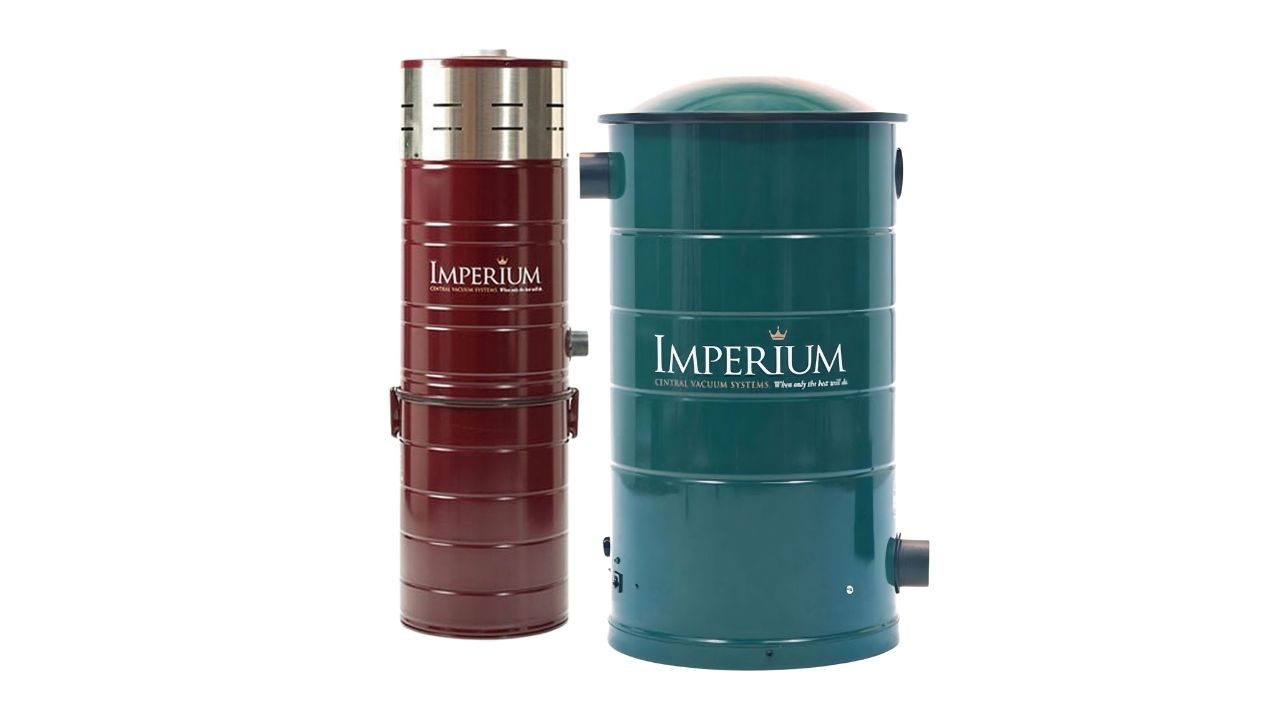
Imperium was never a manufacturer. It was a private-label central vacuum sold by Central Vacuum Stores, and Lindsay Manufacturing built the power units. The seller closed in 2022, so the real question isn’t specs. It’s parts and support, and both still exist once you know where to look.First, Who Actually Built Your Imperium?
A company you’ve probably never heard of built your Imperium. Lindsay Manufacturing in Ponca City, Oklahoma made the power units, even though the label says something else. Sort that out first, because the maker is your map to every part you’ll ever need.
How we checked this: we matched Lindsay and VacuMaid documentation against CV280 and CV300 reseller listings, the EPA’s filtration standard, and owner reports from central vacuum forums. No dealer pays us a cent to land on these answers.
The Lindsay Manufacturing link nobody explains
Lindsay Manufacturing Inc., the Ponca City, Oklahoma builder that’s made central vacuums since 1956 and also makes VacuMaid and AstroVac, produced the Imperium power units. You bought a brand. A different company built the machine.
That gap matters more than it sounds. Imperium, the private-label central vacuum sold by Central Vacuum Stores, never ran a factory. The name lived on a sticker, not a production line.
Knowing the real builder is how you find parts now that the brand’s gone quiet. Search “Imperium motor” and you hit dead pages. Search the Lindsay part inside it and you find stock.
You can read the company history at Lindsay Manufacturing, the Oklahoma company that built Imperium power units, which has run since 1956 and still supports its current lines.
What VacuumLand owners suspected about the brand
Owners on the VacuumLand forum guessed the truth long before any seller confirmed it. The shared parts and identical-looking canisters gave it away. People decoding the brand on their own is the whole reason this guide exists.
One common thread runs through those threads. Owners noticed an Imperium sitting next to a Valet or VacuMaid unit looked like the same machine wearing a different badge. Same canister shape, same motor cover, same inlet fittings.
They were right. The hardware overlap isn’t a coincidence. It’s a shared assembly line.
So if the machine is solid, why does the dead brand matter so much? Because the support you assumed you bought went away.
The Brand Closed in 2022. Now What?
Central Vacuum Stores, the seller behind the Imperium label, went out of business in March 2022. The brand didn’t get bought or absorbed. It went dark. Your support path now runs through the aftermarket, not a manufacturer hotline.
Why Central Vacuum Stores shutting down matters
It matters because the phone support and in-house warranty Imperium advertised closed with the company that issued them. Call the old number today and nobody answers. That’s the fear sitting under this whole search, and most pages skip right past it.
Owners describe the same dead end. They track down the original toll-free line, dial it, and get a disconnected tone or a parked domain. The brand that promised lifetime help simply stopped existing.
That doesn’t make the hardware worthless. It makes the brand promise worthless.
Where replacement parts still come from today
Parts still come from VacuMaid and independent central vacuum shops. VacuMaid, the Lindsay Manufacturing brand built on the same line, calls itself a direct replacement for Imperium units and stocks the motors, bags, and boards that fit. You’re shopping the aftermarket, not stranded.
VacuMaid spells this out plainly on VacuMaid’s official Imperium parts and direct-replacement notice, where it lists the replacement power unit and the parts that carry over.
Here’s where the common parts actually come from now:
| Part | Where to get it now | Cross-compatible brand |
|---|---|---|
| Motor (Ametek-Lamb) | VacuMaid, motor specialists | AstroVac, Valet, VacuMaid |
| Bags | VacuMaid, online vacuum retailers | VacuMaid Maxflow |
| Circuit board | Independent shops, generic boards | Universal central vac boards |
| Inlet valves | Any central vacuum retailer | Universal 2-inch fittings |
The one limit worth naming: aftermarket boards and bags come from sellers you’ll need to vet yourself, since no factory stands behind the Imperium name anymore.
Can you still get any warranty help?
No, not the original warranty. The in-house coverage Imperium promised died with Central Vacuum Stores in 2022. Any protection you get now comes from the seller of the replacement part, not from Imperium.
Reseller notes make the same point in plainer words. The part you buy carries the part seller’s warranty. Buy a VacuMaid motor and you get VacuMaid’s terms, not a revived Imperium guarantee.
Set that expectation before you spend a dollar. So is a brand with no warranty worth your money? Hold that thought. The hardware answer surprises people.
Reading the Specs Resellers Can’t Agree On
Resellers list wildly different numbers for the same Imperium unit, and that’s the real spec story. Coverage, air watts, and warranty length all shift page to page. When sellers disagree on one model, the honest move is trusting the lower figure.
Why CV280 air watt numbers don’t match
The CV280 shows up rated at 561 air watts, the measure of sealed suction power calculated at the airflow opening under load. The same model gets sold as good for 3,000 square feet on one page and 3,500 on another. That spread should make you cautious.
Look at how the same unit gets described across listings. Air watts hold steady at 561, but coverage swings 500 square feet depending on who wrote the page. Warranty claims wander too, cited as 5, 10, and 15 years across different sellers.
When the numbers fight each other, trust the lower one. A seller padding coverage has every reason to round up.
What 740 air watts on the CV300 really means
The CV300 is listed at 740 air watts, a real step up from the CV280, with 138 CFM and a 6.25-gallon bag. That’s reseller-stated, though, not tied to a named test standard like ASTM F558.
Think of air watts as the pressure pushing air through a single hose, and CFM, the cubic feet of air moved per minute, as how much air moves at once. You want both. A high air watt number with weak airflow still struggles to lift embedded grit off carpet.
Reading specs this way carries over to any brand. The same air-watt-versus-CFM logic applies when you weigh Element systems and key specs or any current unit on the market.
Ask any seller for the ASTM rating, not the marketing headline. A number without a test behind it is a guess in a nice font.
Square footage claims you should not trust blindly
Square footage ratings assume short pipe runs and perfect inlet placement, conditions almost no real home meets. A CV280 rated for 3,500 square feet covers less once you add long runs and elbows. Match inlets to each floor, not the whole-house number on the box.
Take a 2,400 square foot two-story home. On paper a CV280 covers it easily. In practice, the inlet farthest from the power unit, fed by a 55-foot pipe run with four elbows, pulls noticeably weaker than the one in the next room.
Forum owners warn about exactly this gap between the box rating and the nozzle. The fix is layout, not a bigger number.
So how do you know whether the motor itself is the weak link? That comes down to motor type.
The Motor Question That Decides Longevity
The motor type decides how long your Imperium lasts, and this is where buyers get burned. Imperium units use thru-flow motors, which run dirty air across the windings. That choice trades some lifespan for filtration design, and it shapes the repair-or-replace call.
Flow thru versus bypass: why owners argue
A flow-through motor pulls the dirty airstream straight across its own windings to stay cool. A bypass motor uses a separate fan to cool itself, keeping grit away from the motor. Owners argue because the bypass design keeps abrasive dust off the windings and stretches service life.
One VacuumLand buyer passed on a CV300 spec sheet for that exact reason. He wanted a bypass motor for the longer haul and saw the thru-flow design as a compromise.
He had a point. A thru-flow motor sips a little dirty air for cooling, and over years that grit wears the brushes and bearings faster.
What the Ametek Lamb motor inside actually is
The CV280 runs a genuine Ametek-Lamb motor, one of the most common power units in the whole central vacuum industry. Ametek-Lamb supplies the same motor family to AstroVac, Valet, and VacuMaid. Shared parts mean replacements are easy to find and fairly priced.
The CV280 specifically uses an Ametek-Lamb two-stage, 5.7-inch motor. That same motor family shows up across the Lindsay-built brands and well beyond them.
A shared motor is good news for an orphaned unit. You’re not hunting a one-off part. You’re buying an industry workhorse that dozens of brands rely on.
When to replace the motor, not the whole unit
Replace the motor, not the unit, when the canister and pipes are sound but the motor’s tired. Check the carbon brushes every five years in a normal home. Worn brushes are a cheap fix. Bad bearings mean a new motor.
Here’s the diagnostic order that saves you money:
- Pull the motor and check the carbon brush length.
- Replace the brushes once they wear down near 3/16 inch of remaining carbon.
- Spin the fan by hand and listen for a bearing growl.
- Bearing noise or a burnt smell means a full motor swap, not a brush job.
A fresh motor outlasts nursing a tired one every time. So is it worth dropping money into a brand nobody supports? That’s the buying question.
Buying One Today: Smart Move or Trap?
Buying a new-old-stock Imperium today is a calculated risk, not a trap. You get solid American-built steel and a proven motor. You also inherit an orphaned brand with no factory behind it. The hardware’s fine. The support isn’t.
Should you still buy an Imperium central vacuum?
Buy one only when you’re comfortable self-servicing it. New old-stock units still float around online, and the steel build and Ametek-Lamb motor are genuinely good. The catch is you own an orphaned brand from day one, with no maker to call.
Are Imperium central vacuums still made? No. The label’s been dormant since 2022.
The verdict you can repeat to a spouse: the machine is solid, the brand is dead, and that’s fine only when you can turn a wrench yourself.
Who an Imperium actually fits right now
An Imperium fits the hands-on owner who can swap a motor or board without flinching. It suits a tight budget where steel construction beats a famous badge. It does not fit anyone who wants a dealer on speed dial.
The owner who thrives with one keeps a spare board on the shelf and treats a motor swap as a Saturday job. He bought the steel canister, not the sticker, and he’s happy.
The owner who regrets it expected a hotline. There isn’t one.
Better new options for the same money
Spend the same money on a current dealer-supported unit and you get a live warranty plus someone to call. VacuMaid, the Lindsay-built direct replacement, mates to your existing Imperium tubing and inlets and carries a real manufacturer warranty. The trade-off is you’re back to paying brand-new prices.
Here’s the honest comparison on the factors that actually differ:
| Factor | Imperium (orphaned) | VacuMaid (current, Lindsay) |
|---|---|---|
| Warranty | None active | Manufacturer-backed |
| Support | No hotline | Dealer network |
| Parts | Aftermarket only | Direct from maker |
| Air watt class | 561 to 740 (reseller-stated) | Comparable current motors |
| Resale | Weak, dead brand | Stronger, supported brand |
Shopping current options is worth doing widely before you settle. Weigh the Allegro central vacuum features explained against VacuMaid and the rest so you compare warranty and support side by side.
VacuMaid’s limitation: its dealer coverage runs thinner in some regions than the big national brands, so confirm a local installer exists before you commit.
What you give up choosing an orphaned brand
Choosing an orphaned brand costs you three things: no factory warranty, no manufacturer hotline, and weak resale value. You trade that peace of mind for steel quality and a low entry price. Walk in knowing the deal.
The steel and the motor are real value. The missing safety net is a real cost. Neither one cancels the other.
Know the trade before you buy, not after the motor quits. And speaking of what matters for the people inside the house, filtration deserves a hard look.
Filtration Claims You Should Question
Filtration is where marketing language gets loosest, and your lungs are the stakes. Imperium offered HEPA-style bags, which is not the same as a certified HEPA filter. The difference matters most for allergy and asthma households.
HEPA versus HEPA style bags, plainly explained
A true HEPA filter traps at least 99.97 percent of particles at 0.3 microns. A bag labeled HEPA-style meets no certified standard at all. The word style is the tell.
That 99.97 percent figure comes straight from the EPA’s definition of a true HEPA filter, which also notes there’s no widely agreed HEPA standard for consumer products, so style on a label means almost nothing.
Think of a window screen versus a coffee filter. The screen stops bugs but lets dust pour through. Real HEPA is the coffee filter catching the fine stuff. HEPA-style is the screen with a fancier name.
For an asthma or allergy household, demand certified HEPA, not a lookalike bag.
What the CRI Green Label really certifies
The Carpet and Rug Institute Green Label rates a product’s emissions and indoor air contribution, not whole-system allergen capture. A unit carrying it passed an emissions test. The badge proves less than sellers imply.
Some Imperium-era listings cite the label on a model like the CV7700. That tells you the unit met an emissions threshold. It does not tell you the system captures fine allergens across the whole house.
Know what the badge proves before you let it close the sale.
Why venting outside matters for allergies
Venting exhaust outdoors is the single cleanest reason to own central vacuum. The finest dust a bag misses leaves the house entirely instead of recirculating through your living space. A unit vented into a basement throws that whole advantage away.
The air path is simple. Debris drops into the canister, the motor pulls the remaining fine air through the exhaust port, and a vent line carries it out through an exterior wall.
Plan the exterior vent run before the installer sets a single fitting. Retrofitting that vent after drywall closes costs far more than running it up front.
So once the system is in, how do you keep it pulling hard for the long haul? Maintenance.
Keeping an Older Imperium Running for Years
An older Imperium runs for another decade on cross-compatible parts, and that’s the real payoff. Sister brands from the same factory share bags, motors, and boards. Keep a short maintenance rhythm and the steel canister outlives most portables you’ve owned.
Cross-compatible parts from AstroVac and VacuMaid
Genuine VacuMaid and AstroVac parts fit most Imperium canisters directly because the same Lindsay line built all three. Bags, motors, and a generic circuit board cover the common failures. These sister-brand parts are your lifeline now.
The overlap is broad. VacuMaid and AstroVac bags drop into most Imperium canisters, the Ametek-Lamb motor is a straight swap, and a single universal control board replaces the original relays and breakers.
That shared-parts reality is exactly why knowing the real maker mattered so much up top. It turns a dead brand into a serviceable machine.
Signs your inlet valves are leaking air
Weak suction at one inlet traces back to a leaking valve more than a dying motor. Worn contacts, missing gaskets, and tired springs bleed air quietly. Most inlet parts are universal and cheap to swap yourself.
One owner chased fading suction across a whole house before finding the culprit: a single inlet valve with a cracked gasket pulling air the moment the system fired up. A two-dollar gasket fixed what felt like a dying unit.
Check each valve’s seal before you blame the motor. One leak robs the suction you paid for.
Installation Truths That Affect Real Suction
Installation decides how much of your rated suction reaches the nozzle. Pipe length, elbow count, and inlet placement all eat airflow before it ever gets to the carpet. The spec on the box is the ceiling, not the floor.
Why suction drops over long pipe runs
Suction drops with every added foot of pipe and every 90-degree elbow past the run the maker designed for. A long pipe acts like a long straw. The farther the air travels, the harder your motor works for less pull at the end.
Critics who bench-test central systems measure real cleaning-performance loss across long runs. The motor doesn’t fail. The friction in the tubing simply steals airflow before it reaches you.
Here’s the counter-intuitive part. A higher air watt rating won’t fully rescue a bad layout. Fix the run and the elbows first.
Matching inlet count to floor square footage
Plan inlets so one 30-foot hose reaches every corner of a floor, then count inlets per floor instead of off the whole-house total. A two-story home needs inlets sized to each level. Bad placement kills the convenience you paid for.
Do it in this order and you won’t strand a corner:
- Measure each floor on its own, not the whole house at once.
- Place an inlet so a 30-foot hose covers the farthest corner of that floor.
- Add an inlet for any room a single hose can’t reach around a tight corner.
- Give the garage and basement their own inlets too.
Do central vacuums really lose suction power?
Yes. Friction across pipe and hose lowers airflow at the nozzle, and every system does it. A clean filter, sealed inlets, and short runs claw most of it back. Honest expectations beat a spec sheet promising the impossible.
Conclusion
You came in thinking Imperium was a living brand you could buy and lean on. You’re leaving knowing it’s an orphaned private label, built by Lindsay Manufacturing, that you can still run smartly with the right parts.
Tonight, find the model number on your canister and search it against VacuMaid and AstroVac parts to confirm support exists before you spend a cent. Do that, and a steel, American-built unit vented straight outside still clears allergens no portable you’ve ever dragged up the stairs could touch.
Frequently Asked Questions
What company makes the Imperium central vacuum?
Lindsay Manufacturing in Ponca City, Oklahoma. Imperium was the private label of Central Vacuum Stores, and Lindsay, the same company behind VacuMaid and AstroVac, built the power units.
Is the Imperium central vacuum brand still in business?
No. Central Vacuum Stores, the seller behind the label, closed in March 2022, and the brand has been dormant since. Parts still come through VacuMaid and the aftermarket.
What is the difference between the Imperium CV280 and CV300?
Mostly power. The CV280 is rated around 561 air watts, while the CV300 jumps to roughly 740 air watts with 138 CFM and a larger 6.25-gallon bag, suiting bigger homes.
Where can I buy bags and parts for an Imperium central vacuum?
VacuMaid is your first stop. As the Lindsay-built direct replacement, it stocks compatible bags, motors, and boards, and independent central vacuum shops carry universal inlet and hose parts.
Should I repair my Imperium central vacuum or replace it with a new unit?
Repair it when the canister and pipes are sound. A motor or board swap costs far less than a new system. Replace only when you want a live warranty and dealer support behind you.