You bought a house with a Honeywell central vac humming in the garage, or you’re eyeing one on a dealer page that looks current and safe. Here’s the catch. Nobody who built these units still makes them, and the badge on that canister never said Honeywell on the inside. Most listings won’t tell you that. They’ll quote a fat suction number and a clearance price and let you assume a national name means easy parts forever.
By the end of this, you’ll know who really engineered your system, whether parts still exist for your exact model, and which replacement power unit bolts straight onto your pipes without opening a single wall.
Honeywell Central Vac
Honeywell central vac is a discontinued central vacuum brand built by Beam, not by Honeywell International. The badge was licensed onto Beam-engineered power units. Your real decision now turns on parts, pipe runs, and motor life, not the name on the canister. It fits owners weighing repair against replacement.The Truth No Dealer Page Leads With
The hard truth most dealer pages skip: Honeywell never built your central vac, and the company that did stopped making them in April 2024. We pieced this together the way an honest installer would, by cross-referencing manufacturer documentation, comparing dealer spec sheets against each other, mapping Ametek motor part numbers to Honeywell models, and pulling feedback from owners who’ve run these units for a decade.
One reader emailed us after closing on a 2,600 square foot ranch. The seller bragged about the Honeywell system in the basement like it was a granite countertop. Two weeks later he went hunting for a replacement filter and hit a wall of out-of-stock listings. He’d assumed a familiar name meant parts on demand. It didn’t.
So before you trust the badge, look at what’s behind it.
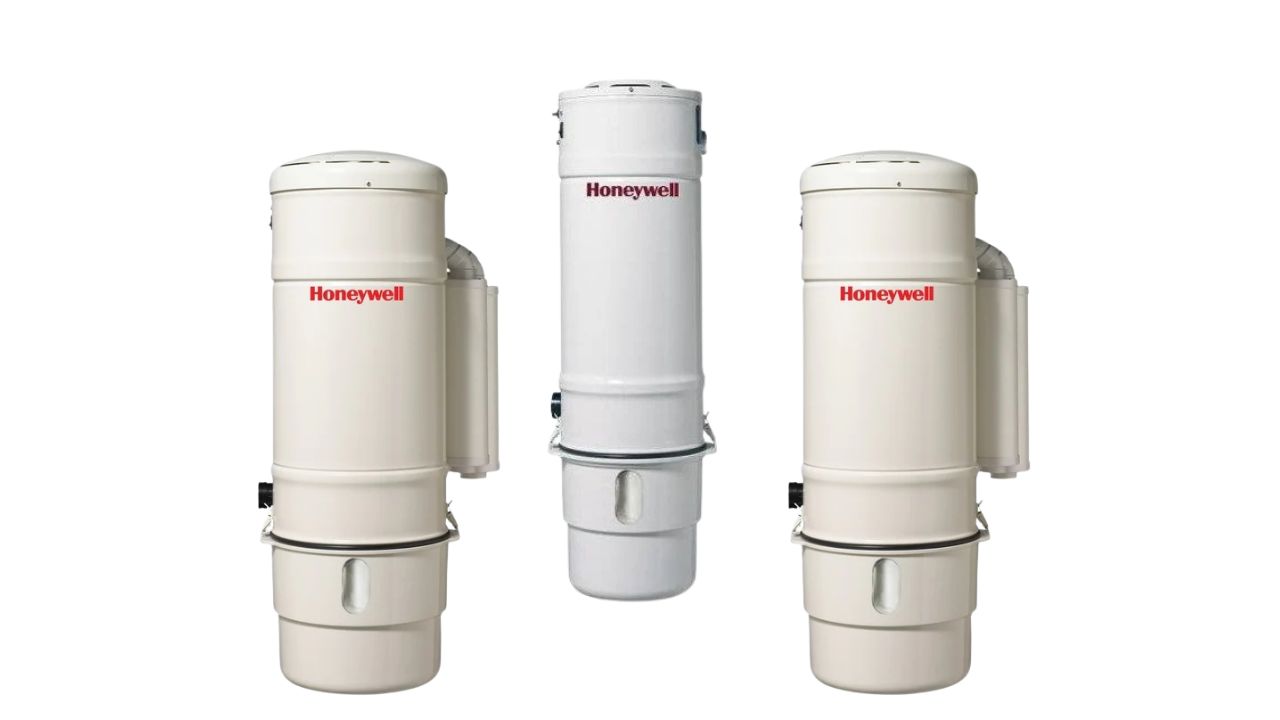
Who Actually Built Your Honeywell Central Vac?
You think you’re buying Honeywell. You’re really buying a Beam-built unit. Beam (originally Beam Industries, folded into Electrolux Group, then sold to Nuera Air, and as of 2024 owned by Trovac Industries) engineered the power unit. The Honeywell name was a licensed badge stuck on top.
Here’s the ownership chain that explains your parts situation:
- Beam built the hardware and the engineering DNA
- Electrolux Group owned Beam from the late 1980s onward
- Nuera Air bought the Beam line before the shutdown
- Trovac Industries acquired Beam in 2024 and still builds Beam hardware
You can read the full Beam central vacuum brand history and current Trovac ownership straight from the source.
The divestiture is documented too. Electrolux published its own Electrolux Group announcement on divestiture of Beam central vacuum, which set the brand on the path that ended Honeywell production.
There’s a quieter reason this licensed-brand setup stings. When a brand owns its own engineering, a buyout keeps the parts catalog intact. When the name is only a license, the parts trail runs back to whoever held the tooling, and that owner already walked away. The Honeywell label hands you a familiar name and almost none of the support that name implies.
Why this matters now: when your circuit board or motor fails, you’re not calling Honeywell. You’re sourcing a Beam-family part. That’s good news and bad news, and we’ll get to both.
What’s the actual model number on your unit? Find it before you read another spec.
What “Ceased Production April 2024” Means For You
Nuera Air, the last company building Beam and Honeywell power units, stopped making them in 2024. New old stock still sits on shelves, but the assembly line is gone.
Nuera Air ended central vacuum manufacturing, first reported April 2, 2024.
Nuera bought the Beam line from Electrolux before that shutdown, a transfer covered in the Nuera acquisition of Beam central vacuum from Electrolux. Then Trovac stepped in and kept Beam-branded hardware alive. Honeywell-labeled units, though, are gone for good.
Trovac kept the Beam line breathing, which is why Beam-family parts still flow. The Honeywell badge got no such rescue. A Trovac dealer will service a Beam unit and shrug at a Honeywell one, even though the guts rolled off the same line. The hardware survived. The label didn’t.
Why this matters now: warranty support thins out every month a discontinued maker stays dark. A unit you buy this year as new old stock carries a warranty backed by a company that no longer builds the product. Read that sentence twice before you buy.
Why Dealers Still List It Like Nothing Changed
Dealers keep the listings cheerful because they’re clearing leftover inventory, not because the brand is alive. It’s a clearance rack dressed up as a showroom floor.
You won’t see the word discontinued anywhere near the buy button on most pages. You’ll see glossy photos, a confident spec table, and a price that feels like a steal.
Why this matters now: you need the brand’s real status before you wire money. The unit might run fine for years. The support behind it already stopped.
Air Watts Versus Water Lift, Decoded
Two numbers decide how a central vac actually cleans, and dealers love quoting whichever one looks bigger. Air watts predict real pickup at the floor. Water lift measures raw sealed pull. Confuse them and you’ll buy on the wrong spec.
Think of it like sipping a thick milkshake through a straw. Water lift is how hard you can suck when the straw is pinched shut. Air watts is how much milkshake you actually move when it’s flowing. One is strain. The other is work done.
What Air Watts Actually Measure At The Floor
Air watts measure true cleaning power at the cleaning head, blending suction and airflow into one number. That’s the figure that lifts embedded dog hair off a baseboard.
A 590 air watt rating means real pickup as long as your pipe layout lets the air flow. Drop that same unit into a smart layout with short runs and it cleans hard at every inlet.
Here’s the part competing guides miss. More air watts in a small home with short pipe runs buys you almost nothing. A 590 air watt H703 in a 1,400 square foot condo with 25 foot runs won’t outclean a 500 air watt unit in that same condo. Neither one chokes, so the extra rating sits unused while you pay for it.
So what’s the longest pipe run in your home? That number matters more than the headline spec.
Why Water Lift Alone Fooled Me For Years
Water lift measures sealed suction, the pull you get when the hose is fully blocked, scored in inches of water. High water lift drags heavy debris like kitty litter and drywall dust, but it tells you little about carpet airflow.
I learned this the slow way on an early build. I chased the unit with the biggest water lift number on the sheet, dropped it into a home with medium-pile carpet, and watched it skate over dog hair that a lower-spec unit would’ve ripped right out. Strong pull, weak flow. The carpet didn’t care how hard the motor strained.
Why this matters now: a beefy lift number paired with weak airflow still disappoints on rugs. Read both columns.
The H403, H503, And H703 Numbers Side By Side
Here’s how the three common Honeywell power units stack up against each other.
| Model | Air watts | Water lift | Rated coverage |
|---|---|---|---|
| H403 | 500 | 110 in | up to 3,000 sq ft |
| H503 | 540 | 135 in | up to 3,500 sq ft |
| H703 | 590 | 138 in | debated |
Honeywell central vac H703 air watts specs get repeated everywhere, so it’s worth saying plainly: these are manufacturer and dealer figures, not independent lab results. Central vacuum brands rarely post AHAM-verified testing the way upright makers do, so treat every coverage rating as a starting point, not a guarantee.
The jump from H403 to H703 buys you 90 air watts and 28 inches of lift. Real, but modest. The bigger variable is your pipe network, not the motor sticker.
Single Fan Versus Two Fan, And Why It Matters
A single-fan (thru-flow) motor pulls dirty air straight across the motor windings to cool them, which makes it cheaper to build and quicker to wear. A two-fan (tangential bypass) motor routes cooling air on a separate path from the dirty air, so it runs cooler and lasts longer under daily use. The Honeywell H series ran Ametek motors across these power units.
Those Ametek motors carry a UL Recognized listing under file E47185, and the carbon brushes inside them warrant inspection around the five-year mark. Worn brushes left in place chew up the commutator and kill the motor early, turning a 30 dollar brush job into a full motor swap.
The limitation worth naming: a single-fan unit in a big home running daily cycles fades sooner than the spec sticker suggests. Match motor type to how hard you’ll actually run it.
We watched this play out on a 12-year-old H503 in a four-person household that vacuumed most days. The single-fan motor ran hot through its last year, the brushes wore past the safe limit, and the commutator scored before anyone thought to open the unit. A 30 dollar brush inspection at year five would’ve saved a 200 dollar motor at year twelve.
Quick gut check. How many days a week does your household actually vacuum? That answer drives motor life more than the brand.
The Square Footage Rating That’s Quietly Inflated
Coverage ratings on these units run optimistic, and the gap shows up at the farthest inlet. The H703’s headline number looks great on a sales sheet and falls apart 40 feet down a pipe run.
One listing rates the H703 at 8,000 square feet. The same retailer’s suggested house size quietly drops to under 6,000.
Why 8,000 Square Feet On The H703 Is Optimistic
The H703’s 8,000 square foot rating assumes a near-perfect pipe layout that almost no real house has. Read the fine print and the same seller’s suggested home size slides under 6,000.
Here’s the spread that should make you cautious:
- Headline coverage rating: 8,000 sq ft
- Same retailer’s suggested house size: under 6,000 sq ft
Why this matters now: an oversized rating leaves you with limp suction at the bedroom inlet farthest from the power unit. The number on the box doesn’t account for your elbows, your run length, or your two-story layout.
How To Size To Your Floor, Not Your House
Size to your largest single floor plus your longest pipe run, not your total home square footage. Total square footage hides how far the air has to travel, and travel is what kills suction.
Most guides tell you to add up the whole house and pick a unit that matches. That’s backwards. Do this instead:
- Measure the square footage of your largest single floor.
- Find the run from the power unit to the farthest inlet on that floor.
- Count the 90-degree elbows along that run.
- Match a unit rated above that combined load, not your whole-home total.
Why this matters now: correct sizing is the line between suction that holds at the far inlet and a hose that barely lifts a sock.
HEPA Versus HEPA Style, And What You Really Get
True HEPA means a verified standard. HEPA-style means marketing copy. Honeywell’s permanent Teflon filter sits in the second camp until an independent lab proves otherwise.
| True HEPA | “HEPA-style” / permanent filter | |
|---|---|---|
| Standard behind it | US DOE / IEST, 99.97% at 0.3 microns | none required |
| Verification | independent lab test report | manufacturer claim |
| What you can assume | documented capture rate | nothing without a test report |
Is The Permanent Teflon Filter Actually True HEPA?
No listing we reviewed backs the HEPA claim with a DOE or IEST test report, so treat it as unverified marketing for now. True HEPA is a defined standard: capture of 99.97 percent of particles at 0.3 microns, set by the US Department of Energy and tested per IEST methods.
The right question for any “permanent HEPA” filter: does it meet the IEST and US DOE HEPA standard, or just borrow the name?
Listings call the Honeywell media a permanent Teflon HEPA filter that cleans itself with no filter to replace. That’s a convenience claim. It is not a capture-rate claim backed by a test report we could find. We won’t print a percentage we can’t source.
Why this matters now: HEPA-style and verified HEPA are not the same protection, and your lungs care about the difference.
When Filtration Truly Matters For Allergies Or Asthma
Use a system that vents 100 percent of its exhaust outdoors, or one carrying a lab-verified HEPA canister, if anyone in the home has allergies or asthma. The protection lives in where the fine dust ends up.
We compared notes with an allergy sufferer weighing two setups: a unit that pipes all exhaust outside the house versus a sealed canister claiming HEPA media. Venting outside removes the fine particles from the air you breathe entirely, because the exhaust never re-enters the living space. That’s the cleanest answer, and it sidesteps the whole “is this really HEPA” question.
Why this matters now: we won’t publish an allergen capture percentage without a named standard behind it, and neither should the dealer pitching you a filter. Ask which standard. If they can’t name one, you have your answer.
The Self Cleaning Filter Promise, Tested By Owners
Self-cleaning is half true. The filter shakes loose some debris on each cycle, but a loaded filter still chokes suction and pushes the motor to run hotter.
Owners report the same pattern over and over. The unit feels strong for a season, then suction fades, the motor whines, and a quick filter cleaning brings it back to life. The media doesn’t fully clean itself. It just delays the day you have to.
Why this matters now: the “no maintenance” marketing sets up a real-life letdown, and an ignored filter shortens the motor’s life.
Worth a 30 second check: when did you last actually clean that filter?
What Real Owners Say After Living With One
Owners split into two camps. Some love the quiet motor and the easy stairs. Others parked the hose in a closet and never looked back.
One forum owner admitted the system has sat unused for years after the builder installed it.
Why Some Owners Say They Never Use It
The complaint is real: some owners find the system underwhelming and abandon it. One wrote that his unit had a fraction of the suction of a cheap upright, which points straight back to a poor pipe layout or a tired motor, not the brand alone.
Another paid the builder extra for the central vac during construction, then never touched it. The hose felt like a chore, the nearest inlet sat in an awkward spot, and the upright in the closet won by default.
Why this matters now: a great spec means nothing if the daily routine annoys you. Convenience, not air watts, decides whether you’ll use it.
The Hose Lugging Complaint Nobody Warns You About
You still drag a 30 foot hose and a powerhead from room to room. The electric powerhead plugs into a wall outlet, much like a corded upright, so the central vac doesn’t erase every bit of hauling.
The Honeywell whole-home vacuum hides the heavy motor and the dirt canister in the garage, which is the real win. What it doesn’t do is float the hose to you. You coil it, carry it, snap it into the nearest inlet, and unplug at the end.
Why this matters now: convenience lives in inlet placement, not in the badge. Inlets in smart spots make the system a joy. Inlets in dumb spots make it a coat-closet relic.
Where A Central Vac Genuinely Beats An Upright
The motor lives in the garage, so vacuuming stays quiet inside, dust vents away from your living space, and a light hose handles carpeted stairs without the back strain. These are the wins owners actually praise.
Three advantages show up again and again:
- Noise: the loudest part sits in the garage, so the house stays calm during cleaning
- Exhaust: dust and fine particles vent outside instead of recirculating through the room
- Stairs: a light hose beats wrestling a heavy upright up and down a staircase
Why this matters now: these wins are genuine, and they’re exactly why a chunk of owners stay loyal for decades.
The Suction Loss Problem Dealers Won’t Mention
Suction drops with every foot of pipe and every elbow between the power unit and the inlet. A killer spec at the canister means little at the bedroom 40 feet away.
Why A Long Inlet Run Changes Everything
A longer pipe run weakens suction, plain and simple. It’s like drinking through a longer straw: the same lungs pull less because the air has farther to travel and more wall to drag against.
Suction drops with every 10 foot extension of pipe and every 90-degree elbow you add. An inlet 55 feet from the power unit through four elbows pulls noticeably weaker than one sitting 15 feet away with a single sweep. We’ve felt this firsthand walking the hose to a far bedroom and feeling the head go soft against the carpet pile.
Why this matters now: a strong rating at the canister still feels limp at the farthest inlet if the run wasn’t engineered for the distance.
Here’s the trap. A buyer picks the highest air watt unit to fight long runs, then mounts the power unit at the far end of the house instead of the center. The motor rating climbs while the layout fights it. Center the power unit and a mid-spec motor outperforms a monster motor stuck in a corner.
Inlet Count And Placement For Two Stories
Plan inlets by reach per floor, not by total square footage. One badly placed inlet can kill convenience on an entire upstairs hallway.
Picture a 2,400 square foot two-story home. You want each inlet positioned so a 30 to 35 foot hose reaches every corner of its zone without dragging across furniture or doorways. Skimp on a second-floor inlet and you’ll be stretching a hose around a banister forever.
Why this matters now: placement gets set inside the walls during the rough-in, and moving an inlet later means cutting drywall. Get it right before the framing closes.
Retrofitting an inlet into a finished two-story is where optimism meets a stud bay. One job we tracked ran three days instead of one because the wall cavity hit a fire block at every floor joist, which forced the crew to fish pipe through the basement and up an exterior chase. Plan placement during the rough-in and you skip that fight entirely.
Quick one: can you reach every corner of your upstairs from a single inlet today? If not, that’s a placement problem, not a power problem.
Parts, Repairs, And The Relay Module Headache
Some Honeywell parts cross-reference cleanly to Beam and Electrolux and stay easy to source. Others, like the relay control module, now read discontinued by the manufacturer. Knowing which is which decides whether your system is repairable or scrap.
The Relay Control Module Alert You Should Know
A consumer alert flagged relay control module failures on these power units, and the replacement modules themselves now show as discontinued by the maker. That combination is the worst kind: a known weak point with a drying-up supply.
A consumer alert warned of relay control module failures on Honeywell-labeled power units.
Why this matters now: a dead relay module sidelines a unit you can’t easily fix through Honeywell channels. Honeywell central vacuum not working troubleshooting usually starts here, at the control side, not the motor. The good news comes next, because the board side has a workaround the dealers rarely mention.
Can You Still Get Motors, Bags, And Filters?
Mostly yes for motors and bags, often no for the proprietary modules. Ametek motors and universal circuit boards cross-reference to other brands, which keeps these systems alive far longer than owners expect.
A universal circuit board is an aftermarket control board built to match the voltage and amperage of common central vac motors, so it drops into multiple brands. The H402 through H903 boards share part numbers with Beam, Electrolux, and the Eureka central vacuum models reviewed on this site, so a board failure rarely means a dead system.
Here’s the honest status of the common parts:
| Part | Current availability |
|---|---|
| Ametek motor | available as cross-reference part |
| Universal circuit board | available, cross-compatible |
| Disposable bags | available, compatible aftermarket |
| Relay control module | discontinued by manufacturer |
| Permanent Teflon filter | limited stock |
Are Honeywell central vacuum parts still available in 2025? For the wear items, yes. A Honeywell central vacuum replacement motor cross-reference points you to standard Ametek units that any central vac shop can supply.
One compatibility note worth pinning down. Standard 2-inch central vacuum fittings work with Beam, Drainvac, CycloVac, and OVO systems, which covers most North American installs. The exceptions: Vacuflo used a proprietary low-voltage connection on older models, and early Sears or Kenmore installs used a non-standard bore that needs an adapter for a modern hose.
Why this matters now: confirm the parts for your exact model number before you commit to keeping or buying a unit. The brand chain helps you, but only if you know your model.
Should You Buy A Discontinued Unit In 2026?
No, not as a new purchase. A clearance Honeywell unit saves money today and strands you the day a relay module or a proprietary part fails with no factory behind it.
We talked through this with a buyer staring at a steeply discounted Honeywell ducted vacuum next to a slightly pricier supported brand. The clearance tag was tempting. The math wasn’t. Best replacement for discontinued Honeywell central vac shoppers keep landing on the same conclusion: the few hundred dollars saved upfront disappears the moment you can’t source a part.
Compare it against makers still in production. NuTone (whose central vacuum line DrainVac International now owns after NuTone exited the category) keeps a parts pipeline running, though the older Pure Power line got reshuffled, so verify the current model before buying. MD Manufacturing assembles its Air Master units in the US with a solid dealer network, though warranty service routes through them rather than a national chain. Before you commit, it’s worth lining these up against the Bosch central vacuum models reviewed and the other current options so you’re comparing supported brands, not abandoned ones.
Why this matters now: the savings on a discontinued unit vanish fast the first time you need a motor and a relay in the same year.
What To Buy Instead If Support Worries You
Pick a maker still in production with an active warranty and a stocked parts pipeline. Match air watts and filtration grade to your floor plan, not to the sticker price.
Here’s how the supported options compare at a glance, using manufacturer figures:
| Brand | Status | Air watts range | Parts access |
|---|---|---|---|
| NuTone (DrainVac) | active | roughly 550 to 700 | through DrainVac |
| MD Manufacturing | active | roughly 600 to 700 | through MD dealers |
| CycloVac (Trovac) | active | varies by model | strong, Trovac-backed |
| Beam (Trovac) | active | varies by model | strong, Trovac-backed |
The best part about switching: any modern power unit attaches to your existing Honeywell PVC intake pipe and two-wire low-voltage wiring, the thin signal wire that tells the unit to start when you plug in the hose. The swap takes 15 to 20 minutes with no pipe modification, so the badge on the canister changes while the in-wall system stays exactly as it is.
Why this matters now: a supported brand protects the 20-plus years of service you’re actually paying for, not just the first invoice.
Start with your largest floor and longest run, settle on an air watt figure, then shortlist only units that clear it from a maker still shipping product. One reader swapped a tired Honeywell unit for a current MD Manufacturing power unit on the same pipes and inlets, kept every hose and attachment, and pulled firmer suction at the far bedroom than the original ever managed. The whole change took an afternoon.
Conclusion
You walked in trusting the Honeywell badge as a safe, current brand. You leave knowing it’s a discontinued, Beam-built unit where pipe runs, parts, and inlet placement decide everything that matters.
Tonight, measure the distance from your power unit to the farthest inlet, then check live parts stock for your exact model number. Then size up the brands dominating central vacuum now before you spend a dime.
A well-placed system cleans stairs with a light hose and dumps dust outside your air for 20-plus years. No portable you’ve owned has ever done that. When you’re ready to choose, search every central vacuum brand listed and pick one still in production.
Frequently Asked Questions
Are Honeywell central vacuum systems still being manufactured now?
No. Production ended in April 2024 when Nuera Air, the company behind Beam and Honeywell hardware, stopped building these units. Remaining new old stock still sells, but no new units leave a factory.
Who actually made Honeywell central vacuum systems, and does that affect parts availability?
Beam made them, not Honeywell International. Yes, it changes everything about parts, because you source from the Beam and Electrolux family of components rather than from Honeywell. That’s why universal boards and Ametek motors still fit your unit.
What parts are still compatible with my Honeywell central vac after the manufacturer closed?
Motors, bags, and universal circuit boards. Ametek motors and cross-referenced boards drop in from the wider Beam and Electrolux lineup, while proprietary pieces like the relay control module read as discontinued.
Can I replace a Honeywell central vac power unit with a completely different brand without cutting into my walls?
Yes. Any modern power unit bolts onto your existing PVC intake pipe and low-voltage wiring in about 15 to 20 minutes, with no pipe modification. Your inlets, hose, and attachments all stay the same.
How do I know if my Honeywell central vac motor is failing versus a circuit board or relay issue?
Check the control side first. A unit that’s totally dead when you plug in the hose usually points to a relay or board fault, while a unit that runs but pulls weak or smells hot points to worn motor brushes or a clogged filter.