The Vacuflo 560 used to rip cereal flakes off your kitchen floor in one pass. Now it wheezes, and the refurbished listing promising “100 percent allergen elimination” for 450 dollars has you wondering if that’s even true, or if the lifetime warranty you assumed came with the house still applies.
It doesn’t, and that’s the misleading part nobody tells you. This guide settles what the 560 actually delivers, what venting it legally needs, what repairs cost, and whether the Vacuflo central vac buying guide should point you toward the 566Q instead.
Vacuflo 560
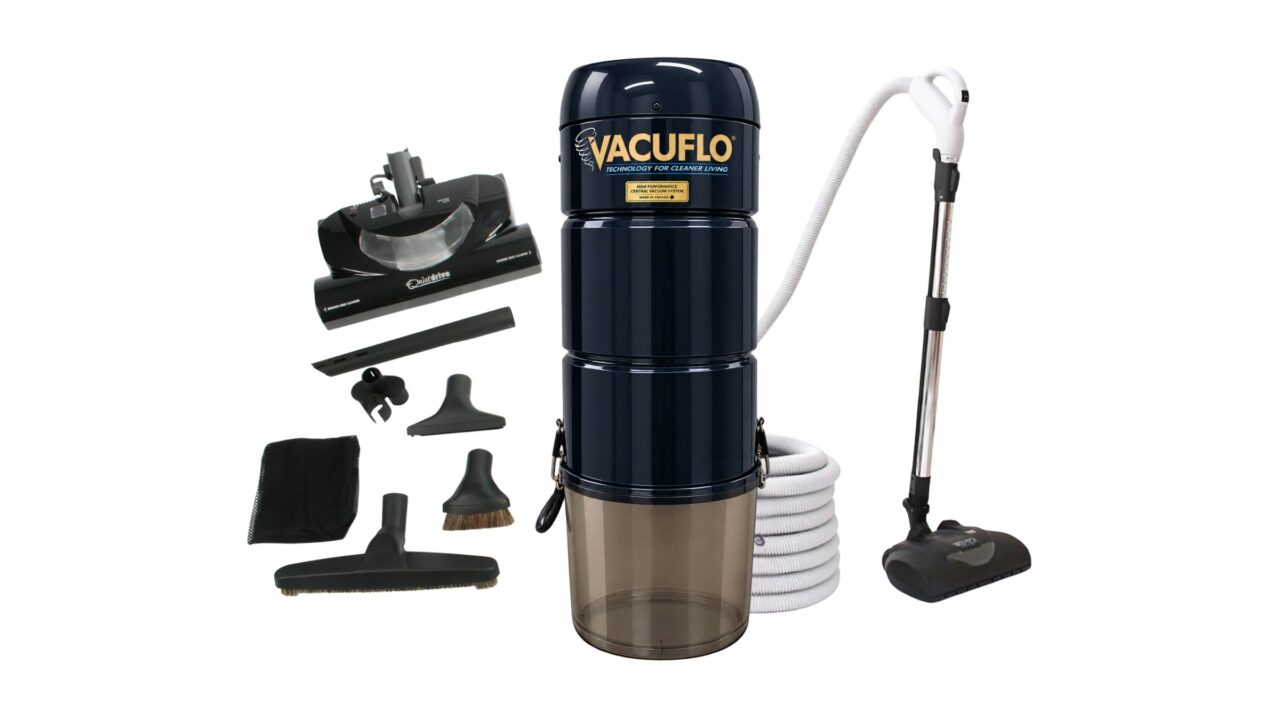
The Vacuflo 560 is a discontinued, single-motor true cyclonic power unit, sold now only as a refurbished unit. Clean air depends on its mandatory outdoor exhaust vent, not filter media. It suits owners replacing a dead unit on an existing mount; buyers wanting current specs need the 566Q.Meet the VacuFlo 560 Before You Commit
Committing to a 560 today means buying a part, not a product line. Vacuflo, built by H-P Products in Canton, Ohio since 1945, retired the 560 from its catalog, so every unit on the market now is reconditioned stock.
Is the VacuFlo 560 Worth Buying Refurbished Now?
Buying refurbished only makes sense if the warranty and air-watt numbers hold up, not because the name feels familiar. Most 560 units today are reconditioned, priced near 450 dollars against an original list price around 1,199 dollars. That gap looks tempting, but the decision hinges on what the seller backs the unit with, not nostalgia.
A Single-Motor True Cyclonic From the Pre-Q Era
True cyclonic separation spins debris hard enough that it drops into the canister on its own, no bag or filter doing the work. The 560 belongs to the generation before the current 466Q and 566Q models, built around the same workhorse 7.2-inch Ametek-Lamb motor family that still powers Vacuflo’s lineup. That shared architecture is why a 1990s 560 and a brand-new 566Q feel similar at the hose end.
Why Dealers List It as Reconditioned Only
Vacuflo’s own official VACUFLO power unit manuals confirm the current True Cyclonic lineup runs 260, 466Q, 566Q, 760, and MaxAir. The 560 isn’t on that list. The 566Q absorbed its spot as the mid-tier unit, meaning dealers selling a 560 are selling an orphaned model with no factory spec sheet behind it. Worth asking: where will parts come from in ten years?
The 100 Percent Allergen Claim Needs Real Context
That 100 percent figure resellers print isn’t a lab number, it’s marketing shorthand for a system that vents outside instead of recirculating air through the house. True cyclonic separation alone never claimed to be perfect, and the 560 has no published capture rate behind that round number.
What True Cyclonic Separation Actually Captures
Vacuflo’s own filtered cyclonic literature puts cyclonic action at roughly 96 to 98 percent separation into the canister, a number that comes from spinning, not screening. The 560 itself carries no published lab capture figure, a gap worth flagging rather than papering over with a reseller’s rounded claim. Dirt loses momentum as it spins, falls out of the airstream, and drops to the canister bottom while lighter air keeps moving toward the exhaust.
The Two Percent That Leaves Through Your Wall
That remaining two percent or so of fine dust doesn’t vanish, it travels out through the unit’s required outdoor exhaust vent and into the open air outside your house. Owners on VacuumLand forum threads describe roughly one to two percent of fine dust showing up right at the exhaust port, confirming the math holds in real installations. None of it ever touches a filter inside the unit, it just leaves the building, the entire point of venting outdoors instead of into a wall cavity.
Reset: where does your current power unit actually vent to?
Why There Is No HEPA Filter Inside
True HEPA is a specific US Department of Energy standard requiring capture of 99.97 percent of particles at 0.3 microns, and the 560 doesn’t meet it because it doesn’t try to. There’s no HEPA media in the unit, only cyclonic separation paired with mandatory outdoor venting. Allergy households that need that DOE-grade number on paper should choose a filtered or disposable-bag central vacuum with a certified HEPA stage instead.
The Spec That Matters More Than Price
Air watts, not price tag, tells you whether a 560 can actually clean your house. A bare-motor lab number means little once that motor sits behind a muffler, feeding a 60-foot pipe run.
Air Watts, Water Lift and CFM Untangled
Air watts measure real cleaning power at the hose end, the number that reflects what you feel when you uncap an inlet. Think of it as a tug of war: water lift is the pulling strength yanking air through the system, and CFM is how much air gets carried along. CFM gets marketed the hardest and misleads the most, because a motor can spin huge air volume with almost no pulling force behind it.
The 560 Motor on the Test Bench
The replacement motor for the 560, the Ametek-Lamb 117549-12, is a 120-volt, two-stage unit drawing 13.5 amps that benches at roughly 125.4 inches of water lift, 111.4 CFM, and 483 air watts. ASTM F558 governs how that figure gets measured, and understanding Vacuflo power units means knowing it comes from the motor alone on a test stand. Installed inside a cabinet with a muffler and real pipe network, delivered performance runs below that bare-motor figure.
The Divisor Trick That Inflates Air Watts
The honest formula is simple: air watts equal CFM times water lift, divided by 8.5. That divisor comes from a fixed physical constant, not a marketing choice. Watch for sellers who quietly swap in 7.5 to pad the final number higher. Run the math yourself on any air-watt claim, the formula takes ten seconds with a calculator.
How Suction Fades Past 35 Feet of Pipe
Suction strength drops with every additional foot of PVC pipe between the power unit and the inlet in use. A reasonable real-world rule puts full-strength coverage at about 35 feet of pipe run. Map inlets against floor layout and pipe distance, not total square footage: a small single-story home with short runs out-cleans a larger house buried behind 80 feet of elbows. More air watts on paper doesn’t fix a layout with too many bends.
Reset: how many elbows sit between your power unit and the farthest inlet you actually use?
Repair the 560 or Replace It Entirely
Repair the 560 when it’s under twelve years old and the motor is the only failure point, replace it once it crosses that age or needs a second major repair. That rule of thumb cuts through most of the back-and-forth dealers spin into a bigger sale.
When a Fresh Motor Swap Makes Sense
A motor swap on the 560 is a fast job, most techs and confident DIYers handle the Ametek-Lamb 117549 swap in about twenty minutes once the canister lid is off. The motor itself runs close to 400 dollars before labor. Past twelve years of total service life, though, a new unit wins on value, because you’re not just buying a motor, you’re inheriting whatever else has quietly aged inside that cabinet.
When the 566Q Is the Smarter Buy
The 566Q beats a refurbished 560 on every number that matters for a buyer comparing them today.
| Spec | Vacuflo 560 (bare motor) | Vacuflo 566Q |
|---|---|---|
| Air watts | 483 | 535 |
| Water lift | 125.4 in. | 135 in. |
| CFM | 111.4 | ~118 |
| Coverage | Unverified, discontinued | Up to 8,000 sq ft |
| Warranty | Refurbisher-dependent | Limited Lifetime |
The 566Q keeps the same reliable 7.2-inch motor architecture, just refined with better sound dampening and a warranty that means something on day one.
Refurbished 560 Price Versus a Current Unit
A 450-dollar refurbished 560 looks like the obvious win against a new 466Q or 566Q running several times that price, until the orphaned-parts risk under that lower sticker gets factored in. Knowing what each Vacuflo model costs across the lineup changes the math fast. A buyer staying five more years who budgets for one motor swap around year eight comes out close to even with a new unit, once warranty and resale get weighed honestly. The new unit wins past that point.
The Lifetime Warranty That Did Not Transfer
Vacuflo’s Limited Lifetime warranty covers the original registered owner only, never a refurbished buyer or a homeowner who inherited the system. Refurbishers selling 560 units offer their own coverage instead, somewhere between six months and two years. Read those terms in full before getting excited about the lower price tag, that’s the document actually protecting you now.
What VacuumLand Owners Learned the Hard Way
Forum threads on VacuumLand are full of 560 owners who learned expensive maintenance lessons the hard way, and most trace back to the same two or three mistakes.
Why Overfilling the Canister Kills the Motor
Letting the canister overfill pulls loose debris up into the impeller blades, the single fastest way to kill an otherwise healthy 560 motor. The resulting imbalance shows up as noise first, then vibration, then a dead motor within months. Regular emptying isn’t a nice-to-have habit, it’s the difference between a motor lasting fifteen years and one that doesn’t make it past three.
The Bypass Motor Edge No Portable Matches
A bypass motor pulls its cooling air from outside the dirt stream entirely, keeping the windings clean no matter how much debris passes through the canister. Flow-through motors in most portables do the opposite, pulling grit and fine dust straight across the windings on every use. That bypass design is the real reason a power unit routinely outlives a portable by a decade or more.
Venting Into the Garage Was the Mistake
Owners who vented exhaust into the garage instead of straight outside lived with the consequences for years.
“We vented into the garage to save a few feet of pipe. Took about two years before there was a visible layer of fine dust across every shelf in there.”
The outdoor exhaust requirement isn’t a suggestion buried in fine print, it’s the mechanism keeping that two percent of fine dust out of any space you breathe regularly.
Living With a 560 for Twenty Years
A well-maintained 560 can run two decades on routine upkeep alone, no motor swap required, as long as the canister gets emptied on schedule and nothing wrong gets vacuumed into it.
The Four to Six Month Canister Ritual
Empty the canister every four to six months under normal household use, the real maintenance rhythm behind the unit’s reputation. Some listings stretch that window to six to eight months, a contradiction worth flagging rather than trusting blindly. The job takes about two minutes once you’ve done it twice, a quick chore rather than the dreaded task it sounds like on paper.
What You Must Never Vacuum Into It
Certain materials void the warranty and damage the motor no matter how careful you are otherwise:
- Fireplace ash, even cold ash, carries a real fire risk inside a canister built for dry household debris.
- Drywall dust clogs the cyclonic action and coats internal components in fine grit.
- Fine construction debris of any kind behaves the same way drywall dust does, and accelerates motor wear fast.
Protecting a twenty-year investment comes down to keeping those three categories away from the inlet, every time.
Who the 560 Is Actually Right For
The 560 is right for someone replacing a dead unit on an existing mount in a mid-sized home, and wrong for almost everyone shopping with a blank slate.
The Right Home Size for One Motor
Vacuflo’s original published square footage rating for the 560 isn’t available on any current factory document, since the unit no longer appears on the active spec sheet, a gap worth naming rather than guessing at. A single-motor unit like this matches mid-sized homes with reasonable pipe runs, not a sprawling multi-wing house. Size the decision by floor layout and inlet distance, not square footage off a tax record.
The Honest Case Against Buying One
Most buyers shopping fresh are better served by a current model, plain and simple: the 560 brings discontinued-parts risk without a price advantage steep enough to justify it. It makes sense almost exclusively for owners replacing a dead unit on the same physical mount, where matching the footprint saves real installation cost. Anyone wanting certified HEPA filtration, a transferable warranty, or a unit built for a home over 4,000 square feet should consider upgrading to the Vacuflo DB7000 or the 566Q instead.
Conclusion
The 560 isn’t dangerous and it isn’t a scam, it’s a discontinued unit whose real performance depends on outdoor venting, not on the allergen number printed in a listing. Tonight, find the model number on the canister front and trace exactly where that exhaust vent terminates outside your house. A properly vented true cyclonic system sends fine dust outside permanently, something no portable vacuum you’ve ever owned came close to doing.
Frequently Asked Questions
What is a Vacuflo 560 and is it still made?
No, the 560 is discontinued. It was a single-motor true cyclonic power unit built by H-P Products, now replaced in the current lineup by the 566Q.
How many air watts does the Vacuflo 560 actually deliver?
Its replacement motor benches at 483 air watts, but that’s a bare-motor lab figure, and installed performance inside the cabinet and pipe network runs lower than that number.
Does the Vacuflo 560 have to be vented outside?
Yes, outdoor exhaust is mandatory, not optional. Venting into a wall, ceiling, garage, or any concealed indoor space defeats the entire filtration design and lets fine dust settle indoors.
What motor does the Vacuflo 560 use, and how much is a replacement?
It uses the Ametek-Lamb 117549 motor, and a replacement runs close to 400 dollars before labor, with the swap itself taking about twenty minutes.
How long does a Vacuflo 560 last before the motor fails?
Expect twelve to twenty years with proper canister maintenance, though overfilling the canister or vacuuming ash and drywall dust shortens that life considerably.
Is a used or refurbished Vacuflo 560 worth buying, or should I get the 566Q?
Get the 566Q for new purchases. A refurbished 560 only makes sense when replacing a dead unit on an existing mount with a tight budget.
Are Vacuflo 560 parts still available?
Yes, the Ametek-Lamb 117549 motor and most wear parts remain available since it’s shared across several brands, but factory support for the 560 cabinet itself has ended.