You found the Vacuflo DB7000, built by Ohio manufacturer H-P Products, and every dealer page calls it powerful enough for a big home. But you can’t tell if it’s the right unit or just the comfortable middle option someone wants to sell you. The spec sheet doesn’t help: water lift, CFM, and air watts sit printed side by side as if they all happen at once. They don’t, and misreading that gap is why buyers overpay or underbuy this model.
The DB7000 sits in the middle of the broader Vacuflo system lineup, between budget bagged units and the bigger two-stage DB8000. By the end of this guide, you’ll know whether the DB7000 fits your floor plan, when the DB8000 earns its higher price, and the one habit that decides whether either motor lasts five years or twenty-five.
VacuFlo DB7000
VacuFlo’s DB7000 is a mid-tier disposable bag power unit built around a single 5.7 inch motor rated at 601 air watts. It suits homes near 7,000 to 8,000 square feet with inlets close to the unit. Skip regular bag swaps and that motor runs hot, short, and weak.Why The DB7000 Feels Like A Safe Default
The DB7000 feels safe because it sits in the middle of VacuFlo’s lineup, neither the cheapest nor the biggest unit on the page. That middle spot is why dealers default to it without asking how big your home is.
What Maxum 7 Was Before The Rename
You’ll see the same unit listed two ways, and it rattles confidence. The DB7000 is the renamed Maxum 7, identical hardware under a newer label.
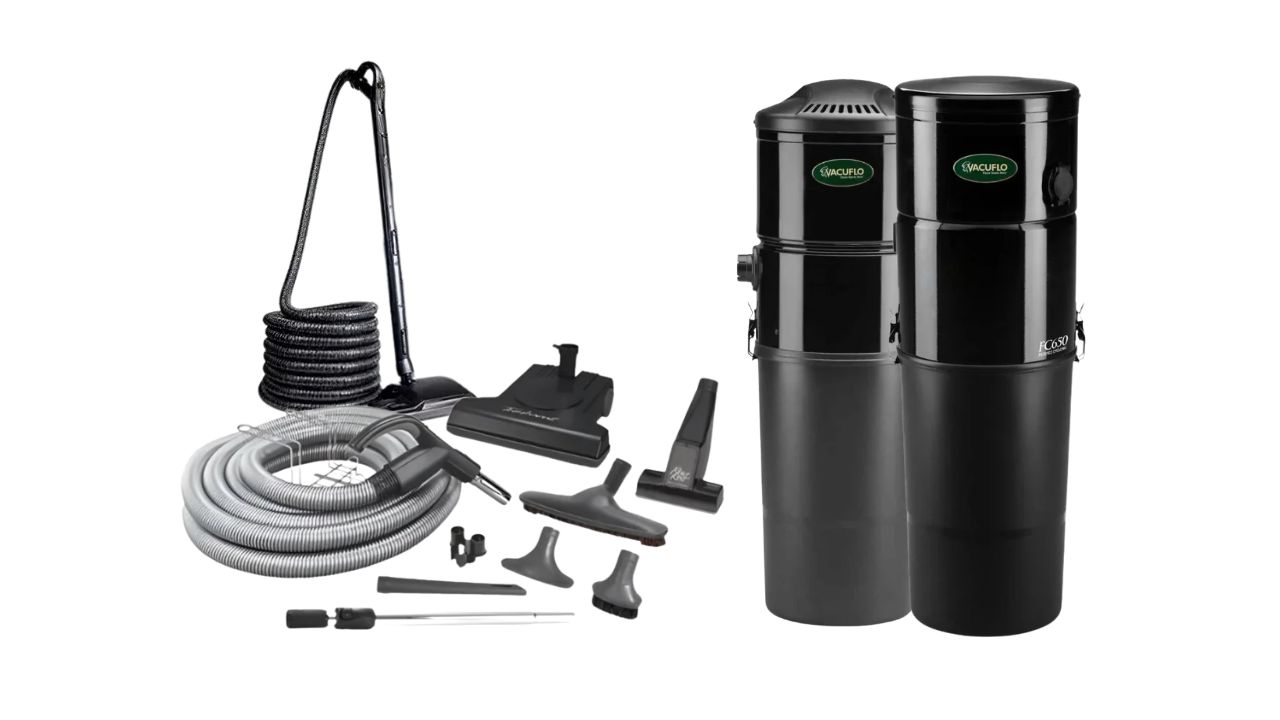
Old reviews praising or criticizing the Maxum 7 describe the exact machine sold today as the DB7000. Cross-reference the model number, not the product name, before you trust a review’s age.
Who Actually Makes VacuFlo Power Units
VacuFlo power units come from H-P Products, an Ohio manufacturer with operations around Louisville and Canton, not a reseller stamping a label on imported parts. This review draws on H-P Products’ own spec documentation, dealer listings across several territories, and owner and technician feedback aggregated from VacuumLand forum threads on the DB line, not a single sales sheet.
Parts and warranty service trace back to that same plant, which supplies everything from the entry-level Vacuflo 560 comparison up through the bagless DB9000. Build quality tracks across that range rather than swinging model to model.
The Headline Numbers Dealers Lead With
Three numbers anchor every DB7000 listing, and dealers repeat them without context. 601 max air watts, 158 inch water lift, and 110 max CFM define the unit on paper.
- 601 max air watts, the figure tied to floor-cleaning potential under the ASTM F558 air-power test.
- 158 inch water lift, 110 max CFM, a 6 gallon bag, and 67.0 dBA per manufacturer documentation.
- A single 5.7 inch motor at 120 volts, drawing up to 14.8 amps and requiring a dedicated 20 amp receptacle to run safely.
The Spec Sheet That Does Not Add Up
The DB7000’s spec sheet doesn’t add up because its proudest numbers describe different moments in the motor’s operation, not one simultaneous performance. Treat each figure as a separate measurement, not a combined promise.
Why 158 Water Lift And 110 CFM Never Coexist
Water lift and CFM never coexist at their peaks because they sit at opposite ends of the same airflow curve. Water lift measures sealed suction with the airflow path fully blocked, the faucet shut tight. CFM measures airflow with that same path wide open, the faucet running free with nothing to push against.
The DB7000 hits 158 inches at the shut-faucet end and 110 CFM at the open-faucet end. It never produces both numbers in the same instant, no matter what the listing implies.
So which number should you actually trust when you’re standing in a showroom?
What Air Watts Really Tell You Here
Air watts measure the unit’s real working output, blending suction and airflow into one comparable score instead of two competing maxes. The figure comes from the ASTM F558 air-power test standard, which roughly multiplies CFM by water lift and divides by 8.5.
The DB7000’s 601 air watts is a peak point measured along that curve, not 110 times 158 divided by 8.5. Compare air watts between units to judge real performance, and leave the multiplication to the lab.
Where The Square Footage Claim Breaks Down
VacuFlo’s home-size claim breaks down because two sources print two different numbers for the same unit. The manufacturer rates the DB7000 for homes up to 8,000 square feet, while some dealer pages quietly list it at 7,000.
Neither source explains the gap. Suction fades over distance and through every elbow, so treat the lower number as the safer planning figure, and rate a multi-story home per floor rather than as one whole-house claim.
The Motor Question Nobody At The Counter Raises
The question nobody raises at the counter is how many fan stages sit on that motor shaft, and it decides how hard the DB7000 works for its air watts.
Single Stage Versus Two Stage Inside The Can
The DB7000 runs a single-stage motor: one fan doing the job the DB8000 splits across two. A two-stage motor stacks a second fan on the same shaft to build more suction pressure before air ever reaches the pipe.
The DB7000’s single 5.7 inch fan produces fewer air watts than the DB8000’s larger 8.4 inch two-stage motor. Dealer listings call both units “single motor,” language that hides the real ceiling: one stage, one fan, no second push.
Why Forum Techs Steer Buyers To The DB8000
VacuumLand technicians steer buyers toward the DB8000 because its two-stage motor holds up better under daily load. One long-time VacuumLand repairer reports VacuFlo single-stage units failing earlier than their two-stage siblings under heavy daily pet-hair use. The step up buys airflow and a motor with a longer bench-tested life, not just a bigger number on a spec sheet.
How Long These Motors Actually Last
Most central vacuum motors carry an 800 to 900 hour service rating, and VacuumLand bench tests pushed the DB8000’s 8.4 inch Ametek/Lamb motor past 2,200 hours. Ametek supplies motors across the industry, not just to VacuFlo, so that result isn’t a marketing claim.
Brush wear and starved airflow, not luck, decide which side of that range a motor lands on.
DB7000 Versus DB8000 Without The Sales Spin
Stripped of sales spin, the DB8000 wins on airflow and motor life while the DB7000 wins on sealed suction and price.
The Water Lift Surprise Between The Two Units
The surprise is that the cheaper DB7000 posts a higher water lift than the pricier DB8000.
| Spec | DB7000 | DB8000 |
|---|---|---|
| Water lift | 158 in | 151 in |
| Max CFM | 110 | 136 |
| Air watts | 601 | 707 |
| Motor | Single 5.7 in, single-stage | Single 8.4 in, two-stage |
More sealed suction doesn’t beat more airflow for real carpet and pet hair pickup. Airflow carries debris up the pipe once suction breaks it loose, and the DB8000 moves more of it, at a higher upfront price.
When The Extra Cost Actually Earns Its Keep
The extra cost earns its keep in homes with long pipe runs or rooms set far from the power unit, not in every house. Choose the DB8000 when inlets sit more than 35 feet of pipe from the mounting point, since airflow finishes the job suction alone can’t over that distance.
A single floor near the unit, with short runs, rarely needs the upgrade. The DB7000 covers it just fine.
Filtration Claims Versus Certified Standards
VacuFlo’s filtration claims for the DB7000 don’t match a certified standard, and that gap matters for anyone with allergies in the house.
What 100% Of Allergens Leaves Unsaid
The 100% claim leaves unsaid which standard, if any, backs that number. Dealer listings promise 100% of dust and allergens removed from the home.
The CleanShield bag filters particles down to 0.3 microns, a real but partial claim. No listing names a certifying body behind the 100% figure, so treat it as marketing language, not a lab result.
Is This True HEPA Or HEPA Style
No, the DB7000’s bag is not certified True HEPA. It filters to 0.3 microns but was never tested or sold under the federal HEPA standard.
True HEPA means a filter tested to capture 99.97% of particles at 0.3 microns under the U.S. Department of Energy standard. The CleanShield bag captures down to 0.3 microns but carries no certified test behind that number. Dealers calling it “hospital grade” are using a marketing phrase, not a certification.
What CarbonCapture Really Protects
CarbonCapture protects air quality near the motor, not allergen capture at the floor where it matters most to a sneezing toddler. The filter stops motor carbon dust from leaving the power unit’s exhaust, guarding the air around the unit rather than the air at the hose end.
The DB3000 and DB5000 skip this filter entirely, so the DB7000 gains a layer those cheaper units don’t have.
Who Should Insist On A True HEPA Path
Anyone with asthma or significant allergies in the home should ask about VacuFlo’s Filtered Cyclonic line before settling for the bag alone. It offers certified HEPA filters the bagged DB units don’t, and venting the exhaust outside routes fine carbon dust out of the living space entirely.
The Maintenance Habit That Decides Its Lifespan
One habit decides whether the DB7000 lasts five years or twenty-five: changing the bag on a schedule instead of waiting for suction to fail.
Why Suction Fades When You Skip Bag Swaps
Suction fades when the bag fills because the motor starts pulling air through packed debris instead of open pipe. You feel the pickup go weak at the hose end before you ever check the can.
VacuumLand owners swap bags every two to three months to hold suction steady. A starved motor runs hotter, and heat, not age alone, kills these single-stage motors early.
The Screen Clog Most Owners Cause Themselves
Most screen clogs are self-inflicted, caused by lint building up behind a bag nobody changed on time. Long-time owners describe this exact buildup once bag changes slip past the two to three month mark.
Clean the screen every time you swap the bag, not just when suction drops. Skip that step and you’ll blame the motor for a clog you created yourself.
Bag Costs And The Every Two Month Rhythm
CleanShield bags are a recurring cost the DB7000’s price tag doesn’t include, unlike a permanent filter unit bought once. Budget bag changes on a steady two to three month rhythm rather than waiting for weak suction to remind you, and weigh that recurring spend against a bagless cyclonic unit’s higher upfront price. See our detailed Vacuflo cost guide for the full math across the line.
What Buying One Actually Looks Like
Buying a DB7000 looks less like an online checkout and more like a phone call to a local authorized dealer, territory restrictions and warranty terms included.
Is The VacuFlo DB7000 Worth It For Your Home?
Worth it for a compact home where every inlet sits within an easy pipe run of the mounted unit. Skip it for a home small enough that the upgrade buys suction you’ll never use, or one big enough that it needs the DB8000’s airflow instead.
- Buy the DB7000 for a single-floor home with inlets close to the unit.
- Step up to the DB8000 for long runs, big square footage, or heavy pet hair load.
- Step down to a smaller unit if your square footage doesn’t justify either DB model.
That smaller option is worth a look. The mid-range Vacuflo FC650 alternative covers a tighter floor plan at a lower price than either DB unit, without the DB7000’s recurring bag cost buying you suction you don’t need.
The Dealer Territory Rule That Blocks Online Orders
Most VacuFlo dealers can’t ship the DB7000 outside their assigned territory, which blocks the quick web purchase you might expect. Many are restricted to selling within roughly a 100 mile radius of their store, and buying through that local authorized dealer also protects the warranty, since purchases from outside the network void coverage outright.
What The Lifetime Warranty Does Not Cover
The lifetime warranty does not cover a new owner after a sale, a unit moved to a different address, or a system bought from outside the authorized dealer network.
- It covers the original purchaser at the original installation site only, for as long as that owner keeps the home or until the system is removed.
- Attachments and hoses carry a 3 year term, and non-residential installs drop to 1 year.
Check the exact terms in Vacuflo’s official product manuals before signing anything with a dealer.
Conclusion
You came in unsure whether the DB7000 was a smart buy or just the unit a dealer wanted off the floor. Now you know the single 5.7 inch motor and the bag you swap matter more than any headline figure. Tonight, measure your largest floor and count how many inlets sit within 35 feet of where the unit would mount. That number tells you whether the DB7000 fits or the DB8000 earns its higher price. And here’s the honest payoff: you empty a sealed bag four times a year instead of breathing back the dust a portable throws into the room with every pass.
Frequently Asked Questions
What home size is the Vacuflo DB7000 rated for?
Up to 8,000 square feet, per VacuFlo’s manufacturer rating. Some dealer listings cap it at 7,000 instead, so plan around the lower number if your home sits near that line.
How powerful is the Vacuflo DB7000 in air watts and water lift?
Peak air watts: 601. Peak water lift: 158 inches, never both together since they sit at opposite ends of the same curve. Air watts is the better number for comparing real cleaning power.
Does the Vacuflo DB7000 have HEPA filtration?
No, the DB7000’s CleanShield bag filters to 0.3 microns but isn’t certified True HEPA. Ask about VacuFlo’s Filtered Cyclonic line, if anyone in the home has asthma or allergies.
Is the Vacuflo DB7000 lifetime warranty transferable to a new homeowner?
No, the lifetime warranty covers only the original purchaser at the original installation address. Selling the home or moving the unit ends that coverage.
Can I buy and install the Vacuflo DB7000 myself, or do I need an authorized dealer?
Use an authorized dealer for both the purchase and the install. Self-installs and out-of-territory purchases void the warranty and limit which dealer will service the unit later.