You typed “electrolux oxygen central vacuum system” and landed on dealer pages calling it a current product. Here’s the problem: Electrolux sold this line in 2018, the company that bought it stopped manufacturing in 2024, and a naming trap is sending buyers to the wrong parts listings entirely.
Central Vacuum Lab’s central vacuum guide covers the full Electrolux picture. This post zeroes in on what the Oxygen actually is, what its specs mean installed in a real home, and when it’s worth repairing versus replacing.
Electrolux Oxygen Central Vacuum System
The electrolux oxygen central vacuum system is a Beam-manufactured wall unit sold under an Electrolux badge from roughly 2004 to 2018. It connects to PVC tubing run inside your walls, exhausts filtered air indoors, and covers three power unit variants: the ZCV900, ZCV910, and ZCV920.What An Electrolux Oxygen System Really Is
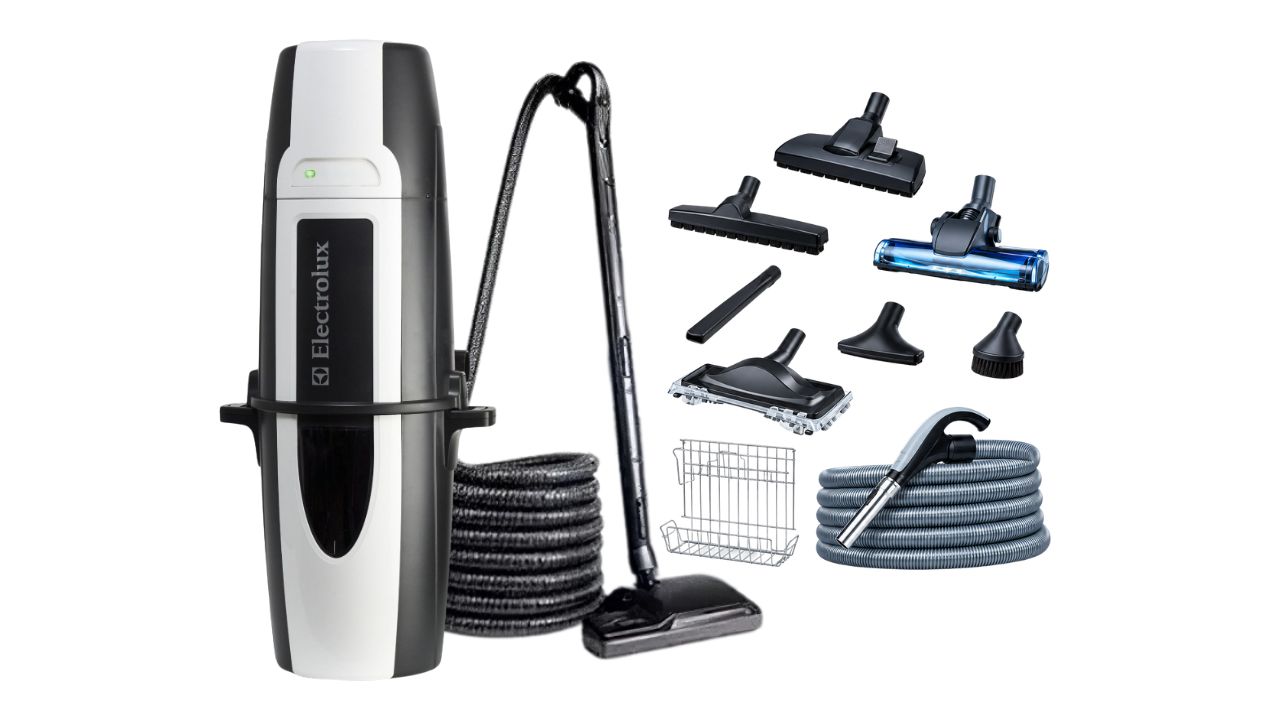
The Electrolux Oxygen central vacuum is a built-in power unit that mounts in a utility room, garage, or basement and connects through PVC pipe to inlet valves on every floor. The motor, filtration, and dirt canister stay out of your living space entirely.
Why “Oxygen” Confuses Almost Every Shopper
“Oxygen” names two completely different Electrolux machines, and that collision has been sending buyers to the wrong product for years. One is a portable canister vacuum. The other is the central vacuum wall unit this article covers. They share nothing except the brand name.
The mix-up plays out constantly: someone researches “Electrolux Oxygen” and lands on forum threads about motor fan failures. Those threads are about the canister, not the wall unit. Search for parts using only “Oxygen” and you’ll pull canister filters that won’t fit your wall unit. Always confirm you’re working with ZCV900, ZCV910, or ZCV920 model numbers before adding anything to a cart.
What The Central Unit Actually Includes
The Oxygen family covers three power unit models: the ZCV900, ZCV910, and ZCV920H or ZCV920A. Each mounts in a fixed location, connects to inlet valves through standard 2-inch PVC tubing, and holds debris in an 8-gallon receptacle. You carry a lightweight hose from room to room; the motor and filtration stay outside your breathing space entirely.
Who This System Is Built For
The Oxygen was designed for allergy and asthma households, pet owners with dense-shedding breeds, and anyone who wants the motor’s exhaust removed from the living space. It’s not the right fit for renters or smaller homes where a quality sealed-HEPA portable closes the gap.
The Beam Connection No Dealer Mentions
Your Electrolux Oxygen power unit was built by Beam, documented in the hardware, the service address, and the parts chain. That single fact answers almost every compatibility question you’ll run into when hunting for filters or a replacement motor.
Who Actually Manufactures Your Oxygen Unit
AB Electrolux, the Swedish appliance company, acquired Beam Industries, the Iowa-based central vacuum maker, in 1987. For three decades, Beam built central vacuum hardware that Electrolux sold under both names; the Oxygen is a direct product of that OEM arrangement.
The Electrolux Oxygen owner’s manual lists a Webster City, Iowa address for service, which is Beam’s original home base. The tank design, motor mounting, and filter housing all follow Beam architecture wearing an Electrolux label, which means Beam-compatible third-party parts cover most Oxygen service needs today. Electrolux’s earlier flagship model shows this same Beam platform at an earlier stage of development.
The Ownership Trail From Sweden To Quebec
In 2018, Electrolux divested its North American central vacuum business — the Beam brand and associated residential lines, carrying roughly USD 70 million in combined revenue — to Nuera Air, a Canadian vacuum company. Electrolux kept its European operations; North America was the part they sold.
Nuera Air ran the brands until 2024, when production paused across all its central vacuum lines. Trovac Industries, a Quebec-based vacuum manufacturer, absorbed surviving brand assets after Nuera’s exit. Units described as “new” today are old stock.
Why The 2024 Production Halt Changes Your Math
The Nuera Air pause swept up Beam, Husky, DuoVac, SoluVac, Smart, and InterVac. The Oxygen sits in this same supply ecosystem. Filters, motor assemblies, and circuit boards tied to Nuera’s factory pipeline are no longer being produced.
Pre-2024 parts still circulate through online sellers, but the sourcing window is contracting. A buyer in 2026 has fewer options than a buyer in 2022, and the trend runs one direction.
Reading The Filtration Claims Without Getting Fooled
The Electrolux Oxygen uses the word “HEPA” prominently. The claim is mostly accurate but requires one real qualification before you trust it on behalf of an allergy sufferer.
What True HEPA Really Promises Here
True HEPA, as defined by the US Department of Energy, captures 99.97% of airborne particles at 0.3 microns or larger. The ZCV920A ships with a True HEPA filter and diffuses exhaust indoors through a soft air diffuser. A “HEPA-type” or “HEPA-style” filter carries no regulated capture rate. The one qualification: opening an 8-gallon bagless canister stirs up accumulated fine dust in a way a bagged unit never does.
Does The Self Cleaning Filter Truly Self Clean
Not reliably. The Electrolux Oxygen uses a GORE-TEX membrane filter that moves during operation to shake debris off the surface. Owners on VacuumLand report the mechanism leaves fine particulate behind, and the filter eventually loads up in a way that chokes suction noticeably after a year or two of regular use.
The fix many long-term Beam platform owners land on is a bag conversion. A compatible bag insert traps fine particles before they reach the filter and makes emptying a contained two-second job. It adds a small recurring cost. For a household with allergies, it’s the right trade.
Indoor Exhaust Versus Venting Outside
The Oxygen’s integrated muffler and indoor-exhaust rating mean no exterior duct is required, a meaningful simplification for retrofits. The tradeoff: the finest particles the filter misses re-enter the room through the diffuser. In new construction for severe allergy households, an outdoor vent removes that variable entirely. In a finished basement install, indoor exhaust works acceptably for most.
| Factor | Indoor Exhaust | Outdoor Exhaust |
|---|---|---|
| Installation effort | Simple, no wall penetration | Requires exterior duct run |
| Particle management | Filter-dependent | Removes all exhaust from living space |
| Best for | Most homes, finished retrofits | Severe allergy households, new construction |
The Specs That Decide Real Suction
The Electrolux Oxygen numbers look solid on a spec sheet. Here’s where they land in a real home.
Air Watts Versus Marketing Wattage
The ZCV900 rates at approximately 550 air watts from a 12-amp motor. The ZCV910 lands near 575 air watts. Air watts measure true suction at the cleaning head under load, calculated per the ASTM F558 standard. They’re the only cross-brand comparison that matters; input wattage tells you nothing about delivered cleaning power.
550 to 575 air watts delivers consistent pull across a 60 to 70 foot pipe run in a single-story home. In a two-story layout where the farthest inlet is 80-plus feet from a basement power unit, delivered suction at that last inlet will feel noticeably weaker. Physics, not a product defect.
The Square Footage Claim You Should Halve
Electrolux rated the ZCV900 for homes up to 4,500 square feet. That number assumes an ideally engineered pipe network with a short main trunk, few directional changes, and sensibly placed inlets. Most installed systems aren’t that ideal.
Treat coverage ratings as optimistic by 40%. A ZCV900 in a well-engineered 2,500 square foot home outperforms the same unit strained across a sprawling 4,500 square foot layout. Your pipe-run length is the engineering number; the square footage rating is marketing.
How Distance Quietly Steals Your Suction
Every 10 feet of pipe run reduces delivered suction. Every 90-degree elbow cuts it further; a sweep elbow loses far less airflow than a hard 90, which is why experienced installers specify sweep elbows wherever they can. A three-floor home with a basement power unit can lose 30 to 40 percent of rated air watts at the farthest inlet when the pipe network wasn’t engineered for the layout.
Plan inlet placement before drywall closes. In a new build, that conversation costs nothing. In a retrofit, it may cost wall access.
What Motor Sits Inside This Unit
The Oxygen family uses motors sourced from the Ametek Lamb OEM platform, the dominant supplier across North American central vacuum brands. Published dealer specs don’t consistently confirm motor stage count or bypass versus thru-flow architecture, both of which affect performance and longevity. Before buying a used unit, get the full model number from the motor hood label and cross-reference against Beam-compatible motor listings.
What Owners Wish They Knew First
Owners who’ve run an Oxygen central vacuum for five to ten years have opinions no dealer page publishes.
The Bagless Mess Nobody Warns You About
Emptying a bagless central vacuum means opening an 8-gallon canister loaded with pet hair, fine grit, and household debris that’s been accumulating for weeks. A cloud of fine particulate is almost inevitable.
VacuumLand veterans describe the Beam-platform emptying experience as messier than expected, particularly for anyone dust-sensitive. First-time owners almost never see this mentioned in any product listing.
When People Pick A Different Brand Instead
Enthusiast forums steer away from the Electrolux Oxygen when buyers have a clean-slate choice. The names that recur are MD Manufacturing, DrainVac, PurVac, and VacuMaid, with a consistent lean toward bagged units with outdoor exhaust. Read these as informed owner sentiment, not lab-tested rankings, but the pattern holds across multiple forums and years.
Is the electrolux oxygen central vacuum system worth buying now
Buying a new Electrolux Oxygen in 2026 is a bet on old stock and a contracting parts chain. Current-production units from MD, DrainVac, or CycloVac are the better primary choice for new construction or a full replacement.
Amazon clones reuse the Beam tank with weaker motors. Avoid those. A lightly used Oxygen with original hardware and a healthy motor is a different proposition: proven Beam-platform performance at a discount, with the tradeoff that sourcing parts in five years takes real effort.
Bagless Versus Bagged On This Exact Unit
The Oxygen ships as a bagless cyclonic system, but a bag conversion kit is compatible and many owners make the switch after a few dusty empties.
Filtration And Cleanliness Side By Side
| Factor | Bagged | Bagless (Stock) |
|---|---|---|
| Allergen exposure at emptying | Minimal; sealed bag disposal | Moderate to high; open canister |
| Motor protection | Strong; bag filters fine particles | Depends entirely on filter condition |
| Filter replacement frequency | Less frequent with bag acting as buffer | More frequent without it |
| Recurring cost | Small bag cost per cycle | No bag cost, but higher filter wear |
The Cost Of Owning Each Path
Bags for Beam-platform central vacuums run a few dollars each and last one to three months. Bagless skips that cost but demands consistent filter cleaning; a clogged filter quietly kills suction and pushes particles toward the motor.
Buying Or Keeping One In 2026
The right choice depends on what you already have and what condition the hardware is in.
Where Parts And Service Stand Today
Parts for the ZCV900, ZCV910, and ZCV920 remain available through central vacuum specialty retailers and online distributors as of mid-2026. Filter assemblies, hose fittings, inlet valves, and some circuit board components are in circulation from pre-2024 stock. As stock thins and no new production refills the pipeline, parts for specific variants will disappear. Filters go first. Motor assemblies take longer.
Smart Moves If You Already Own One
Three actions that pay off immediately for any current Oxygen owner:
- Write down your full model number from the label on the motor hood. The ZCV900, ZCV910, and ZCV920H or ZCV920A each carry different filter and motor specifications, and ordering the wrong filter is a common expensive mistake.
- Order a spare filter now. Stock is still available, but supply will contract before demand does.
- Save a PDF copy of the owner’s manual. Parts diagrams and service details disappear from the web when brands change hands.
Should You Repair Or Replace An Aging Unit
| Scenario | Recommendation |
|---|---|
| Broken inlet valve or hose, motor still strong | Repair. Inlets are inexpensive; Beam-compatible parts still ship. |
| Clogged or failed filter, motor sounds healthy | Repair. A new filter and thorough cleaning typically recover suction. |
| Motor failing, unit over 15 years old | Replace. A dead motor on an orphaned brand makes no economic sense. |
| Intact pipe network, dead power unit | Replace power unit only. Existing 2-inch PVC transfers to MD, DrainVac, or most modern brands. |
A working pipe network transfers to nearly any current brand. You lose the Electrolux badge but gain an active parts chain and a warranty that still has someone behind it.
Conclusion
You came in thinking the electrolux oxygen central vacuum system was one stable product from one steady brand. It’s a discontinued Beam-built unit, sold by Electrolux in 2018 and pulled from production by Nuera Air in 2024. Tonight, pull the model number off the motor hood and order a spare filter before stock runs out.
Central Vacuum Lab’s hands-on system assessments cover tested Electrolux models still in active support. A central vacuum outlasts portable options by a decade, and that steady pull at every inlet beats any canister you’ve hauled upstairs.
Frequently Asked Questions
Is the Electrolux Oxygen central vacuum still manufactured?
No. Electrolux sold its North American central vacuum business to Nuera Air in 2018. Nuera paused all production across its central vacuum brands in 2024. Units described as “new” today are old stock.
What is the difference between the Electrolux Oxygen central vacuum and the Oxygen canister vacuum?
They are completely different products sharing a name. The central vacuum is a wall-mounted ZCV900/910/920 power unit connected to in-wall PVC pipe; the Oxygen canister is a portable vacuum with different parts, different filters, and a different motor.
What are the air watts and specs of the Electrolux Oxygen ZCV900, ZCV910, and ZCV920?
The ZCV900 delivers approximately 550 air watts from a 12-amp motor with an 8-gallon receptacle. The ZCV910 rates near 575 air watts. The ZCV920A adds a True HEPA filter with indoor air diffusion for allergen-sensitive homes.
Does the Electrolux Oxygen central vacuum have a true HEPA filter?
The ZCV920A ships with a True HEPA filter that captures 99.97% of particles at 0.3 microns during operation, but the ZCV900 and ZCV910 use a GORE-TEX self-cleaning filter that does not meet that standard. Confirm your model number before assuming HEPA filtration.
Where can I still buy parts and filters for an Electrolux Oxygen central vacuum?
Parts are available through central vacuum specialty retailers and online distributors as of mid-2026, but stock will contract as no new production replaces what’s been sold. Search using your ZCV model number specifically.
Who makes Electrolux central vacuums now, and is the warranty still honored?
Trovac Industries, a Quebec-based vacuum manufacturer, absorbed surviving brand assets from Nuera Air after Nuera’s 2024 production halt. Original warranty language named Electrolux’s North American service operation as the contact, which no longer exists; warranty service for pre-2018 units is effectively unavailable.
Should I repair my Electrolux Oxygen central vacuum or replace it with a new system?
Repair makes sense when the motor is healthy and the fix is a filter, hose, or inlet valve; replace when the motor is failing, because dead motors on orphaned brands rarely justify the sourcing cost. Your existing 2-inch PVC pipe network transfers to most modern brands, so the pipes stay even when the power unit goes.