The central electrolux vacuum line has always traded on that famous name, and the electrolux pu3650 quietclean central vacuum unit is exactly where that trust gets complicated. Most buyers never question the badge. That’s the problem. The “Electrolux” name belongs to a Swedish appliance giant that sold its entire North American central vacuum operation in 2018 and hasn’t touched it since.
By the end of this guide you’ll know what the PU3650 actually delivers, which specs are measurement cherry-picks, where parts come from inside an orphaned supply chain, and when replacing the unit beats nursing it back to life.
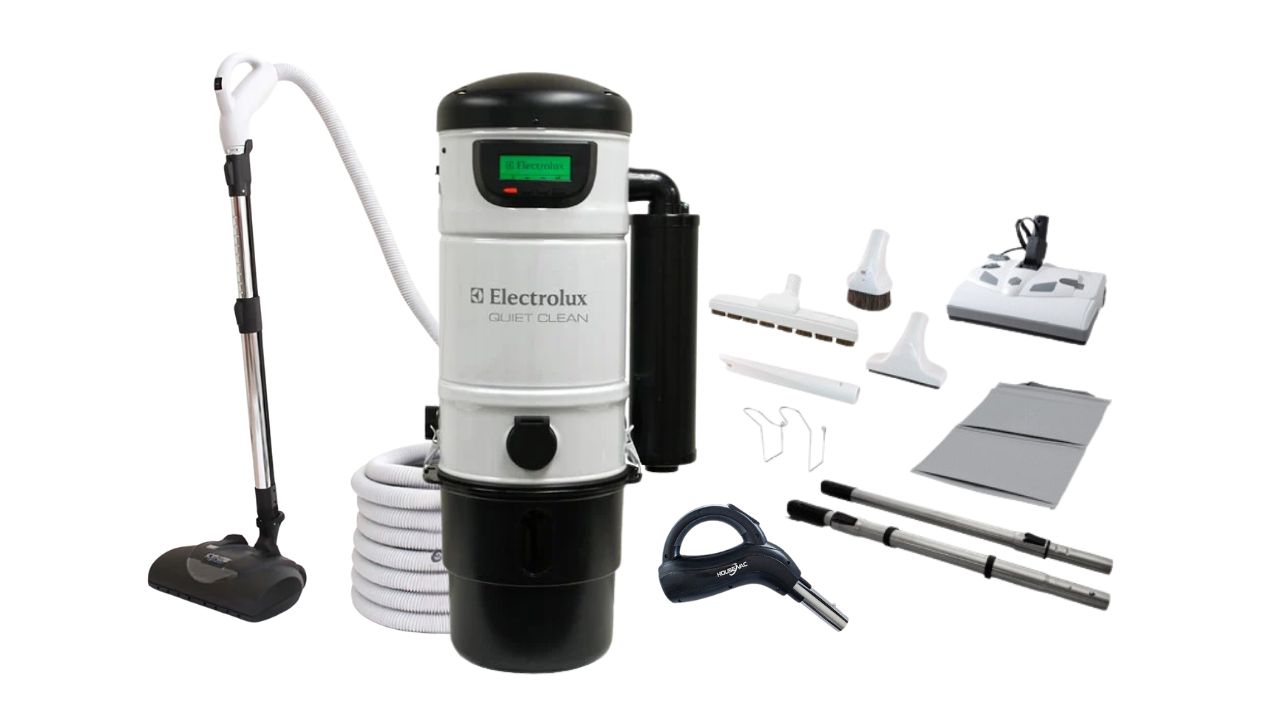
Electrolux PU3650 QuietClean Central Vacuum Unit
The PU3650 is a discontinued, orphaned power unit wearing a borrowed name, built under a brand that exited the category years ago. It delivers 600 air watts from a steel cabinet with a self-cleaning filter and a sound-dampened motor. It matters most to existing owners deciding whether to repair or move on, and to clearance buyers who need to know what support they’re getting.Why this quiet vacuum keeps confusing buyers
Which Electrolux actually built your PU3650?
The PU3650 did not come from AB Electrolux, the Swedish appliance company behind your refrigerator. It also didn’t come from Aerus, the old Electrolux Corp USA known for door-to-door canister vacuums. It came from Electrolux Central Vacuum Systems, the operation that ran the BEAM platform and the QuietClean line before being sold off entirely. Three separate companies have worn the Electrolux name and built different things, and warranty claims fall apart the moment you contact the wrong one.
Why the badge says Electrolux but the maker moved on
In 2018, Electrolux’s divestiture of its North American central vacuum business handed the BEAM line, the QuietClean units, and Sanitaire commercial products to Nuera Air. The combined operation had generated roughly USD 70 million in annual revenue. Electrolux Group walked away.
Around April 2024, owners across central vacuum forums reported that Nuera had halted manufacturing. Trovac Industries has since absorbed the portfolio. The badge on your unit has outlived two companies since Electrolux exited.
The discontinued label dealers bury below the buy button
Multiple dealers now list the PU3650 as discontinued. At least one seller now steers PU3650 shoppers toward the Cana Vac line as a supported replacement. New-old-stock units still exist, but every passing year narrows the parts pipeline and shrinks the service network. A clearance price looks less like a deal and more like a liability when the support behind it has already moved on twice.
The specs that actually move suction
What 600 air watts means at your floor head
Air watts measure sealed suction at the cleaning head under load, governed by ASTM F558 performance standards. Six independent dealer pages agree on 600 air watts for the PU3650. That number is real, but it describes a controlled bench test, not the pull at a bedroom inlet 60 feet from the power unit with four elbows between them. A realistic installed figure runs 15 to 25 percent below rated peak. The PU3650’s 600 air watts is competitive for a home up to about 3,000 square feet with clean, direct pipe runs.
Water lift of 140 inches and why it matters
Water lift is the static pressure that moves debris through the pipe network, measured in inches of water column. The PU3650’s 140-inch rating means the motor can pull a column of water 140 inches straight up before running out of force. Think of it as the climb your dirt makes before reaching the collection canister. That keeps grit moving through long horizontal runs rather than settling in the pipe and choking airflow over years of use.
The 125 CFM number and suction loss over distance
CFM (cubic feet per minute) measures airflow volume, the velocity that carries fine dust along the pipe. The PU3650 lists 125 CFM, adequate for most residential layouts. A home with a 70-foot pipe run and three 90-degree elbows can lose 30 to 40 percent of effective CFM by the time air reaches the cleaning head. Every foot of pipe and every elbow quietly steals from the number you paid for.
Does the spec sheet contradict itself on water lift?
One dealer page prints 140 inches of water lift in the product description and 105 inches in its own spec table on the same page. That 35-inch gap signals the page was assembled from two different source documents. Pull the official PU3650 operating and maintenance manual and treat its figures as the reference, not what any dealer page says.
That QuietClean promise versus the decibel reality
The 72.5 decibel test no brochure prints
One dealer ran the PU3650 with its muffler installed and measured 72.5 decibels. Marketing pages claim operation below 70 decibels. That gap is only 3 decibels on paper, but in acoustic terms it’s roughly 40 percent more perceived loudness than the lower number implies. In a detached garage, you won’t feel the difference. In a utility closet adjacent to a bedroom, you will. The rated spec deserves a field check before you commit to a mount location.
How a muffler hides a 110 decibel motor
That same test pulled the muffler off and recorded approximately 110 decibels from the bare motor, near the threshold where sustained exposure damages hearing. The quiet you experience during normal operation is acoustic engineering covering a genuinely loud machine. Crack the housing, run a loose fitting, or skip the gasket on reassembly, and the QuietClean name stops applying entirely.
Where to mount it so quiet stays quiet
Mount the power unit in a detached garage, basement utility room, or mechanical space separated from living areas by at least one insulated wall. Distance and a closed door do more for perceived quiet than any decibel rating. Plan the mount location before drywall closes. Retrofit placement decisions made after construction almost always trade pipe run efficiency or acoustic separation to make the location work at all.
Single fan or two stage? The motor question
Why sources fight over the PU3650 motor type
One dealer describes the PU3650 as a single-stage motor unit. Another calls it a two-stage bypass. That contradiction is not a minor discrepancy. Motor type determines the cooling method, lifespan expectation, and which replacement units fit the chassis. Ask for the Ametek/Lamb motor part number before trusting any longevity claim. It’s on the motor housing and cross-references directly to replacement specs.
Bypass versus flow through motors explained simply
A tangential bypass motor routes cooling air through a dedicated separate channel, so the motor never breathes the dust it’s pulling. A flow-through motor routes dirty air directly across its windings, meaning debris reaches the motor internals with every cleaning session. Think of it as the difference between a worker in a sealed respirator and one breathing the same dusty air. Same output, very different wear rates over seven years of daily use.
What forum owners say about late Electrolux motors
Owners on VacuumLand and central vacuum forums broadly describe late Electrolux and BEAM-era motors as shorter-lived than the brand’s reputation once suggested. This is forum consensus, not controlled lab data. Treat it as a signal worth verifying against your motor part number before committing to a purchase or a repair estimate.
HEPA or HEPA style? Read the filter claim closely
What self cleaning HEPA really captures
The PU3650 markets a permanent self-cleaning HEPA filter you never replace. The U.S. Department of Energy defines true HEPA filtration as capturing 99.97 percent of particles at 0.3 microns under controlled laboratory conditions. “Self-cleaning” describes the filter’s maintenance mechanism, not its capture rate. The PU3650 cartridge filter is not independently certified to the 99.97 percent at 0.3 micron standard.
True HEPA versus HEPA style filter claims
| Attribute | True HEPA | HEPA Style / Self-Cleaning |
|---|---|---|
| Capture rate | 99.97% at 0.3 µm | Varies; often 99.9% or unspecified |
| Governing standard | DOE/IEST HEPA definition | None required |
| Replacement needed | Yes, per schedule | Marketed as permanent |
| Independent certification | Required | None |
One dealer cites 99.9 percent capture for the PU3650. Another lists 99.97 percent. The manual says nothing. When the owner’s manual and dealer pages can’t agree on the filtration rate, the filter is not certified true HEPA.
Why allergy buyers should ask for certification
Use a certified true HEPA canister unit when anyone in the home has dust or pet dander allergies. Filtration claims without a named standard and an independent test result are marketing language, not health protection. The PU3650’s self-cleaning filter works well for what it is. Know what that is before buying it for what it isn’t.
How big a home can it really clean?
Why one dealer says 4000 and another says 12000
Coverage ratings for the PU3650 range from 4,000 square feet on one listing to 12,000 on another, with most pages settling around 8,000. A number that triples between sellers is not a measurement, it’s a marketing estimate. ASTM F558 tests at the hose end under controlled conditions and says nothing about your pipe layout, inlet count, or home geometry. That spread should make any buyer pause.
The square footage rule that halves dealer claims
A practical rule among CVAC-certified installers: halve the dealer’s stated coverage figure and plan for that number. The popular 8,000 square feet listing becomes a realistic 4,000 square feet of confident cleaning performance. Match inlet count to square footage per floor, not the whole home total. Two floors at 1,200 square feet each need inlets positioned so one 30-foot hose reaches every corner on that level without stretching across doorways or around stair landings.
Inlet placement for a two story 2400 sq ft home
For a two-story colonial at 2,400 square feet total, four inlets minimum gives solid coverage: one near each end of each floor hallway, positioned so the hose never stretches past 25 to 30 feet to the farthest corner. Every extra 10 feet of hose beyond the nearest inlet is airflow pulled through rubber rather than pipe. The Oxygen line from Electrolux used a similar inlet density approach, worth reviewing when comparing alternatives for an existing pipe run.
Owning a discontinued unit without the regret
Is the Electrolux PU3650 QuietClean central vacuum unit worth buying now?
New-old-stock PU3650 units can still make sense for an owner replacing a power unit in an existing pipe network, with two conditions: accept orphaned support, and confirm the pipe layout fits the unit’s specs. The steel body is durable. The motor and control board are the vulnerabilities.
A family in a 2,200 square foot colonial ran a clearance PU3650 through two years of daily use with two dogs. Suction at a second-floor inlet 55 feet from the unit lifted embedded retriever fur from low-pile carpet without issue. Then the LCD control board failed. The unit powered on at the manual switch but not from any wall inlet, the textbook low-voltage inlet circuit fault the manual flags for authorized dealer service. The authorized network had thinned by then.
Where parts and motors come from after Nuera halted production
Parts now route through Trovac Industries and aftermarket suppliers cross-referencing the Ametek/Lamb motor frame. The PU3650 shares its 5.7-inch Lamb/Ametek motor and several gaskets with the BEAM platform, so BEA- part numbers from BEAM aftermarket catalogs often apply directly. That shared lineage is the supply-chain lifeline most owners never find until they’re stuck. Universal Ametek replacement motors can fit the chassis, but confirm the exact frame size and mounting pattern against the original motor part number first.
What dealers recommend instead and why
At least one established central vacuum dealer has stopped stocking PU3650 units and now steers shoppers toward Cana Vac as the actively supported replacement. Cana Vac units ship with compatible 2-inch fittings, so existing tubing, inlets, and hose connections carry forward. A current, supported unit carries a live manufacturer warranty and an accessible service network. A clearance PU3650 carries a 10-year parts warranty from a company that may not have inventory to honor it.
How to protect a PU3650 you already own
Guard the muffler first. It carries the entire acoustic load between you and a 110 dB motor, and a cracked housing or loose fitting degrades both sound experience and motor thermal performance. Inspect the muffler connections once a year. Stock a compatible Ametek/Lamb motor now while supply is still findable. Prices rise as inventory dwindles, and the alternative is a multi-week wait from a specialty supplier.
Conclusion
You arrived trusting a badge and leave knowing it’s borrowed, the specs need a second read, and the company behind the warranty changed hands twice since this unit was designed. Tonight, pull the motor part number off the housing and check the muffler for cracks before deciding to buy, repair, or move on. For real-world performance feedback from owners who’ve lived through LCD board failures and motor wear, that pattern is the signal worth reading before you commit. A built-in vacuum you can service for twenty years beats any portable you replace every three, but only when the parts pipeline outlives the brand behind it.
Frequently Asked Questions
Is the Electrolux PU3650 still made, and who supports it now?
No. Electrolux sold the line to Nuera Air in 2018. Nuera halted production around April 2024, and Trovac Industries has since absorbed the portfolio. Parts and service now depend on Trovac’s inventory and aftermarket suppliers cross-referencing BEAM and Ametek/Lamb part numbers.
How many air watts and how much suction does the Electrolux PU3650 actually have?
The PU3650 is rated at 600 air watts at the hose end under ASTM F558 test conditions, with a published 140-inch water lift and 125 CFM airflow. Expect 15 to 25 percent less effective pull at a distant inlet once your pipe runs and elbow count are factored in.
Does the Electrolux PU3650 really have a “permanent” filter that never needs replacing?
Not exactly. The self-cleaning filter reduces maintenance intervals but is not certified true HEPA at 99.97 percent. At least one parts listing recommends replacing the cartridge every two to three years. “Permanent” describes the cleaning mechanism, not a certified capture rate.
Why won’t my Electrolux PU3650 start from the wall inlets but starts at the unit?
A low-voltage inlet circuit fault is the most common PU3650 field failure. The unit powers on at the manual switch because that bypasses the inlet wiring entirely. Check the low-voltage wiring at the closest inlet first, then trace toward the PC board relay control module. Confirm your parts source before scheduling any service call.
Should I repair my aging PU3650 or replace it with a new central vacuum?
Replace it when the LCD control board or motor has failed and the unit is more than seven years into service. Repair it when the fault is a gasket, muffler seal, or low-voltage inlet connection and the motor still runs clean under load. A current, actively supported unit is the safer long-term choice for most owners making this decision today.